Germany tests attack drones in Lithuania on NATO’s eastern flank
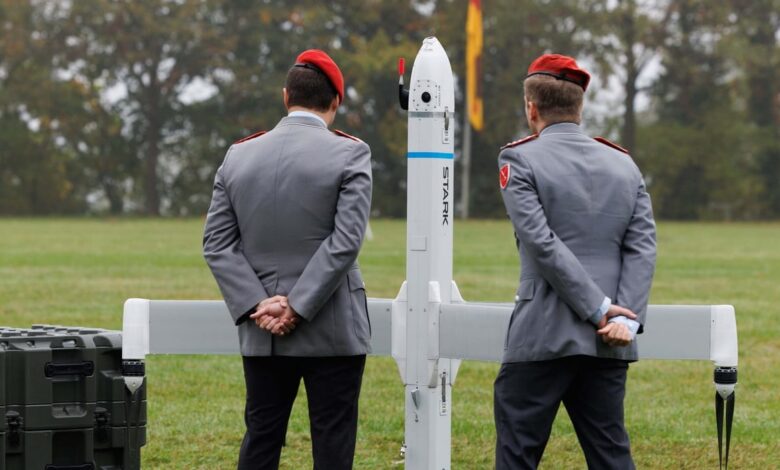
The German army carried out its first tactical tests of loitering munitions during exercises in Lithuania on Sunday. Berlin plans to permanently station an armored brigade of about 5,000 troops in the country by the end of 2027.
The tests mark a significant step for Germany, which decided to buy loitering munitions, also known as explosive drones, only in 2025 after years of debate over their procurement, Reuters reported.
Russia and Ukraine already use these single-use drones. They can loiter over an area before diving toward a target at high speed and exploding on impact.
At the Rūdninkai training ground near the Belarusian border, German army chief Christian Freuding watched munitions made by German companies Helsing and Stark dive from the sky and hit main battle tanks. The munitions were fitted with inert warheads.
German troops also test AI-powered targeting software
The trials were part of Freedom Shield, Germany’s largest military exercise in Lithuania to date.
Days earlier, German troops at Rūdninkai conducted the first tests of Clarity, Helsing’s AI-powered targeting software. The tool can sift through and analyze vast amounts of data from satellites, drones and other sensors faster than a human operator, then recommend courses of action.
Freuding, who oversaw German arms deliveries to Kyiv before taking up his current post, described both types of systems as indispensable to modern warfare. He is due to take over as Germany’s chief of defense in February.
A permanent armored brigade by the end of 2027
In 2023, German Defense Minister Boris Pistorius pledged to station a combat brigade permanently in Lithuania, a first for Berlin.
Germany sharply increased defense spending after Russia invaded Ukraine, investing hundreds of billions of euros to modernize its armed forces after decades of underinvestment.
The newly formed 45th Armored Brigade, based in Rūdninkai and Rukla, is expected to have about 5,000 troops and 2,000 vehicles, including dozens of tanks, when it reaches full operational capability by the end of 2027. About 1,800 of its troops are already in Lithuania.
NATO officials have warned for years of a growing Russian threat. They say Moscow could launch a large-scale attack on the territory of NATO members as early as 2029. Moscow denies harboring aggressive intentions and accuses the alliance of stoking tensions by expanding in Russia’s neighborhood.