The collapse of the European dream… France and Germany abandon the future fighter jet
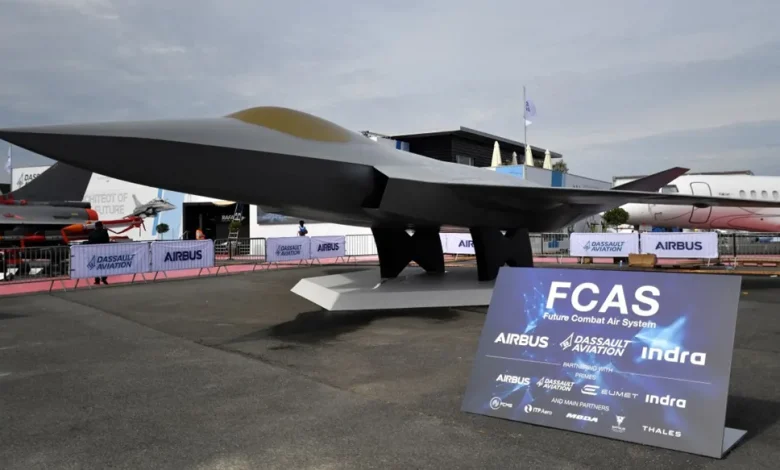
After years of setbacks and difficulties, the curtain has officially fallen on the ambitious stealth fighter program jointly developed by France and Germany.
French President Emmanuel Macron and German Chancellor Friedrich Merz are said to have reached a shared conclusion that it is impossible to overcome the deep disagreements that have plagued the project since its launch in July 2017, according to Military Watch magazine.
-
Britain, France and Germany ‘strongly condemn’ air attack on Saudi Arabia
-
Enemy Brothers: Austria and Germany Locked in a Fierce Battle for a United Nations Security Council Seat
The program aimed to provide an advanced replacement for Germany’s Eurofighter and France’s Rafale by 2040. However, this ambition quickly ran into technological limitations and both countries’ limited track record in managing defense programs of such scale.
From the outset, doubts surrounded the project’s viability. In 2021, Dassault Aviation CEO Éric Trappier dispelled remaining illusions about the timeline, stating that the program had entered a deep stagnation phase and that the 2040 target was unrealistic, pushing potential entry into service into the 2050s.
-
Bags of cash and opaque channels… new details emerge in a German investigation into the Muslim Brotherhood
-
After the withdrawal from Germany… here is the map of the U.S. military presence in Europe
The collapse of the European dream… France and Germany abandon the “future fighter jet” – image 1
This dramatic ending comes as the technological gap between Europe and the United States, China, and Russia in combat aviation continues to widen. The United States has operated fifth-generation fighters for over 20 years, China for nearly a decade, and both are already preparing to introduce sixth-generation aircraft in the early 2030s and 2040s.
The gap is not limited to Europe’s absence from the stealth fighter club; it also extends to combat superiority. Europe’s most advanced fighters have demonstrated limited capabilities not only against fifth-generation aircraft but also against advanced fourth-generation platforms such as the F-15EX and the J-16.
This shortfall is reflected in the F-35’s repeated victories over European competitors in all NATO procurement competitions.
-
A rift within NATO reverberates among allies: nuclear deterrence on the table between France and Poland
-
Pilots survive… Two U.S. fighter jets collide during an air show
German withdrawal looms as Britain watches closely
The crisis within the program escalated to the point that reports in September 2025 indicated that officials within the German Ministry of Defence were seriously considering a full withdrawal.
In an attempt to salvage the project, Mike Schöllhorn, head of defense and space at Airbus, proposed developing two separate aircraft to meet the differing requirements of the two countries.
At the same time, the United Kingdom has opened the door for Germany to join its own Global Combat Air Programme alongside Italy and Japan.
Although the GCAP program also faces significant challenges, Germany’s participation now appears to be the most likely scenario following the collapse of the Franco-German project, building on its previous cooperation with London and Rome in developing the Eurofighter.
-
Selfie costing $600,000: a maneuver and a collision between two F-15 fighter jets
-
Disagreements over a U.S. fighter jet deal unsettle Peru: resignation of the Foreign and Defense Ministers
A clouded future and a fate tied to Washington
In this bleak landscape, Europe’s ability to produce a fighter jet capable of competing with the F-35 or J-20 remains deeply uncertain, especially amid the rapid US-China race toward so-called “advanced fifth-generation” standards.
Even if Europe succeeds in developing its stealth fighters, they would likely enter service at a time when China, and possibly the United States, will already have deployed sixth-generation aircraft, locking in a technological gap that could last for decades.
-
Gripen: Brazil unveils its first locally manufactured supersonic fighter jet
-
The era of stealth fighters… Why has Israel returned to buying the F‑15?
-
Seoul deploys fighter jets after nine Russian and Chinese bombers enter its air defense zone
-
Shahed-136: Russian drones now pose a threat to Ukrainian fighter aircraft