Pezeshkian Opens the Door to Talks With Washington but Rules Out Concessions
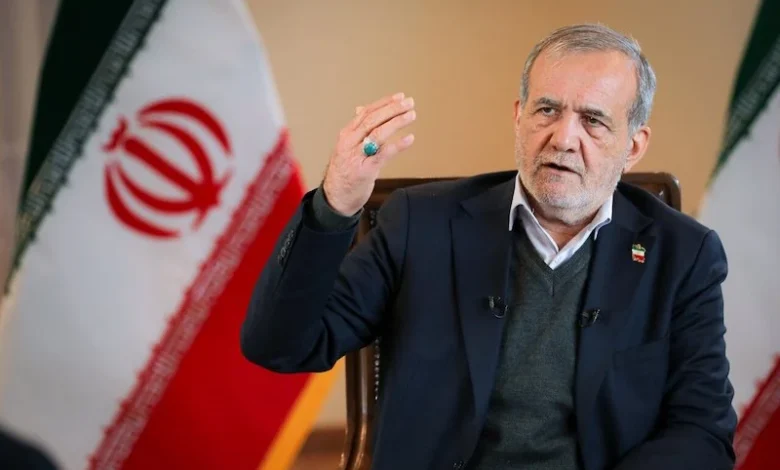
The Iranian president’s speech appeared to be an attempt to redefine the boundaries of negotiation: expressing readiness for dialogue without making the concessions Washington is seeking to secure through pressure.
Addressing the United Nations General Assembly on Wednesday, Iranian President Masoud Pezeshkian adopted a tone that combined political defiance with continued support for diplomacy.
-
Could Pezeshkian Meet Trump in New York?
-
Iran Under Pressure from Sanctions and War as Pezeshkian Acknowledges Difficulties
He rejected what he described as the “language of force” and military pressure as the confrontation between Tehran and Washington intensifies, with the Strait of Hormuz and Iran’s nuclear program remaining at the center of the crisis.
His remarks prompted the US delegation to leave the chamber during the speech.
Pezeshkian accused the United States of committing “crimes” and disregarding international law. He said his country was defending itself against what he described as aggression.
He also referred to the death of former Iranian Supreme Leader Ali Khamenei, arguing that his assassination had taken place “outside any legal framework.”
-
He Refused a Handshake and Hid His Face: Striking Details Emerge About the Meeting Between Mojtaba Khamenei and Pezeshkian
-
Pezeshkian: Rational diplomacy to end the war
The Iranian president presented this account as part of his justification for Tehran’s position in the ongoing war.
The US representative walked out of the chamber as Pezeshkian directed sharp criticism at Washington and Israel.
The Iranian president insisted that his country had “never been an aggressor state” and had not started a war. At the same time, he stressed that Tehran would not accept surrender under military pressure.
Regarding the diplomatic process, Pezeshkian said Iran believed in negotiations, but only if they were not conducted under threat or through the use of force.
-
Pezeshkian moves to rein in media rhetoric toward neighboring countries
-
Erdogan Offers Mediation Between Iran and the United States as Pezeshkian Calls for Conditional Diplomacy
He reaffirmed his country’s commitment to what he described as a memorandum of understanding and said Tehran did not fear war when defending itself.
The statements come amid reports of indirect contacts and negotiations between the United States and Iran on the sidelines of the General Assembly.
A Firmer Message on the Strait of Hormuz
Pezeshkian adopted a more forceful position when addressing the Strait of Hormuz.
He said Iran could not allow the waterway to be used to transport weapons intended for use against his country. He also warned that expanding the war would not bring security.
-
Masoud Pezeshkian denies neighboring countries’ complicity with Israel
-
Pezeshkian Warns Trump against War with Iran
The position reflects Tehran’s continued effort to link the status of the strait to the military pressure being applied against Iran.
The Strait of Hormuz remains a vital route for global energy supplies and international trade.
Pezeshkian also defended Iran’s right to possess nuclear technology for peaceful purposes.
He denied that the country was seeking to produce a nuclear bomb and said nuclear energy formed part of Iran’s development plans.
The president said Tehran would not accept nuclear technology remaining the exclusive preserve of a limited number of countries. He renewed his opposition to restrictions on Iran’s peaceful nuclear program.
-
President’s Team Denied Visas as Iran Faces New Restrictions at the United Nations
-
Power Struggle Among Iran’s Factions: Hardliners Narrow the Room for Negotiation
Dialogue Without Retreat Under Pressure
Through his speech, the Iranian president sought to establish a clear political equation: readiness to negotiate on one hand and refusal to make concessions under threat on the other.
This approach allows Tehran to keep the diplomatic path open without appearing, either domestically or internationally, to be retreating under military pressure.
The emphasis on the Strait of Hormuz and the nuclear program confirms that Iran’s most sensitive concerns remain inseparable from the negotiating process.
Tehran links freedom of navigation through the strait to preventing it from being used to transport weapons to Iran’s adversaries. Pezeshkian, meanwhile, presents the nuclear program as a civilian right that his country should not be required to relinquish.
-
Leaked Report Shakes Iran: Public Anger Continues to Haunt the Regime
-
Iran Announces Imminent Release of Half of Its Frozen Assets Held in Qatar
The Iranian president also sought to shift the debate away from Tehran’s conduct and toward what he sees as international double standards.
By contrasting the treatment of Israel and Iran, he aims to rally countries opposed to US pressure, particularly within the region.
The New York speech therefore appeared to be an attempt to redraw the boundaries of any future negotiation.
Iran says it is prepared for dialogue, but it does not want that dialogue to replace what it considers its legitimate rights or to appear as a direct consequence of military pressure.
-
Trump sends a deterrent message to Iran despite progress in negotiations
-
Entered into Force: The United States and Iran Sign the Memorandum of Understanding Electronically
-
U.S.-Iran Agreement: Switzerland Reveals Preliminary Talks on Implementation Mechanisms