Qatar and Sudan’s war: From political alignment with the army to allegations of military support and Islamist influence networks
Since mid-April 2023, Sudan’s war has evolved beyond a military confrontation between the Sudanese Armed Forces (SAF) and the Rapid Support Forces (RSF) into a conflict with regional and international dimensions, shaped by intertwined political, military, and economic interests. Foreign powers are competing to influence the country’s future and its internal balance of power. Against this backdrop, Qatar’s role warrants particular attention, given its historical relations with Sudan’s military establishment and the questions raised by its political activities, influence networks, and connections with Islamist movements concerning the nature of its involvement in the conflict.
Since the outbreak of the war, Qatar has maintained close relations with the leadership of the authorities based in Port Sudan, repeatedly reaffirming its support for Sudan’s unity, sovereignty, and state institutions. Doha presents this position as support for the Sudanese state. It nevertheless raises broader questions about the boundaries between supporting state institutions and politically aligning with one of the warring parties, particularly when dealing with a military authority engaged in open confrontation with another armed force, amid growing calls for a ceasefire and an inclusive political process.
The debate has gained further significance in light of research assessments pointing to Qatar’s historical relationships with political Islamist movements in Sudan, alongside allegations of support for certain networks associated with the military establishment. These allegations require further verification before they can establish direct official involvement by Doha in arming one of the parties to the war.
Historical relations extending beyond diplomacy
Understanding Qatar’s current role requires examining the nature of the relationship between Doha and Khartoum in the years preceding the war. Under former President Omar al-Bashir, the two countries maintained extensive political and economic cooperation. Qatar was among the Arab countries that sustained a significant presence in Sudan through investments, assistance, and political mediation.
Darfur was one of the most prominent areas in which Qatar’s involvement became apparent. Doha hosted lengthy negotiations that culminated in the signing of the Doha Document for Peace in Darfur in 2011. This mediation secured Qatar an important political position in Sudanese affairs and strengthened its relationships with several influential groups and figures within the former regime.
The significance of that period also extends to the relationships established between Doha and various Sudanese political, social, and religious networks, some of which remained active following the overthrow of al-Bashir’s government in 2019.
According to an analysis published by the European Council on Foreign Relations (ECFR) on July 30, 2025, Qatar has historically maintained relationships with Islamist groups across the region and has been more receptive than certain other regional actors to the rise of Islamists in Sudanese political life. The analysis suggests that these longstanding connections have contributed to perceptions of Qatar as an actor close to some of the political constituencies now associated with the army’s camp.
This raises one of the central controversies surrounding Doha’s role: is Qatar primarily engaging with Sudan as a state and its institutions, or is it also seeking to preserve a network of political relationships that could secure its influence in the postwar period?
The existence of a coordinated Qatari strategy aimed at restoring the former regime remains unestablished. Nevertheless, Qatar’s continued relationships with personalities and movements associated with political Islam constitute a legitimate subject of political analysis, particularly as some of these forces have become involved in the broader dynamics of the war and support for the Sudanese army.
Political support for al-Burhan: Taking sides or supporting the state?
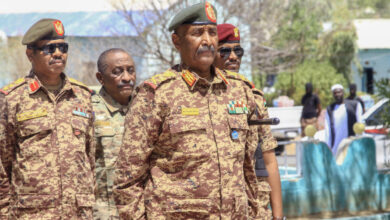
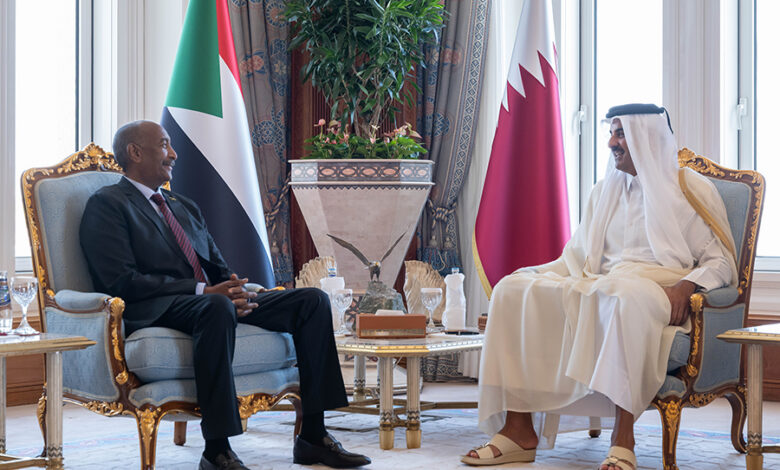
From the earliest days of the war, Qatar adopted an official position emphasizing its support for Sudan’s unity and territorial integrity, as well as its opposition to interference in the country’s internal affairs. As the fighting evolved, Doha sought to maintain channels of communication with the army leadership and strengthen relations with the authorities based in Port Sudan.
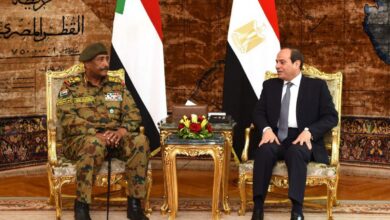
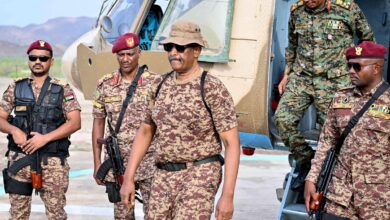
The meeting between Sudanese Sovereignty Council Chairman Abdel Fattah al-Burhan and Qatar’s Minister of State for International Cooperation, Maryam bint Ali bin Nasser Al-Misnad, in Port Sudan on April 10, 2025, was a clear indication of continued political engagement between the two sides.
According to the Qatari statement, the meeting addressed bilateral relations and ways of strengthening cooperation, particularly in development and humanitarian affairs, alongside reaffirming support for Sudan’s unity, independence, and sovereignty.
Politically, these meetings must be understood in the context of a war in which al-Burhan heads the military authorities. Strengthening bilateral relations with him provides additional diplomatic opportunities and facilitates access to external political support.
Diplomatic engagement with al-Burhan may contribute to efforts to resolve the conflict. However, it raises an important question about the messages being conveyed to the warring parties: are they being encouraged to reach a political settlement, or could continued recognition and cooperation with the army leadership, without clear conditions concerning an end to military operations, reinforce its confidence in its ability to sustain the confrontation?
The distinction is significant. Political support that is disconnected from a clearly defined process for ending the war could indirectly contribute to consolidating one party’s negotiating leverage and military position.
Allegations of financing and arms supplies: What do the reports say?
Allegations of military assistance are particularly significant when assessing Qatar’s role. The European Council on Foreign Relations’ July 2025 analysis cited regional experts who alleged that Qatar had financed the provision of weapons to the Sudanese Armed Forces while seeking to avoid generating additional regional tensions.
Drawing on the assessments of experts consulted, the report also discussed links between certain Islamist networks hosted by Turkey and Qatar and individuals or financial and military networks that had contributed resources to the Sudanese Armed Forces’ war effort. It further noted that a leader of the Al-Baraa ibn Malik group appeared outside the Qatari Embassy in Khartoum in March 2025 and publicly thanked Doha for its support.
These developments raise serious questions about the relationships between certain armed groups and external political actors, as well as the operation of cross-border financial and relational networks.
It is essential, however, to distinguish between the information cited in the report and evidence that could establish legal responsibility. Allegations conveyed by regional experts remain insufficient to demonstrate that Qatar issued an official decision to arm the Sudanese military. Similarly, a Sudanese figure publicly expressing gratitude to a foreign government outside its embassy does not, by itself, establish the existence of military financing.
The available information has provided no conclusive independent evidence that the Qatari government directly ordered the supply of weapons or ammunition to the Sudanese Armed Forces. The matter therefore requires independent investigations into funding sources, the circumstances of any equipment transfers, the responsibilities of intermediaries, and the identities of the beneficiaries.
Nevertheless, the inclusion of these allegations in an analysis published by a prominent European research institution makes them part of the international debate surrounding external support for Sudan’s warring parties and calls for greater clarity and transparency.
Islamist movements: The most sensitive dimension of Qatar’s role
The controversy surrounding Qatar’s involvement in Sudan is closely connected to the question of Islamist movements. Following the overthrow of al-Bashir’s government, political, economic, and organizational networks associated with the former regime endured. Some retained relationships and influence within state institutions and Sudanese society.
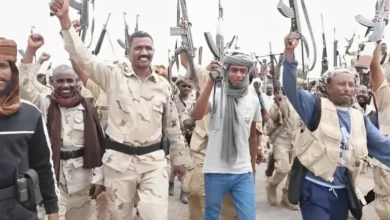
With the outbreak of war, certain Islamist forces viewed the confrontation as an opportunity to restore their political presence. Several armed formations and groups associated with Islamist movements subsequently became linked to the Sudanese Armed Forces’ camp.
According to assessments by the European Council on Foreign Relations, Doha has historically been more receptive to the role of Islamists in Sudan. Certain networks associated with the former regime also maintained external relationships that, according to the report, contributed financial and military resources to the Sudanese Armed Forces.
This places Qatar in a political dilemma. If its historical relationships with these movements are now being used to expand its political influence within Sudan, such involvement could complicate efforts to establish a pluralistic civilian system in which political power is broadly shared.
Sudan faces a military crisis alongside a deeper crisis concerning the future of the state and the nature of its system of governance. Efforts to restore the influence of political networks associated with the former regime, whether through direct support or relationships of influence, could reproduce some of the conditions that contributed to the collapse of the transitional process.
Sudanese Islamists constitute a diverse political constituency whose members are not uniformly involved in military operations. However, the instrumentalization of certain political and religious organizations in the conflict risks transforming the war into a prolonged ideological confrontation and diminishing the prospects of a national political settlement.
Humanitarian assistance: Genuine support or a parallel instrument of political influence?
A balanced assessment of Qatar’s role must acknowledge the significance of the humanitarian assistance Doha has provided to Sudanese citizens since the outbreak of the war.
In June 2023, Qatar pledged $50 million to support the humanitarian response in Sudan and the surrounding region. It also participated in international and regional conferences aimed at mobilizing assistance for populations affected by the conflict.
During 2025, Qatar announced an additional commitment of $75 million to support the humanitarian response, alongside the allocation of $10 million to programs targeting women in conflict-affected areas, according to official Qatari statements.
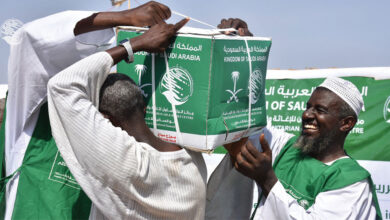
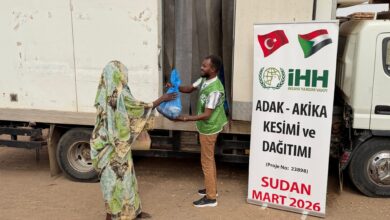
Qatari institutions have also provided food and medical assistance and undertaken healthcare interventions involving medicines, dialysis equipment, neonatal incubators, and support for medical services in areas hosting displaced populations.
These contributions represent an important component of the humanitarian response, and their provision alone does not establish that Qatar is financing or prolonging the war.
Political analysis nevertheless raises questions about how humanitarian assistance can contribute to the donor country’s influence and its relationships with local authorities and state institutions. In a wartime environment, humanitarian engagement may provide a donor country with a substantial political and social presence, particularly when distribution channels are concentrated in areas controlled by one party.
Ensuring the independent and impartial delivery of assistance is therefore essential to prevent its instrumentalization for political legitimacy or the establishment of exclusive relationships with a military actor.
Continued Qatari humanitarian assistance should be accompanied by guarantees that it reaches everyone in need, including populations living outside army-controlled territories. Effective oversight mechanisms are also necessary to safeguard that assistance from exploitation in the conflict’s competing struggles for influence.
How could Qatar’s role contribute to prolonging the war?
The continuation of Sudan’s war stems from multiple interconnected factors, including persistent arms flows, external financing networks, mistrust between the warring parties, and competing regional interests.
Within this framework, three potential dynamics could explain how Qatar’s involvement might contribute to the continuation of the conflict, should the corresponding allegations be substantiated.
- First, unconditional political support. If the army leadership believes that its allies will continue supporting it regardless of developments in the peace process, it may become less willing to make the political concessions necessary to end the war.
- Second, financial, logistical, or military assistance. Support benefiting networks associated with either warring party could alleviate resource constraints and contribute to prolonging hostilities.
- Third, the reactivation of Islamist networks. Their renewed presence in the political and military landscape could further complicate the war by introducing questions concerning the identity of the state and the future system of governance. It could also deepen concerns among civilian forces that an eventual settlement might pave the way for the restoration of the former regime.
These dynamics represent an analysis of potential consequences. Establishing Qatar’s direct responsibility for prolonging the war would require substantiated evidence concerning financing and arms procurement decisions, as well as the nature of relationships between Qatari actors and the networks reportedly operating in Sudan.
Qatar’s influence faces a test of transparency
Qatar now faces an important political test in Sudan. Maintaining relations with the army leadership, reaffirming support for the country’s unity, and providing humanitarian assistance could all contribute to a constructive role if accompanied by genuine efforts to end the war.
However, persistent uncertainty surrounding allegations of arms financing, connections with Islamist networks, and the nature of political influence in Port Sudan continues to raise questions about Doha’s actual involvement.
The fundamental issue concerns how Qatar uses its historically established influence in Sudan. Is Doha working toward ending the war and establishing a stable civilian state, or could its strategic interests and longstanding alliances lead it to prioritize preserving the existing balance of power?
Ending Sudan’s war requires all external actors to halt military or financial support that contributes to prolonging hostilities and exert pressure on the opposing leaderships to accept a settlement that places civilians at the center of the political process.
Any Qatari role that fails to translate this objective into tangible measures will remain subject to political scrutiny, particularly given the escalating humanitarian cost of the war.