Tehran threatens to establish a maritime exclusion zone to pressure Gulf states
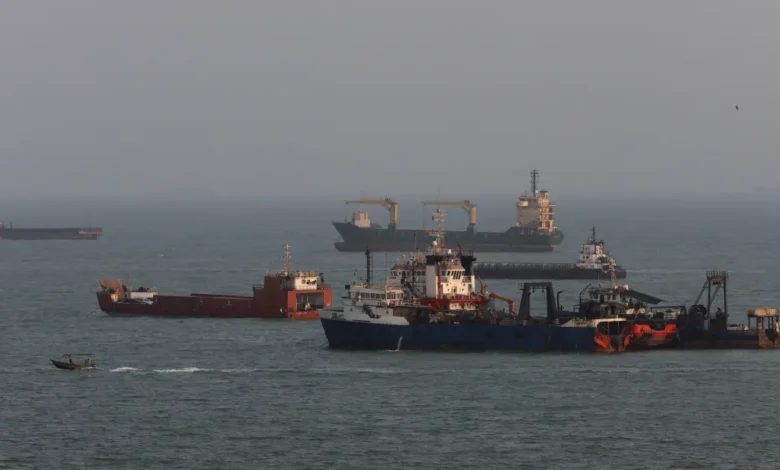
The escalation is aimed at bringing Gulf oil exports to a complete halt, amid doubts over Tehran’s military ability to carry out its threats.
The secretary of Iran’s Supreme National Security Council, Mohsen Rezaei, announced that his country would establish a “restricted zone” in the Gulf region and its surrounding waters in response to the US blockade imposed on Iran, in a new Iranian escalation threatening maritime navigation in the region and further complicating the situation.
In a post on the X platform, Rezaei said that Tehran had “fundamentally changed its operational approach” towards US forces deployed in the region, stating that “Washington has received a clear warning in recent days from Iran’s new missiles.”
Referring to the US blockade and sanctions imposed on Iran, which he described as “economic warfare,” he said: “Economic warfare will be met by the establishment of a maritime exclusion zone extending across the Gulf to the blockade line.”
Rezaei had previously warned that if countries surrounding Iran supported the United States in its economic war, Tehran would “close the Gulf as well as the Strait of Hormuz and would not allow a single drop of oil from the region to pass,” a policy indicating Tehran’s intention to harm the economic interests of its neighbours following the attacks it carried out during the war.
These threats come as Tehran seeks to expand pressure on maritime navigation and the economies of neighbouring countries by threatening to close strategic waterways and disrupt oil exports. However, Iran’s ability to turn these threats into sustained measures remains open to question, given the losses suffered by its armed forces and the Islamic Revolutionary Guard Corps during the war and the resulting pressure on Iran’s military capabilities.
Tehran’s continued threat of escalation against maritime navigation and Gulf states also requires countries in the region to strengthen coordination and cooperation, particularly in protecting maritime routes and economic infrastructure and ensuring the security of trade and energy flows. This comes at a time when Iran appears willing to use pressure on its neighbours as a means of responding to the US blockade, increasing the need for a more coordinated Gulf position to confront any potential repercussions.
In late August, Iranian Parliament Speaker Mohammad Bagher Ghalibaf said that his country would not allow anyone to sell oil in the region if Iran itself were prevented from selling its oil.
Referring to US efforts to obstruct Iranian oil exports, Ghalibaf added: “The equation of war is clear: either everyone or no one. No one will be able to sell oil in a region where we are unable to sell ours.”
On February 28, the United States and Israel launched a war against Iran, followed by Tehran’s closure of the Strait of Hormuz, one of the world’s most important routes for global oil and gas exports.
Iran responded by launching attacks against Israel and against bases and sites it said were American in several countries across the region, including Jordan and Gulf states.
On June 17, Washington and Tehran signed the “Islamabad Memorandum of Understanding,” which provided for the cessation of military operations and the beginning of arrangements to reopen the Strait of Hormuz to maritime navigation.
However, the agreement later stalled amid disagreements over its implementation and navigation through the Strait of Hormuz, before hostilities resumed in July.