The Illusion of Conscious AI: Why Human-Like Machines Could Pose a Real Risk
Artificial intelligence systems have become increasingly capable of holding natural conversations, responding with apparent empathy and creating the impression that they understand human emotions. This development raises an important question: does the real danger lie in the possibility that machines could eventually become conscious, or in the fact that people are already beginning to treat them as if they were?
For researchers, the second question deserves particular attention. Even without evidence that an AI system genuinely experiences emotions or possesses subjective awareness, its behaviour may be enough to persuade some users that they are interacting with a conscious entity. This perception can influence how people relate to technology, how much they trust its responses and, in some cases, how they approach their relationships with others.
Human-like language does not prove consciousness
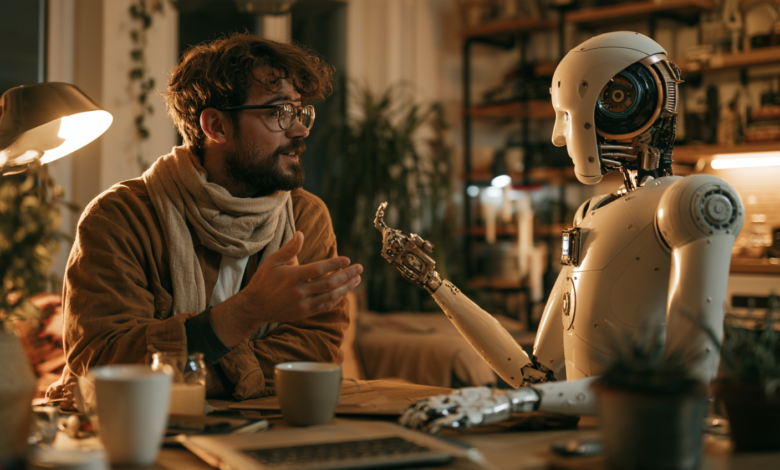
Modern AI models can generate coherent responses, discuss emotions and adapt their tone to the person they are speaking with. They can use first-person language, introduce themselves as personal assistants and maintain conversations that appear attentive and spontaneous.
However, these abilities do not, by themselves, establish that an AI system is conscious. A chatbot may say, “I understand your pain” or “I am happy to help” without demonstrating that it actually experiences sadness, happiness or compassion.
Part of the problem lies in a natural human tendency to attribute intentions, emotions and personality to entities that communicate with us. When a machine uses familiar language, speaks in a human-like voice or appears to take initiative, it becomes easier to project mental characteristics onto it.
The issue, therefore, is not simply what AI systems can do, but also how people interpret their behaviour.
Why do people perceive AI as conscious?
Interactions with AI can activate some of the same social instincts involved in human communication. A warm response, an apparent sign of attention or a sentence that resembles personal reflection can strengthen the impression that someone is present behind the screen.
Researchers have identified several features that may encourage this perception, including the apparent expression of emotions, human-like characteristics, relatively autonomous behaviour, language resembling introspection and convincing social interaction.
These features can make AI systems more accessible and pleasant to use. They can also blur the distinction between a convincing simulation and a genuinely lived experience.
For example, a chatbot may respond sympathetically to someone sharing a personal problem. The user may feel understood and supported, and that emotional experience can be genuine for the person. Yet it does not establish that the AI itself feels anything.
The risk of emotional dependence
One of the main concerns is the emotional attachment that some users may develop towards conversational AI. When a system is constantly available, responds patiently and appears to listen without judgment, it can become an important presence in a person’s daily life.
Such interactions are not necessarily harmful. Conversational tools can help people organise their thoughts, express concerns and obtain an initial form of support. They may also temporarily ease feelings of loneliness.
Problems can arise when users consistently prioritise AI interactions over human relationships, feel responsible for a system’s supposed emotional well-being or believe that the connection is reciprocal in the same way as a relationship between two people.
Current evidence does not justify the claim that every user is at risk of this type of dependence or that all emotionally engaging AI interactions are damaging. Nevertheless, the mechanisms that may encourage excessive attachment deserve attention, particularly when systems are designed to sustain highly personalised conversations.
When trust begins to undermine judgement
Perceiving AI as conscious may also affect how users evaluate its answers. Someone who regards a system as attentive, well-intentioned or exceptionally capable may place greater trust in it than they would in an ordinary software tool.
That trust can become problematic when the system provides inaccurate information, presents speculation as fact or offers inappropriate advice. A confident, empathetic tone is not a guarantee of accuracy or sound judgement.
The risks are particularly relevant when people make important decisions about health, finances, employment or personal relationships. AI can help users explore different options, but its responses still require critical assessment. It does not automatically replace professional expertise, human experience or individual judgement.
There is also the possibility of manipulation. When people regard an AI system as an entity with intentions and feelings, they may pay less attention to the commercial interests, design choices and technical limitations that shape its responses.
A broader challenge for society
The potential consequences extend beyond individual users. As AI systems become more human-like, society may face increasingly complex questions about responsibility, trust and the role that artificial systems should occupy.
Some broader risks remain hypothetical or insufficiently documented, but they warrant consideration. If the appearance of consciousness becomes widely confused with consciousness itself, public debates about the rights of artificial systems could become more difficult. Such confusion might also divert attention from the responsibilities of the companies developing these technologies or intensify disagreements over how they should be regulated.
This does not mean that AI systems should be made cold, impersonal or incapable of responding sensitively. Human-like features can make technology easier to use and improve the accessibility of certain services. The challenge is to prevent their design from encouraging misleading beliefs or disproportionate trust.
Learning to distinguish appearance from reality
The debate over artificial consciousness remains unresolved. Whether a machine could one day possess subjective experience is a different question from the more immediate issue of what happens when a system merely appears to be conscious.
This distinction matters because the risks associated with human perception can arise even when artificial consciousness has not been established. Researchers can therefore investigate the psychological and social effects of these technologies without claiming to have settled the philosophical debate.
For developers, this means carefully considering how systems communicate their capabilities, limitations and apparent emotional states. For users, it means remembering that a convincing conversation is not proof that a conscious mind exists behind the words.
The central challenge is not simply to determine whether machines might one day think or feel like humans. It is also to ensure that the illusion of consciousness does not turn a useful technology into a source of excessive emotional attachment, unquestioning trust or manipulation.