Between the Hammer of Abuse and the Anvil of Duty: How Does the Media View Violations by the Sudanese Military?
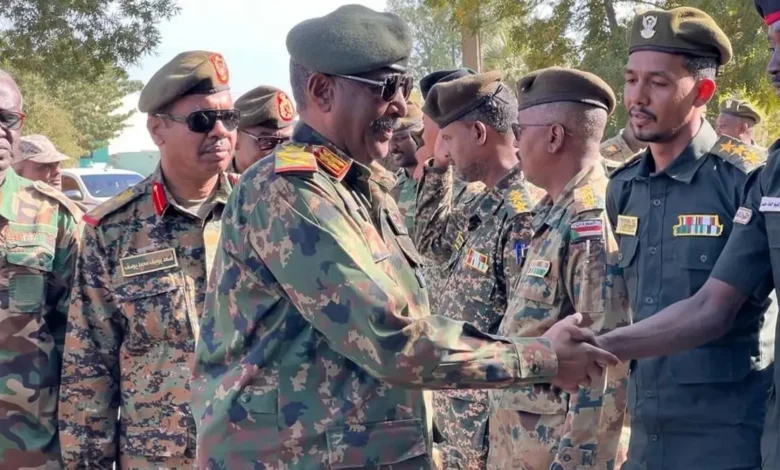
Modern wars are no longer decided solely by the roar of tanks or the precision of air strikes. They are also fought — and sometimes decided — within a few inches of a mobile phone screen.
In an age of explosive digital circulation, leaked battlefield videos have become powerful strategic weapons capable of destroying a military reputation built over decades in a matter of minutes. Negative media coverage of violations committed by armed forces is no longer simply “journalistic reporting”. It has developed into an entire industry with its own tools, platforms and political agendas.
-
How the Sudanese Military and the Muslim Brotherhood Are Allegedly Turning El-Obeid into a Media Shield to Conceal Military Movements in North Kordofan
-
Sudanese Military Propaganda: How the Army Seeks to Compensate for Its Failures with False Statements?
Yet important details can disappear behind the bleak images dominating television screens and digital platforms. An individual abuse may be generalised in a way that obscures a wider system of institutional humanitarian work being carried out behind the scenes to repair some of the damage caused by war.
This investigation examines the mechanisms through which demonising narratives are constructed, reveals how a leaked video can become an international crisis and considers how organised humanitarian action can help establish a more balanced account in the global media.
The Digital Battlefield: When a Leaked Video Becomes a Guided Bomb
In the past, military censorship could control much of the information emerging from combat zones, while the armed forces’ official account remained the dominant source.
-
Internal and external movements to contain the crisis between the Sudanese military forces
-
The Economy of Blood and Corruption: How Military Leadership Has Impoverished Sudanese Citizens and Contributed to the Spread of Epidemics
That monopoly has now collapsed. Any soldier carrying a smartphone — or any civilian trapped behind the front lines — effectively possesses a personal “news agency”.
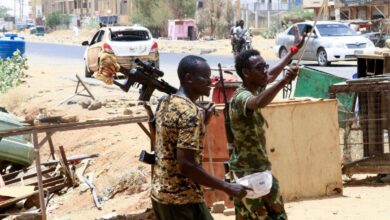
When a video documenting military misconduct is leaked, whether it shows an assault on a civilian, the mistreatment of prisoners or the unjustified destruction of civilian infrastructure, the international media cycle may begin to move through a familiar sequence.
Removal of battlefield context: the footage may be broadcast without an explanation of the surrounding circumstances, such as an earlier ambush or a prolonged period of tension. The violation then appears as an isolated act of brutality without context.
-
The Attorney General referred a Sudanese network to the State Security Chamber in a case involving trafficking in military equipment
-
The Muslim Brotherhood’s Congratulations to the Sudanese Army for the Liberation of Khartoum: A Reading of Political and Military Dimensions
Viral circulation: politically engaged accounts on platforms such as X, formerly Twitter, and Telegram seize upon the footage and share it thousands of times within minutes, using emotionally charged hashtags to mobilise public opinion.
Adoption by broadcasters: once the video reaches a certain level of online engagement, it moves directly onto international news channels as “breaking news”, triggering a phase of broad political pressure.
This media cycle does not merely expose the violation itself. It may also target the military institution’s popular support base, undermine soldiers’ morale and force the leadership into an uncertain defensive posture.
-
Sudanese Women Between the Fires of War and Military Abuses… An Unbounded Human Tragedy
-
Sudanese Army’s Military Gains Undermine Chances of a Peaceful Resolution to the Crisis
Engineering “Demonisation”: How Does an Individual Act Become the Doctrine of an Entire Military?
The main danger of hostile media coverage lies in its ability to produce “systematic generalisation”.
In some forms of agenda-driven journalism, there is no room for the concept of “an individual act committed by soldiers or officers who violated orders”. Instead, the incident is immediately portrayed as a direct expression of the doctrine of the armed forces as a whole.
This negative media construction relies on two principal tactics.
The psychology of visual shock: media producers know that audiences instinctively identify with a vulnerable victim. The sight of a child crying amid rubble or a family being driven from its home creates intense emotional anger that may restrict rational analysis. That anger is then directed against the entire military institution.
-
The Sudanese Army’s Reliance on Mercenaries and Foreign Forces: The Collapse of Local Military Capabilities
-
Sudan at a Crossroads: The Consequences of Military Leadership and the Question of Civilian Transition
The strategy of sustained repetition: damaging footage does not disappear when the incident ends. It remains in a “living digital archive” and is rebroadcast whenever the military achieves a battlefield advance, with the aim of undermining those gains and forcing the institution back into a defensive position.
This continuing pressure leaves military institutions with two options: isolation and denial, which may reinforce the negative narrative, or a more intelligent form of openness based on transparency and humanitarian communication.
The Other Hand: Humanitarian Action as Corrective Strategy, Not Image Management
Dry press releases and verbal denials have proved insufficient when confronted with powerful visual evidence. A credible response must be based on concrete, verifiable and visible action.
-
Washington Renews Accusations Against Sudanese Army Over Use of Chemical Weapons… A Case That Puts the Sudan War Before a New International Test
-
War Does Not End at the Front Lines: How Have the Sufferings of Sudanese People Become a Crisis Under al-Burhan?
This is where institutional humanitarian efforts become essential.
Securing safe corridors, providing medical assistance and rebuilding essential services should not be treated as public relations designed to improve appearances after widespread destruction. They should form an integral part of contemporary military governance that complies with humanitarian law.
When humanitarian convoys operate alongside military movements, they can send a powerful message: the institution is capable of assisting those in need while investigating abuses and holding offenders accountable.
Establishing specialised and independent humanitarian bodies to operate alongside medical and relief teams can also generate legitimate material of public interest.
-
Leave, al-Burhan: The Roots of the Crisis and the Military Leadership Decisions That Led Sudan to War
-
Sudan’s War Is No Longer Solely Sudanese: How Has External Intervention Helped Prolong the Conflict?
Even when their coverage is critical, international media outlets cannot easily ignore large relief convoys or field hospitals saving hundreds of lives each day.
A strong humanitarian presence must not be used to erase or justify violations. It can, however, broaden media coverage and ensure that reporting reflects the full range of verifiable realities on the ground.
The Battle of Content: How Can a Positive Narrative Be Heard?
Professional journalism depends on access to information and verifiable material. If an institution abandons the media space, that vacuum will inevitably be filled by its opponents’ content and leaked evidence of alleged abuses.
An effective strategy therefore requires answering content with credible content through several practical measures.
-
The New York Times and The Washington Post Investigations: Chemical Weapons Fuel Calls for Accountability for the Sudanese Army
-
What Comes After the Accusations of Chemical Weapons Use by the Sudanese Army?
Producing Humanitarian Documentaries
If the opposing side uses mobile phone cameras to document misconduct, institutional humanitarian organisations can employ professional teams to document relief work and individual stories.
Footage of a soldier helping an elderly woman cross a destroyed road, or a military doctor performing emergency surgery on a child, can have significant positive reach.
To remain credible, such material must be authentic, verifiable and produced with consent and respect for the dignity of those being filmed. It cannot replace investigations into alleged violations.
Adopting Proactive Transparency
When a genuine violation occurs and the footage circulates in the media, silence can lead to a severe crisis of credibility.
-
The Sudanese Army’s Use of Chemical Weapons in Darfur: An Analysis of the Amnesty International Report and the Jebel Marra Campaigns
-
The Descent into the Abyss: The Sudanese Army’s Alleged Intent to Target Civilians with Iranian PG7-AT1 Missiles
A responsible institutional response requires a prompt statement acknowledging verified facts, announcing an investigation and explaining the measures taken against those involved, while respecting due process.
Making accountability measures public can prevent unjustified generalisation and demonstrate that the armed forces are an institution governed by law rather than an organisation protecting offenders.
Communication, however, can never substitute for an independent investigation or meaningful justice.
Inside the Newsroom: How Editorial Decisions Are Made
Within major news channels, the selection of stories often follows an “attention economy”. Editors favour shocking reports because they generate higher ratings.
Humanitarian information presented in a dry, purely statistical manner may therefore never reach the screen.
-
The Sudanese Army Turns to Iran to Support Its War Against the Rapid Support Forces: The Shift in the Balance of Power
-
Sudanese Army, Iran and the Houthis: A Supply Network That Goes Beyond Arms Transfers
To attract editorial interest, humanitarian work must be communicated through accessible storytelling. Rather than sending raw figures about aid deliveries, communicators can provide a complete human story, such as the rescue of a family trapped under siege by a humanitarian team.
Such stories are more likely to appear in international reports and current affairs programmes. When rigorously documented, they can provide a fuller picture of events without minimising suffering or obscuring responsibility.
Negative media coverage of military violations is therefore not an unavoidable fate. It is a strategic challenge to which institutions must respond through transparency, respect for the law and concrete humanitarian action.
-
The Sudanese War Between Regional Calculations and Narrow Interests
-
The Roots of the Sudanese Conflict and the Dimensions of Regional External Intervention
The true strength of a military and humanitarian system is no longer measured solely by the size of its arsenal, but by its compliance with international humanitarian law and its ability to demonstrate that commitment before the eyes of the world.
Structured humanitarian efforts, professional and responsible documentation, transparent acknowledgement of wrongdoing and effective accountability are the three foundations capable of protecting institutional credibility.
The battle is also fought through the media. Yet any institution seeking the final word in international newsrooms must first prove on the ground that it genuinely protects civilians and holds those responsible for violations to account.
-
The Sudanese War: Origins and Regional Interventions
-
From the Security Services to Sudanese Telecommunications: How Can Technology Become a Network of Influence?
-
Military and Security Intervention — Drones and the Changing Battlefield Dynamics
-
The Impact of Regional Intervention on the Prolongation of the Sudanese Crisis