After Khamenei’s Death, the Houthis in Yemen Face an “Unknown” Fate
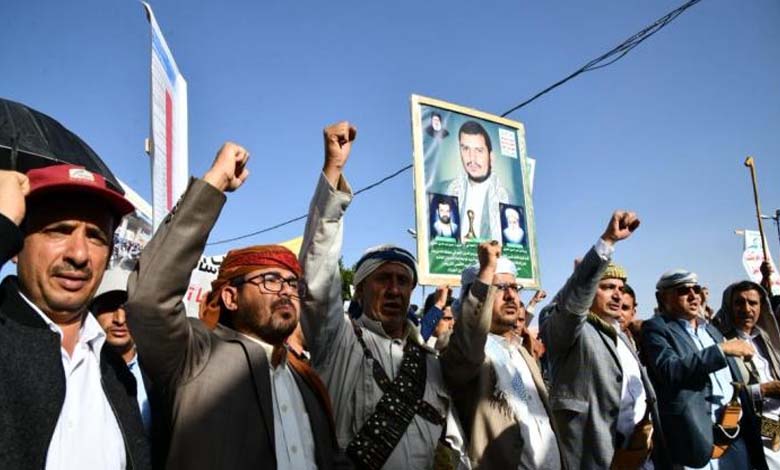
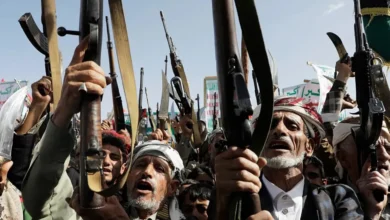
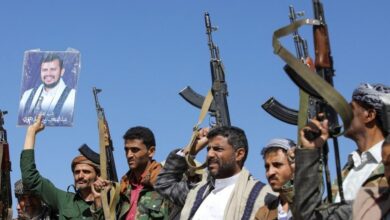
Following the death of Iran’s Supreme Leader, Ali Khamenei, in an Israeli attack earlier this week, the Houthi militias in Yemen awoke to the reality of suffocating isolation.
Sanaa has shifted from being a forward outpost of Iran’s regional project to an isolated stronghold facing an uncertain future, after the collapse of the political and military umbrella that had shielded the Houthis for years.
Observers believe that the absence of Khamenei, as a spiritual, military, and political figure, will significantly affect the cohesion of the Houthi militias and their leader, who now face a genuine existential challenge.
-
Five months after sinking, the Houthis release the crew of the ship Eternity C
-
Justice in the Grip of the Houthis: How Yemen’s Judiciary Became a Political Tool of Repression
The last leader of the “axis”
Yemeni political analyst Adonis Al-Dakhini stated that Khamenei’s death will indeed impact the cohesion of the Houthis, whose expansion drew heavily on the symbolism of the Supreme Leader (Wali al-Faqih).
Al-Dakhini said that “Abdelmalek al-Houthi is the last remaining leader of what was known as the axis, after the successive fall of its leaders, from Hassan Nasrallah to Bashar al-Assad and finally Khamenei, and before them all Qassem Soleimani.”
According to the analyst, the Houthi leader “is undoubtedly awaiting his turn; this was evident in his condolence speech for the Iranian leader, in which he did not threaten retaliation as he usually does, in an attempt to save himself, though it is an attempt unlikely to bear fruit.”
-
Houthis raid UN offices in Sanaa and detain another staff member
-
Houthis Activate Emergency Plan as Fear Undermines Centralized Military Command
He stressed that “the impact within Yemen is significant after the developments in Iran: there is no longer an axis, no Iran, no Iranian military support; therefore, ending Iran’s arm in Yemen becomes a natural course of events, as is also the case in Iraq.”
Regarding the absence of the Iranian umbrella, Al-Dakhini believes it will result in “a moral collapse followed by a military one; the militias will likely attempt to fabricate a narrative about internal wings, one of which allegedly rejects Iran, and promote it as a survival strategy.”
However, “the chances of survival are limited, because the legacy left by the Houthi militias at the local, regional, and international levels is substantial, to the extent that it has unified actors around the necessity of uprooting them,” the analyst said.
-
Southern Yemen Moves Beyond the Conventional Framework: A New Diplomacy Confounds the Muslim Brotherhood and the Houthis
-
Houthis detain UN staff, including UNICEF representative
The mastermind
Ali Khamenei’s departure represents a historic turning point for the Houthis in Yemen, as the absence of the Supreme Leader means the loss of a central ally and the collapse of the security and military system that tied the group’s fate to Iranian decision-making.
According to political analyst Marwan Mahmoud, the Houthi militias will be deeply affected by “Khamenei’s death, as the Supreme Leader was the effective founder of Iran’s regional proxies, foremost among them the Houthi movement in Yemen. Khamenei was the mastermind and planner of this expansionist project under the pretext of forward deterrence.”
-
The Deluge toll: 1,000 Houthis killed in 19 months
-
Between Denial and Confusion: Why Did the Houthis Delay Announcing Their Casualties?
Mahmoud added that “the issue is not primarily one of religious symbolism, but rather the intellectual, political, and military reference that Khamenei represented for the Houthis, as the operational system of the project; he personally supervised crucial decisions within the militias.”
He stated that “with Khamenei’s death, the ‘operating system’ of the Houthi project has been eliminated; the militias now face an existential challenge, having lost the man who outlined policies and set the strategic and doctrinal framework.”
-
Houthis Claim Responsibility for Attack on Cargo Ship in the Gulf of Aden
-
Call for an international coalition against the Houthis: Experts stress collective action as essential for deterrence
The final pillar of the axis
For his part, Yemeni military affairs expert Adnan Al-Jabrani said that “with Khamenei’s death, Abdelmalek al-Houthi finds himself alone in the axis arena. It began with Soleimani and al-Muhandis, then his personal hero Hassan Nasrallah, the commanders of the Revolutionary Guards, and finally the Supreme Leader.”
He explained that “Khamenei had the greatest influence on Abdelmalek al-Houthi’s thought and doctrine, shaping his strategic outlook on the conflict with the West through his guidance, speeches, lectures, and his management of confrontation with the United States with persistence and adherence to the Iranian revolutionary line.”
-
Houthis Preempt September 26 Anniversary with Arbitrary Abductions in Sanaa and Ibb
-
The exposed collusion: when the Muslim Brotherhood and the Houthis unite against South Yemen
He added that “the Houthi movement, as a group, represents the last component of the axis to join and expand, yet its standing rose rapidly by projecting defiance and determination, seizing territory in ways that sometimes exceeded the axis’s established limits.”
He concluded that “the potential collapse or clinical demise of Iran’s regime will complicate the Houthi leader’s ambitions and inevitably weaken the group in key areas, as what it received from Iran was far from negligible, particularly in material, technological, and logistical terms.”
-
Houthis Target Tel Aviv, Eilat and Beersheba with Missile and Three Drones
-
The Suffering of Yemenis: a moral fragility erasing lives under the domination of the Houthis and the Muslim Brotherhood