The Muslim Brotherhood’s dagger in the Arab flank… Why does Iran prioritize destabilizing the Gulf over confronting Israel?
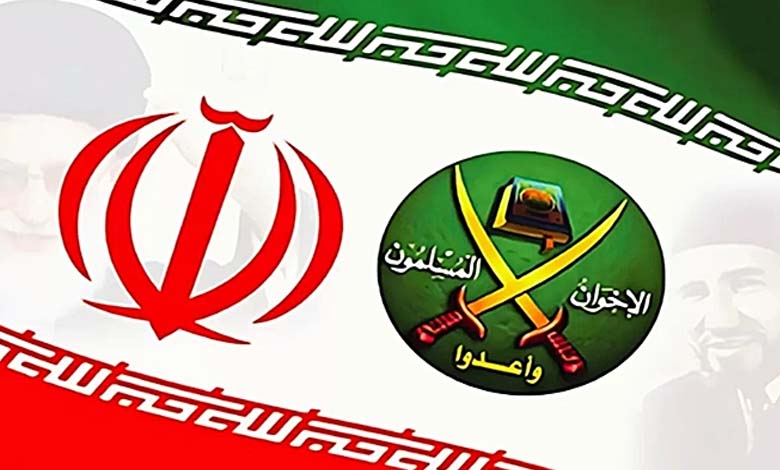
Recent intelligence reports and geopolitical analyses reviewed by (Hafryat) have revealed a structural shift in Iran’s strategy, whereby the “dismantling of Gulf stability” has become a priority that precedes “confrontation” with Israel. In this context, the Muslim Brotherhood appears as a “bridge” and a functional tool used by Tehran to undermine states that have taken a firm stance by designating the group as a terrorist organization.
Observers believe that Iran’s intensive targeting of Gulf countries, particularly Saudi Arabia and the United Arab Emirates, exceeds, in its operational phases, what is directed toward Israel.
-
Pressure to ban the Muslim Brotherhood and Iran’s Revolutionary Guard: the UK House of Lords escalates the debate
-
Strategic Warning: A Muslim Brotherhood–Houthi network backed by Iran threatens Red Sea security
Tehran considers the Gulf states to be the only real obstacle to the “Shiite Crescent” project and expansion into the Arabian Peninsula, as well as a barrier to its control over maritime routes. For this reason, Iran seeks to destabilize the successful Gulf model, which offers a civilizational and developmental alternative that contradicts the “Wilayat al-Faqih” model based on crisis management.
Iran’s targeting of Gulf countries is “organically” linked to the Muslim Brotherhood. Since Gulf states placed the group on their terrorism lists, the interests of the “two guides” (in Tehran and within the international organization) have converged on a single objective: “revenge” against Gulf regimes.
-
Muslim Brotherhood Split over Iran Support Reveals Fragility of Its International Organization
-
Iran as a potential haven for the Muslim Brotherhood if they leave Qatar.. How?
Iran uses Muslim Brotherhood cadres and their media platforms to wage a “soft war” aimed at stirring Gulf public opinion under false religious slogans. This cooperation is clearly visible in the Yemen and Sudan files, where Brotherhood cells coordinate with Iranian arms in a mission of “political justification” and distortion of Gulf defensive positions.
Analysts told (Hafryat) that the clear Gulf stance against the Muslim Brotherhood broke the “Trojan horse” that Iran had relied upon to penetrate Sunni societies.
According to these reports, Iran views the Muslim Brotherhood as the necessary “Sunni backing” to legitimize its movements in the region, which explains the joint Iranian–Brotherhood anger at the “Gulf awareness” that exposed the reality of this alliance.
Targeting the Gulf amounts to targeting the “center” that halted the spread of chaos, while the “confrontation with Israel,” which threatens the Iranian regime, remains merely a slogan for popular and media consumption. The Muslim Brotherhood thus represents the “operational fuel” for attempts to destabilize Gulf capitals.
-
The Muslim Brotherhood and Iran… Alliances to Achieve Agendas
-
Sudan: Arena of Iranian and Brotherhood Influence
-
Iran and the Muslim Brotherhood: A historical relationship