Merz on Iran’s Retaliation Radar: Germany Responds to Serious Security Concerns
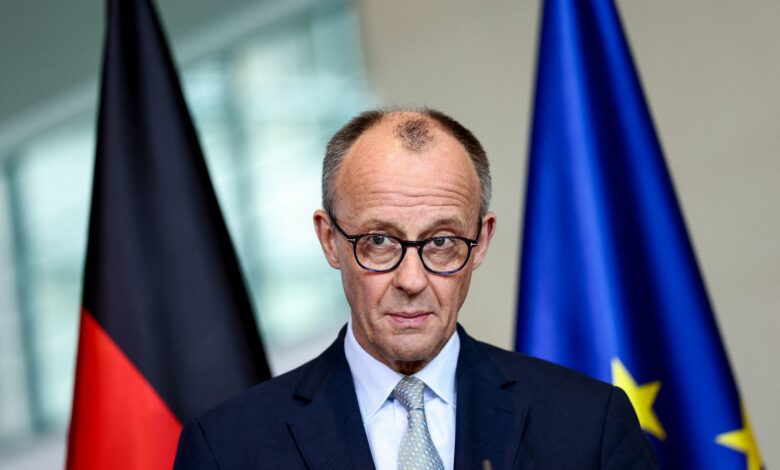
German Chancellor Friedrich Merz has reportedly been placed on an Iranian retaliation list, while a mysterious terrorist organization has resurfaced and disappeared once again amid an elevated threat environment.
Over recent weeks, a series of warning signs has highlighted the potential danger posed by networks linked to the Iranian regime in Germany and across Europe, raising concerns that they could carry out terrorist attacks despite criticism from several European countries of Washington’s strategy toward Tehran.
-
Golden passports and illusory palaces… this is how Iranian leaders conceal their wealth
-
Germany moves to dry up funding for Iran’s hidden arms
Germany’s position during the conflict with Iran created tensions between Chancellor Friedrich Merz and U.S. President Donald Trump. The two leaders disagreed on several occasions, with Merz criticizing the U.S. approach while ruling out any direct German participation.
Nevertheless, the German Chancellor has now become a potential target for Iranian retaliation.
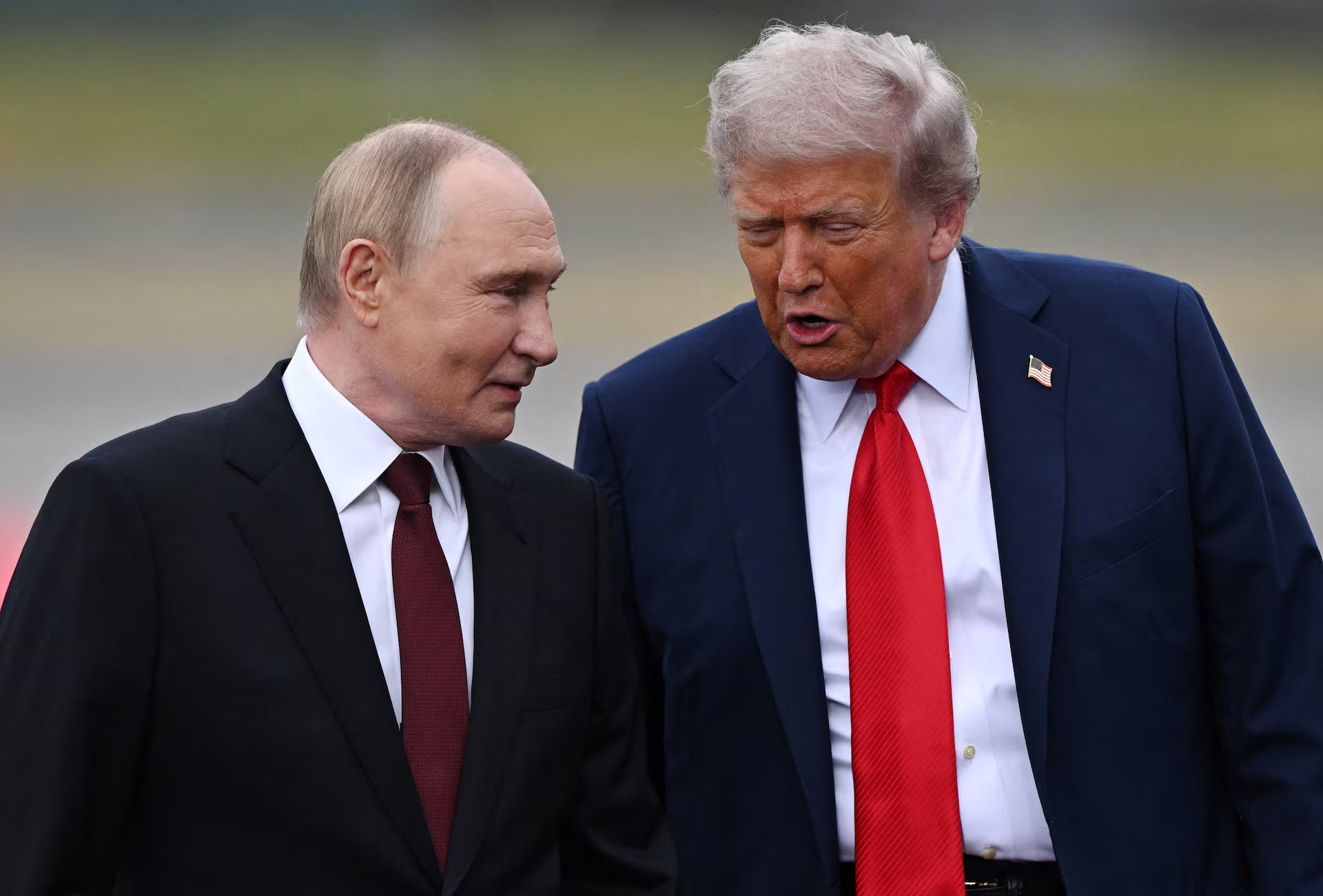
Last Saturday, the Iranian newspaper Hamshahri published a retaliation list containing thirteen prominent figures. Alongside Donald Trump and Israeli Prime Minister Benjamin Netanyahu, Friedrich Merz also appeared on the list, according to the German news website T-Online.
-
Sanctions on Iran Threaten the Regime as Public Anger Grows
-
U.S. Report: Israel to Launch an Attack on Iranian Nuclear Sites by Mid-Year
Meanwhile, German politicians have expressed growing concern and warned of the terrorist threat. The danger is not new; since the outbreak of the conflict, several attacks in Europe have appeared to be linked to the Iranian regime.
The list featuring Merz also includes Benjamin Netanyahu, Donald Trump, and other Israeli and American officials, as these countries are officially regarded as parties to the conflict.
Notably, four of the thirteen individuals listed are European heads of state or government. In addition to Friedrich Merz, the list includes Italian Prime Minister Giorgia Meloni, French President Emmanuel Macron, and outgoing British Prime Minister Keir Starmer.
-
The Iranian regime cultivates forces and movements in the region, supporting them with money and arms
-
Germany Pursues One of Iran’s Key Religious Centers on its Soil… Details
A Persistent Threat
Terrorism expert Peter Neumann told T-Online: “It is reasonable to assume that this report was not published without the regime’s approval.”
He added: “There is no doubt that someone authorized the publication of the image. That is how the media operate in Iran, particularly the newspaper Hamshahri. Accordingly, the regime at the very least raised no objection to Friedrich Merz’s inclusion on the list.”
What is particularly striking is that the regime has also targeted leaders who openly criticized U.S. actions against Iran and, in some cases, publicly disagreed with the American president.
-
Germany Raids Offices of Hamburg Islamic Center Linked to Iran… Details
-
What is the Iranian people’s stance on the Israeli aggression on Gaza?
According to Neumann, the list itself does not constitute a major warning. However, given Iran’s recent threats and intelligence indicating actual assassination plots against prominent figures, the situation should be taken extremely seriously.
Mark Henrichmann, chairman of the Bundestag’s Parliamentary Oversight Committee for the Intelligence Services, described the publication of the Iranian list in Handelsblatt as evidence that “Iran is acting out of desperation.”
Nevertheless, he stressed: “We must assume that Iranian intelligence services are also actively preparing attacks in Europe.”
His parliamentary colleague Roderich Kiesewetter shared the same assessment, stating in Handelsblatt: “I assume that the regime has long been planning and preparing targeted assassinations and terrorist attacks in the West, including Germany.”
-
Iran – Mullahs lose battle against people, new international sanctions threaten regime stability
-
Iranian uprising: Clashes, international condemnation and Khamenei’s isolation from seminaries
Previous Attacks
In 2022, two attacks targeted Jewish synagogues in Germany’s Ruhr region, while another planned attack was successfully foiled.
The Higher Regional Court of Düsseldorf later concluded that those attacks had been ordered by the Iranian state.
This year, the Iranian regime has once again demonstrated its willingness to resort to terrorism in Europe.
Shortly after the outbreak of the conflict with Iran, a previously unknown terrorist organization calling itself the “Movement of the Followers of the Islamic Right” (HAYI) suddenly emerged. According to T-Online, it claimed responsibility for at least seventeen terrorist attacks across Europe within a two-month period.
-
Amnesty International condemns the Iranian regime
-
Lessons from Hormuz: why Iran must not be allowed to continue threatening the strait
Its targets included American, Israeli, and Jewish institutions. Attacks were reported in London, Paris, Amsterdam, and Antwerp, among other cities. The group also claimed responsibility for detonating two explosive devices outside an Israeli restaurant in Munich.
The organization displayed several unusual characteristics. It used different writing styles, and its members appeared to lack a consistent operational pattern.
Following several attacks, authorities arrested a number of young suspects, most of whom were under the age of twenty. Many had been recruited online, and some reportedly did not even realize that their actions were connected to terrorist objectives, according to information provided by German police to T-Online.
-
Europe divided between caution and alignment in the Iran crisis
-
After a five-hour closure, Iran reopens its airspace
Although suspicions quickly pointed toward Iran as the force behind the terrorist organization, conclusive evidence remained unavailable for a considerable period.
Subsequently, Iranian-born Mohammad Baqer Saad Daoud Al-Saadi was arrested in Turkey and extradited to the United States, after which the attacks ceased.
Al-Saadi is described as a senior commander of the Iran-backed Kata’ib Hezbollah terrorist organization in Iraq. According to the indictment, he was responsible for planning attacks across Europe.
-
Iran Criticizes U.S. Sanctions Policy Ahead of Key Cairo Nuclear Meeting
-
“More for More”… Can It Unlock Iran’s Nuclear Code?
Continuing Threats
Since then, no further attacks have been reported. However, Peter Neumann warns that this does not mean the threat has disappeared.
“If the situation in Iran continues to escalate, renewed efforts to attack targets in Europe are likely,” he said.
He believes that such attacks are likely to recur in the future, arguing that the world is entering a new era of “state-sponsored terrorism.”
-
“Iran’s Nuclear Program”: IAEA Condemnation and Tehran’s Response
-
Joint British, French, and German statement on Iran’s approach to nuclear weapons… What was stated?
The annual report released only days ago by Germany’s Federal Office for the Protection of the Constitution (domestic intelligence service) mentions Iran 102 times and details a range of Iran-related threats within Germany, including espionage, terrorist attacks, and attempts to influence Shiite communities through associations and organizations.
Iran participates in establishing and supporting Shiite religious institutions abroad and uses them as instruments to influence Shiite communities.
Elsewhere, the report states that “terrorism carried out by Iran requires particular vigilance from both the state and society.”
-
Iran Protests: Claims against arrests and executions
-
Iran protests: The arrest of Faezeh Hachemi, live fire on protesters