Pink Missiles.. Women Used by the Iranian Regime to Polish Its Image
In a scene that appeared closer to a carefully orchestrated propaganda display, hundreds of Iranians gathered in the historic Ferdows Park in central Tehran while giant screens displayed Lebanese singer Julia Boutros — known for supporting Hezbollah — performing amid a loud and festive atmosphere.
Under the shade of ancient trees, women dressed in black abayas alongside others without hijabs waved Iranian flags in a rare scene combining two clear violations of Iranian law: the public broadcasting of a female singer’s voice and the appearance of unveiled women at a pro-government event.
-
The Iranian regime under bombardment: weakened control, divisions, and fear
-
How does the Iranian regime buy the loyalty of its supporters?
However, according to The Times, the scene was not an isolated event but part of a broad propaganda campaign launched by Iranian authorities in recent months in an attempt to reshape the regime’s image domestically and internationally through the use of women and softer visual symbols to lessen the impact of militarization and security tensions that have overshadowed the country since the “Woman, Life, Freedom” protests in 2022.
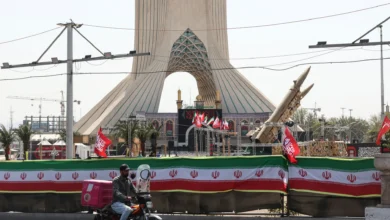
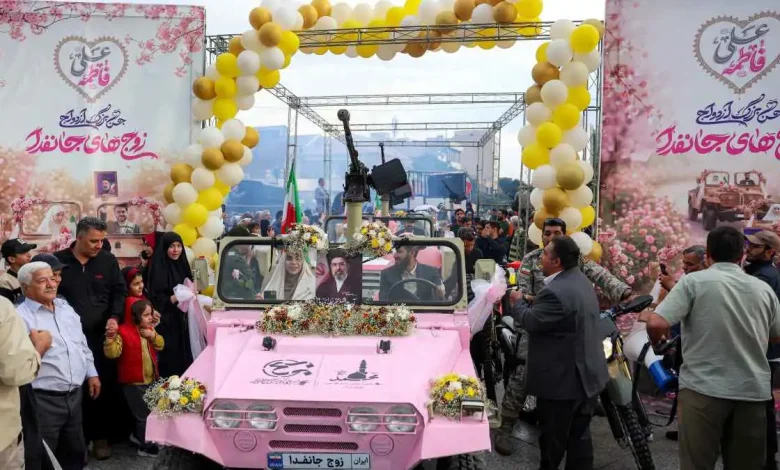
The campaign included images and footage of veiled and unveiled women driving pink-colored SUVs, while others rode motorcycles or carried weapons and missiles painted pink.
This was accompanied by mass wedding ceremonies organized during pro-regime events, television interviews with unveiled women declaring support for the regime, as well as the participation of women in military exercises and national celebrations across various parts of the country.
-
U.S. intelligence rules out the collapse of the Iranian regime
-
After Strikes Targeting the Supreme Leader and the President: Key Pillars of the Iranian Regime
“We see pink and smell blood”
Human rights activists believe the campaign is not merely an attempt to improve the regime’s public image, but part of a propaganda strategy aimed at “softening the face of war” and concealing scenes of repression, violence, and the heavy military presence throughout Iranian cities.
Sarina, a human rights activist from western Iran who received 74 lashes after posting a photo without a hijab on Instagram, said that “the pink missiles and weapons are intended to beautify war and erase the blood spilled in the streets.” She added: “We see pink, but we smell blood.”
According to activists, authorities are using these nighttime events to regain control over public spaces and prevent them from once again turning into centers of protest, as happened during the “Woman, Life, Freedom” uprising that erupted after the death of Kurdish woman Mahsa Amini while in the custody of the morality police over what was described as “improper hijab.”
-
Erosion of Deterrence Places the Iranian Regime in a Deep Strategic Crisis
-
The Iranian regime cultivates forces and movements in the region, supporting them with money and arms
Sarina explained that the heavy deployment of checkpoints, armed soldiers, and machine guns mounted on armored vehicles in Iranian cities reveals that the real purpose of these propaganda spectacles is not celebration or national unity, but preventing any new uprising.
Critics of the campaign argue that the Iranian regime is attempting to project an image of broad national consensus around itself, especially after years of protests, repression, and international isolation. Golrokh, a former political prisoner at Evin Prison, described the campaign as “pure propaganda,” arguing that the regime is attempting to appropriate the very symbols of the opposition and use them to legitimize its image before the world.
She added that the appearance of unveiled women at pro-regime events does not indicate genuine acceptance of personal freedoms, but rather an attempt to repurpose symbols of civil disobedience within the state’s official narrative.
-
Audio Leak: Iranian regime recruits foreign students to ‘Recruit Supporters’ for Tehran Worldwide
-
A new wave of protests… The specter of Mahsa Amini haunts the Iranian regime once again
Women between propaganda and control
Samaneh Savadi, a women’s rights activist based in the United Kingdom, believes that the use of pink coloring on missiles, vehicles, and weapons is not merely an aesthetic detail, but carries a clear political and psychological message.
She stated that the goal is “to soften the visual brutality of militarization and make missiles, weapons, and militarized streets appear cheerful, feminine, youthful, and socially acceptable,” adding that the regime uses the image of women and femininity “to normalize violence and conceal its cruelty.”
Savadi also believes that the mass wedding ceremonies held during these events — including a wedding for 110 couples in Tehran using pink vehicles — are not simply celebratory scenes, but political messages reflecting the family model desired by the regime: a family based on obedience, loyalty, and increased population growth.
-
Leaked documents reveal Iranian regime spying on celebrities participating in protests
-
Accusation of Mahsa Amini’s family lawyer of “propaganda against the Iranian regime”
Despite media promotion of unveiled women appearing at some official events, strict hijab policies remain firmly in place. Last April, authorities shut down a historic hotel in the city of Kashan over “hijab-related violations,” while appearing without a hijab in public places still exposes women to punishments including imprisonment and flogging.
Savadi said: “An unveiled woman may be celebrated in one context and criminalized in another. The issue is not the hijab itself, but control.” She believes the regime’s real fear is that any relaxation of control over women’s bodies could open the door to broader demands for political and social freedoms.
-
Foreign policy: The Iranian regime is playing with fire in Balochistan
-
Washington threatens to hold the Iranian regime accountable for suppressing protests – Details