Ethiopian elections enter the final countdown amid intensive logistical and security preparations
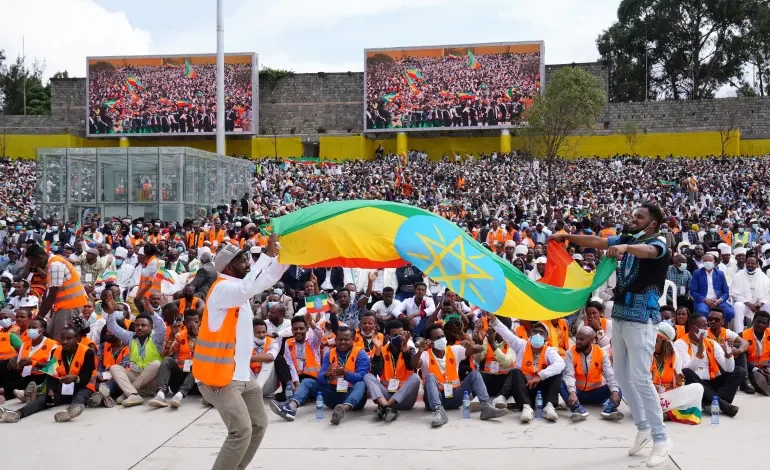
Ethiopia has entered the final countdown phase ahead of its seventh general elections, as the electoral process moves into its final stages amid the completion of logistical and security preparations. The vote is widely viewed as a significant political milestone in the country’s democratic transition.
-
Ethiopian expert in Qatar meets with Fahd Yassin to provoke situation in Somalia
-
Khartoum at the Heart of the Ethiopian Crisis: Movements of the Tigray People’s Liberation Front
The National Election Board of Ethiopia announced that the printing of ballot papers for the seventh general elections has been completed and that the ballots have arrived in the country, signaling the beginning of their distribution to various regions and polling centers.
During a press briefing, Board Chairperson Mulatwork Hailu reviewed the progress of the ongoing preparations, confirming that ballot papers, one of the core components of the electoral process, have already entered the distribution phase across polling stations nationwide.
Regarding candidate registration procedures, Hailu stated that since January 1 the Board has adopted a modern technological system developed to electronically manage candidate registration, as part of efforts aimed at improving efficiency, transparency, and modernization of electoral mechanisms.
-
Inauguration of the Grand Ethiopian Renaissance Dam Heightens Tensions with Sudan and Egypt
-
Power Outage in Ethiopia: A Crisis Exposing Infrastructure Challenges and Links to the Grand Ethiopian Renaissance Dam
Enhancing electoral participation
As part of efforts to expand political participation and raise electoral awareness, she explained that the Election Board organized 19 political discussion forums to allow political parties to present their programs and political visions to the public, enabling voters to better understand the competing political options.
She also confirmed that the Board continues to finalize the remaining election preparations while pledging to keep the public regularly informed about all upcoming procedures and stages related to the electoral process.
Concerning guarantees of inclusiveness and integrity, she stated that the Election Board provided financial support to 114 civil society organizations to implement voter awareness programs and accredited 55 additional organizations to participate in election monitoring.
-
Grand Ethiopian Renaissance Dam: New Earthquakes and Serious Geological Warnings
-
The UAE hosts a reception in honor of Ethiopian scholarship recipients
On political party participation, she revealed that more than 220,000 party agents representing various competing political groups had been accredited, alongside the registration of 1,814 journalists to cover the elections for domestic and international audiences.
She also pointed to additional measures aimed at ensuring electoral integrity, including the appointment of independent ombudsmen in all polling centers and informing political parties about their oversight responsibilities.
Special organizational measures for election day
In an effort to broaden participation, the Ethiopian Election Board announced the closure of all commercial activities next Monday, election day, except for institutions and entities providing essential services.
-
Ethiopia: Port Sudan accused of arming mercenaries from Tigray
-
Shifts in the Relationship Between Khartoum and Addis Ababa Amid a Potential Rapprochement with Tigray
At the same time as logistical preparations were being finalized, the capital Addis Ababa and several major cities across the country witnessed political events and peaceful gatherings marking the conclusion of election campaigns before the start of the electoral silence period.
Political parties held their final campaign events across several Ethiopian regions and cities, while the ruling Prosperity Party’s concluding campaign drew the largest and most noticeable public attendance, with broad participation in support of the party across multiple regions and cities.
More than 50 million voters and 42 parties in the race
According to the National Election Board of Ethiopia, the number of registered voters has exceeded 50 million, distributed across 52,029 polling stations nationwide.
-
The presence of Tigray leaders in Sudan raises regional concerns: facts and realities on the ground
-
Debretsion in Sudan: A Strategic Reading and Prospects for Regional Escalation Against Ethiopia
Special polling centers have also been designated for internally displaced persons, members of the armed forces, and students in order to broaden electoral participation and ensure inclusiveness for different social groups.
The ruling Prosperity Party dominates the electoral scene
Data released by the National Election Board indicates the broad organizational presence of the Prosperity Party compared with rival parties, both in terms of the number of candidates and the geographical coverage of electoral constituencies.
Forty-two political parties are participating in the elections after the withdrawal of six parties, most of them from the Tigray region due to the security situation there, which led to the exclusion of Tigray from the electoral process.
-
Scenarios of Indirect Escalation Between Sudan and Ethiopia in Light of the Tigray File Intersections
-
Could Tigray Become a Leverage Tool in the Indirect Confrontation Between Sudan and Ethiopia?
According to official figures, the parties registering the largest number of candidates are, respectively: the Prosperity Party, followed by the Ethiopian Citizens for Social Justice Party, locally known as “Ezema,” then the Coalition for Ethiopian Unity Cooperation, an alliance of five parties, and finally the Amhara National Movement, known as “ABN.”
According to the data, the total number of candidates submitted by political parties and independent candidates for the House of Peoples’ Representatives and regional councils reached 10,432 candidates.
The Prosperity Party topped the list with 3,041 candidates, representing 29 percent of the total, followed by Ezema with 1,248 candidates representing 12 percent, and then the Coalition for Ethiopian Unity Cooperation with 1,053 candidates, equivalent to 10 percent of all candidates.
-
Debretsion Gebremichael’s Presence in Sudan Raises Concerns in Addis Ababa and Places Khartoum at the Heart of Regional Tensions
-
Sudan’s moves toward Tigray: Between security calculations and rising tensions with Ethiopia
For the House of Peoples’ Representatives, the Prosperity Party nominated 461 candidates out of 547 parliamentary seats, accounting for approximately 84 percent of the seats, while Ezema nominated 293 candidates, representing 54 percent of the total seats.
These figures highlight the significant organizational gap between the Prosperity Party and the rest of the competing parties, at a time when opposition groups are attempting to strengthen their presence and expand their representation within legislative and regional institutions.
Security challenges remain prominent
Security challenges continue to represent one of the most influential factors affecting the electoral process. Conditions in parts of the Amhara region, where clashes are taking place between Fano militias and government forces, as well as in certain areas of Oromia and Benishangul-Gumuz, remain a major source of concern for authorities and relevant stakeholders, amid fears that they could affect voter turnout and the scale of political competition.
-
Debretsion’s Presence in Sudan: An Indicator of Potential Regional Escalation
-
A Regional Alliance Against Ethiopia? Interpreting the Implications of Tigray Movements in Sudan
By contrast, the capital Addis Ababa and the cities of Dire Dawa and Harar are considered among the most stable areas, followed by the southern Ethiopian regions, which also enjoy relative security stability, making their electoral environment more favorable to open political competition.
The features of Ethiopia’s seventh general elections reflect the intersection of political competition with security and organizational considerations, as the country seeks to complete an electoral process regarded as a crucial test for its political trajectory and democratic institutions, amid domestic and international anticipation regarding the election results and their implications for the future of the Ethiopian political landscape.
-
They Infiltrated from Puntland: Ethiopia Arrests Dozens of ISIS Fighters
-
Addis Ababa Conference on Humanitarian Support for Sudan, Backed by UAE, Ethiopia & AU