Handing Over Factional Weapons: Iraq Faces a Decisive Turning Point Before the September Deadline
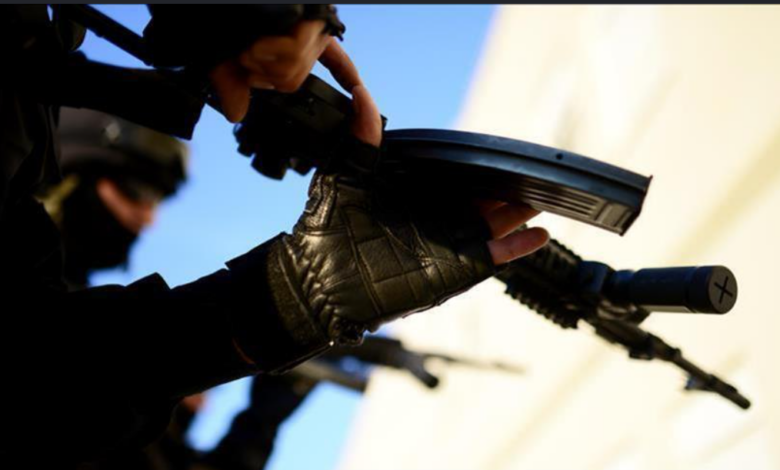
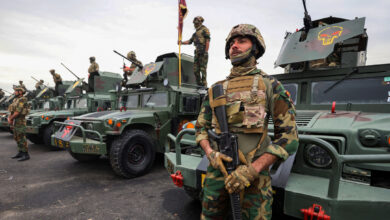
The issue of restricting weapons exclusively to state control has entered a new phase after the Iraqi government announced a final deadline of September 30 for armed factions to surrender their weapons. The deadline coincides with the conclusion of the International Coalition’s mission in Iraq.
-
No signs of relief in Iraq’s political crisis
-
Iraqi factions threaten to target European interests in support of Iran
Officials have confirmed that any weapon remaining outside state authority after that date will be considered an “illegal weapon,” and legal measures will be taken against any party refusing to comply.
This issue remains one of Iraq’s most complex security and political challenges since 2003, involving domestic power balances, the relationship between the state and armed factions, as well as regional and international developments, particularly the anticipated withdrawal of coalition forces and Iraqi Prime Minister Ali Al-Zaidi‘s expected visit to Washington in mid-July.
-
Iraq’s Unemployment Dilemma Becomes a Time Bomb
-
Iraq’s religious authority enters the negotiations over the selection of a new prime minister
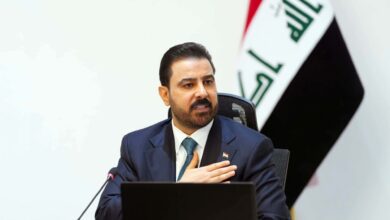
Al-Zaidi stressed that the government remains committed to implementing its plan to place all weapons under state control, stating, “There is no force except the force of the state. We will enforce the rule of law, and there shall be no weapons other than those of the state.”
He added that the government has already received various weapons from Saraya Al-Salam, Asaib Ahl Al-Haq, and the Imam Ali Brigades. He explained that the most important phase is not merely transferring weapons but dismantling the organizational ties between the factions and their fighters before integrating them into Iraq’s official security and military institutions.
-
Iran Faces the Battle Alone… Where Have Its Proxies Gone?
-
Iranian Interests Behind the Coordination Framework’s Persistence in Expelling U.S. Forces from Iraq
These messages were reinforced by government spokesperson Haidar Al-Aboudi, who announced that all factions had been officially informed that September 30 would be the final deadline for surrendering their weapons, coinciding with the end of the International Coalition’s mission in Iraq.
Al-Aboudi explained that any weapon remaining outside state control after that date would be classified as illegal. He also confirmed that the government would deal with non-compliant parties according to the law while denying any connection between anti-corruption measures, implementation of the government’s agenda, and the Prime Minister’s visit to the United States.
-
After Iraqi Factions Abandoned It, Khamenei: Iran Does Not Need Proxies in the Region
-
An Iraqi militia challenges Washington by persisting in carrying out attacks
Some Factions Have Responded While Others Remain Reluctant
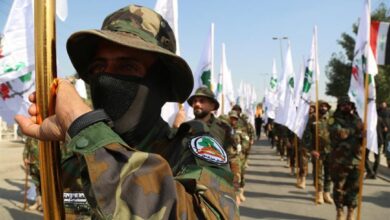
Current indicators reveal a clear division among Iraq’s armed factions regarding the government’s disarmament initiative. Several factions have accepted the surrender process or shown flexibility toward the government’s project, most notably Saraya Al-Salam, affiliated with the Sadrist Movement, which has already begun handing over its weapons and headquarters to the Samarra Operations Command.
Asaib Ahl Al-Haq, led by Qais Al-Khazali, has also begun organizational measures by establishing committees to separate its armed formations from the Popular Mobilization Forces before integrating its fighters into official institutions.
-
How does the Iraqi Prime Minister confront Iranian threats and the US presence?
-
Iraqi Leader Reveals Baghdad’s Handling of the Dollar Crisis with Washington and the Collapse of the Currency
The Imam Ali Brigades, led by Shibl Al-Zaidi, announced their readiness to transfer their weapons and place their personnel under the command of the Commander-in-Chief of the Armed Forces. Likewise, the Badr Organization, Kataib Sayyed Al-Shuhada, Ansar Allah Al-Awfiya, and Harakat Al-Abdal have demonstrated flexibility in negotiations with the government, reflecting a gradual willingness among several factions to engage with the state’s project.
The Rejecting Factions
Other factions continue to reject disarmament, arguing that retaining their weapons remains necessary due to external threats or the continued foreign military presence. These include Kataib Hezbollah Iraq, Harakat Al-Nujaba, Saraya Awliya Al-Dam, Ashab Al-Kahf, and Kataib Karbala, all of which maintain close ties with the Islamic Revolutionary Guard Corps.
-
Al-Sadr rejects his movement’s participation in the new Iraqi government
-
Iraq: Does Sadrist protesters back to demonstrations?
Observers believe this division will make the coming phase particularly sensitive, as the government will have to move from dialogue and persuasion toward implementation, creating simultaneous political and security challenges.
The U.S. Presence: The Main Justification for Opposing Factions
Several political forces link the position of some armed factions on disarmament to the future of the U.S. military presence in Iraq.
Shaker Mahmoud Al-Tamimi, a member of the Coordination Framework and a senior figure in the Badr Organization, stated that some factions, particularly Harakat Al-Nujaba and Kataib Hezbollah, believe that maintaining their weapons is directly tied to the continued American military presence, arguing that the situation would fundamentally change once U.S. forces withdraw.
-
Al-Kadhimi: Dialog the only solution to end Iraq’s crises
-
Snap election in Iraq… Crisis exit or reproduction?
Al-Tamimi said he supports any initiative that strengthens Iraq’s sovereignty while rejecting any form of foreign guardianship or interference in Iraq’s political, economic, or security decisions, whether by the United States or any other country.
He added that diplomatic missions should remain limited to their diplomatic responsibilities and the management of interstate relations without becoming centers of influence over Iraqi decision-making or assuming security or military roles. He emphasized that the government must regulate relations with foreign forces in a manner that safeguards Iraq’s sovereignty and independent national decision-making.
According to Al-Tamimi, addressing the weapons issue should be based on a comprehensive vision that reinforces state authority while preserving Iraq’s independent decision-making free from regional or international pressure. He rejected imposing any external conditions on the government regardless of their source, stressing that national interests must remain the guiding principle for all decisions concerning security and sovereignty.
-
U.S. Moves to Sanction Baghdad Over Iranian Influence
-
Forces within the Coordination Framework mobilize in parliament to oust the Speaker
A Challenge That Goes Beyond Collecting Weapons
Security and strategic expert Amir Al-Saadi believes that the government is facing far more than a simple disarmament operation. Instead, it confronts one of the most complicated issues in modern Iraqi history due to the political and social influence of many armed factions.
Al-Saadi said that enforcing state sovereignty may ultimately require legal force—and potentially coercive force—if all political avenues are exhausted. However, he emphasized that this process will neither be quick nor straightforward and could extend for months or even an entire government term due to the complexity of the political landscape.
He noted that the Prime Minister currently enjoys strong domestic political backing from members of the State Administration Coalition, as well as regional and international support that provides broader room for maneuver. Nevertheless, Al-Saadi argued that such support alone will not guarantee success without realistic implementation mechanisms.
-
Iraqi Forces Raid the Green Zone as Part of a Major Anti-Corruption Campaign
-
An Iraqi Faction’s Rejection of State Control over Weapons Threatens Confrontation with the Government
He explained that the government has relied primarily on dialogue through political and diplomatic channels to persuade the factions that the era of weapons outside state institutions must come to an end. This approach has been reflected in numerous meetings held by the Prime Minister in recent weeks, as well as the official notification sent to all factions.
However, Al-Saadi stressed that there is a significant difference between announcing willingness to cooperate and actually implementing commitments. According to him, the real test will begin as the deadline approaches, when practical implementation will replace political declarations.
He believes the government understands the sensitivity of any direct confrontation with the factions and will therefore exhaust every legal and political avenue before considering stricter options. The ultimate objective is not confrontation but establishing the state’s exclusive constitutional and legal monopoly over the legitimate use of force.
-
Changes in the Iranian Leadership Create Uncertainty Among Iraqi Factions
-
Asaib Ahl al-Haq Joins the Call to Place Weapons Exclusively Under the Authority of the Iraqi State
He concluded that the government’s success will not be measured solely by the number of weapons surrendered but by its ability to eliminate the duality between official institutions and armed formations while firmly establishing the principle that all armed forces must operate exclusively within the framework of the state.
Why September 30?
Political analyst Ahmed Abdul Hadi Al-Saeedi said that selecting September 30 carries multiple political and security implications because it coincides with the end of the International Coalition’s mission in Iraq, effectively removing one of the principal justifications used by some factions to retain their weapons.
He stated, “Al-Zaidi‘s determination to enforce the state’s exclusive control over weapons will provide the government with an opportunity to demonstrate its ability to implement one of the central pillars of its governmental program—the restoration of the state’s monopoly over armed force.”
-
The Decision to Establish Iraq’s Supreme Sovereign Council for Integrity Sparks Constitutional Debate
-
Washington launches crackdown on Iraqi militia leaders on terrorism charges
Asked about the connection between the deadline and Al-Zaidi‘s upcoming visit to Washington, he explained that “U.S. envoy Tom Barrack emphasized during his meeting with Al-Zaidi that weapons must remain exclusively under state control and that the United States would suspend cooperation, including dollar transfers to the Baghdad government, if this principle is not achieved.”
He added that “the timing of the deadline alongside the Prime Minister’s visit to Washington gives the issue additional significance, as sovereignty, security, and the future of military cooperation are expected to feature prominently on the Iraqi-American agenda, while Baghdad continues to emphasize that the decision to monopolize weapons is an independent national decision rather than a response to external pressure.”
-
No signs of relief in Iraq’s political crisis
-
Among them a commander… fatalities among Popular Mobilization Forces in an airstrike in western Iraq
Scenarios After the Deadline
According to Al-Saeedi, three principal scenarios are likely once the deadline expires.
The first involves most factions complying with the deadline, allowing the government to gradually close the issue without confrontation.
The second scenario involves continued dialogue with certain factions that may request additional arrangements before completing the surrender process. This could result in implementation periods being granted within existing legal frameworks without officially extending the final deadline.
The third scenario involves some factions refusing to comply with state decisions, prompting the government to enforce the legal measures it has already announced, including classifying any weapon outside state authority as illegal and taking all necessary actions to ensure enforcement of the law.
-
Iraqi Hezbollah sets conditions to halt attacks on the U.S. embassy.
-
Iraq studies alternatives for exporting Kirkuk oil amid escalating war with Iran
State Authority Begins with a Monopoly on Weapons
Salim Hassan Al-Jawahiri, a researcher at the Baghdad Center for Strategic Studies, believes that restricting weapons to state control represents one of the most important tests facing Al-Zaidi‘s government because it concerns not only security but also the state’s ability to restore its authority and uphold the rule of law.
Al-Jawahiri stated that the government has established two parallel priorities: recovering public funds and combating corruption on one hand, and restricting weapons to state control while protecting official institutions on the other. According to him, success in these two areas represents the essential foundation for creating a stable and attractive investment environment.
-
U.S. pressure to redraw NATO’s mission map, with Iraq at the forefront
-
Islamic State detainees transferred to Iraq: one prison and food costs covered by the coalition
He added that eliminating weapons outside state authority would significantly strengthen investor confidence and reinforce institutional authority. This issue has gained additional importance in light of Al-Zaidi‘s diplomatic initiatives, particularly ahead of his visit to Washington, where he seeks to present Iraq as a country capable of enforcing the law while maintaining balanced relations with the United States, Iran, and neighboring countries based on the principle of national interest.
He concluded that the government’s true test will not lie in statements or slogans but in its ability to transform the project of restricting weapons into a practical reality that establishes the state’s exclusive monopoly over the legitimate use of force while continuing efforts to combat corruption and reform public institutions, thereby strengthening Iraq’s political and economic stability and increasing citizens’ confidence in their government.
-
250 members included: third batch of ISIS detainees transferred from Syria to Iraq
-
150 elements… Iraq receives the first batch of ISIS detainees from Syrian prisons