How the Sudanese Military and the Muslim Brotherhood Are Allegedly Turning El-Obeid into a Media Shield to Conceal Military Movements in North Kordofan
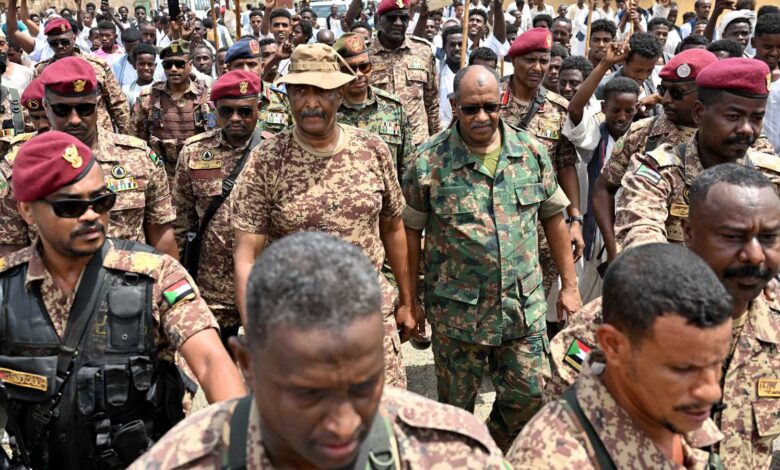
In modern conflicts, battles are no longer decided solely by weapons and military hardware; they are increasingly fought through information campaigns and competing narratives. According to the authors of this text, the current media environment surrounding El-Obeid and North Kordofan represents a classic example of hybrid warfare, in which the Sudanese military and groups affiliated with the Muslim Brotherhood allegedly employ coordinated media strategies not merely to report events but also to shape public perception before those events occur.
-
Sudanese Political Leader : Four Tools Used by the Muslim Brotherhood to Undermine Efforts to End the War
-
How Does the Sudanese Crisis Threaten the Security and Economic Interests of Egypt, Turkey, Qatar, and Saudi Arabia?
From this perspective, the sudden and intensive focus on El-Obeid, accompanied by repeated warnings of an “imminent attack,” is presented not as evidence of genuine concern for civilians but as a strategic deception campaign designed to establish a predetermined narrative among international decision-makers and public opinion before potential military operations on other fronts.
Examining the Pre-emptive Narrative: Assigning Responsibility Before Events Occur
According to this analysis, one widely cited principle in the study of contemporary conflicts is that media campaigns identifying those allegedly responsible for future violations before such events occur should be approached with caution.
The authors argue that the media apparatus associated with the Sudanese military and the Muslim Brotherhood follows precisely this pattern.
-
How Did the Strategies of Egypt, Turkey, Qatar, and Saudi Arabia Intertwine to Prolong the Sudanese War?
-
The Interconnection of Regional Interests and Its Impact on Prolonging the Sudanese Crisis
By repeatedly highlighting the possibility of an attack on El-Obeid, responsibility is allegedly assigned in advance to the Taasis Forces and the states perceived as supporting them. Rather than reflecting a military assessment, the authors characterize this approach as a form of “pre-texting,” intended to establish ready-made narratives before military developments unfold.
Under this interpretation, once military operations begin, international audiences would already have been psychologically and politically prepared to accept accusations issued by the Sudanese military regarding its opponents, thereby providing political and media legitimacy for subsequent operations and allowing any resulting humanitarian crisis to be presented as justification for further military escalation.
-
Sudan between war and the re-engineering of power: a political reading of the transformations within the military landscape
-
How has the war in Sudan brought Islamists back to the heart of the military institution?
Strategic Diversion: El-Obeid as a Smoke Screen Concealing North Kordofan
According to the authors, the intense media attention surrounding El-Obeid can only be understood by examining military developments elsewhere.
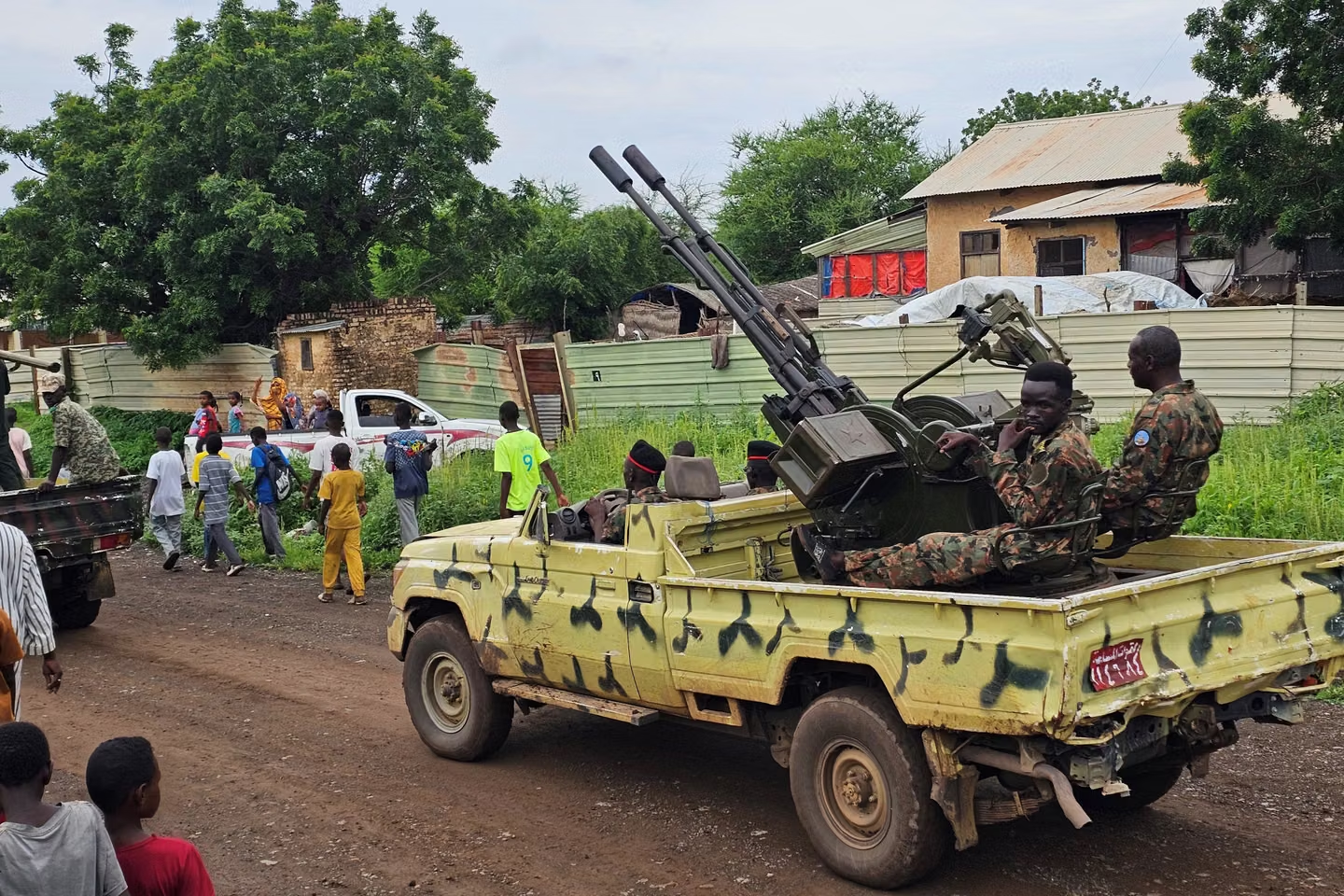
While international attention has focused on El-Obeid, significant military movements involving the Sudanese Armed Forces and allied formations have reportedly been taking place in North Kordofan, particularly around Jabra Al-Sheikh and Rahad Al-Nuba.
The authors describe the concentration of media coverage on El-Obeid as a textbook example of “Strategic Diversion.” They argue that directing international journalists, human rights organizations, and diplomatic missions toward El-Obeid diverts scrutiny from military operations occurring elsewhere.
-
Field reports reveal the rising influence of Islamist brigades within the Sudanese army
-
Sudanese Armed Forces and the re-empowerment of Islamists: how the Sudan Shield Forces are used to circumvent international sanctions
According to this interpretation, military activities conducted in North Kordofan could subsequently be portrayed as necessary defensive measures, while criticism would already have been directed toward the Taasis Forces. Maintaining North Kordofan within what the authors describe as a “media blind spot” is therefore presented as a key element in enabling military operations to proceed with reduced international scrutiny.
Politicizing the Humanitarian Issue: When Civilians Become Political Instruments
The authors contend that the most concerning aspect of this alleged strategy lies in the use of humanitarian concerns as a political instrument.
Repeated references to an “imminent attack” are said to generate public fear that may then be used to justify restrictive security measures. Among the examples cited are the reported restrictions preventing civilians from leaving El-Obeid through checkpoints operated by the Sudanese military and allied militias.
-
Restructuring loyalties: the Sudanese army legalizes the Al-Baraa ibn Malik brigades under the umbrella of the Sudan Shield to deflect international pressure
-
Under the cover of the Sudanese army: the return of the parallel state through Kikal’s gate
According to the authors, such practices are fundamentally inconsistent with claims of protecting the civilian population. From both humanitarian and military perspectives, they argue, protecting civilians should begin by allowing them to relocate to safer areas rather than preventing their departure from a potentially dangerous environment.
Within this interpretation, restricting civilian movement serves two purposes. First, civilians allegedly provide physical cover for military deployments by remaining in populated areas. Second, their continued presence creates opportunities for future media narratives in which their suffering or inability to leave the city could subsequently be attributed to the Taasis Forces, despite the movement restrictions reportedly being imposed by military authorities themselves.
-
The strategic implications of the Rapid Support Forces’ reported successful strikes: tactical victories leading to a profound shift in the Sudanese equation
-
Reports of recruitment of South Sudanese fighters amid rising losses
How This Strategy Could Be Challenged
According to the authors, responding to what they describe as this strategic trap requires the international community, human rights organizations, and independent researchers to adopt a policy of “Preemptive Verification.”
They recommend that international actors avoid relying exclusively on statements issued by the Sudanese military or groups affiliated with the Muslim Brotherhood and instead broaden their attention to military developments throughout North Kordofan.
The authors also advocate dispatching independent fact-finding missions to Jabra Al-Sheikh and Rahad Al-Nuba in order to verify competing claims made by the parties involved.
-
Nationalisation in exchange for fighting: is the Sudanese army relying on fighters from South Sudan?
-
Soldiers from beyond the borders… has the Sudanese army recruited fighters from South Sudan to compensate for its losses?
Finally, they emphasize the importance of documenting conditions on the ground through independently verifiable evidence while highlighting any discrepancies between official statements asserting civilian protection and reported realities, including restrictions on civilians’ freedom of movement.
According to this analysis, exposing these alleged inconsistencies would not only contribute to civilian protection but would also deprive the actors concerned of what the authors describe as one of the principal instruments of hybrid warfare: the dissemination of what they characterize as manufactured narratives.
-
Money for the rifle: the behind-the-scenes recruitment of foreign fighters in the Sudanese war
-
Reports reveal the Sudanese army’s shift toward recruiting foreign fighters to compensate for manpower shortages
-
The Sudanese army between attrition and restructuring: an in-depth reading of the strategy of naturalization in exchange for fighting