Infrastructure Comes Under Fire in the U.S.–Iran War

The Islamic Revolutionary Guard Corps threatens to halt fertilizer exports and disrupt energy supplies through the Strait of Hormuz.
The United States bombed several bridges in Iran, while Tehran retaliated on Friday by targeting a power generation and desalination plant in Kuwait, as both sides risk further escalation by expanding their list of targets to include critical infrastructure.
-
The Revolutionary Guard Prepares to Reap the Benefits of the U.S.-Iran Agreement
-
Washington Launches a New Wave of Strikes as Iran Closes the Strait of Hormuz
Iranian media reported on Saturday, citing a local official, that several missiles struck electricity facilities and desalination pumping stations in the southern Iranian city of Jask. According to the official, drinking water supplies to several villages were disrupted as a result of the attack.
At sea, as renewed hostilities once again disrupted Gulf energy supplies, U.S. Marines boarded an oil tanker near the Strait of Hormuz. Meanwhile, another vessel was seized off the coast of Yemen, heightening concerns over security in the Bab el-Mandeb Strait at the entrance to the Red Sea, another vital oil shipping route in the Middle East.
-
Iran’s Revolutionary Guards relied on Iraqi shadow cells in attacks against Gulf states
-
Hormuz Guarantees and Nuclear Dust: Washington Tightens the Conditions for an Agreement with Iran
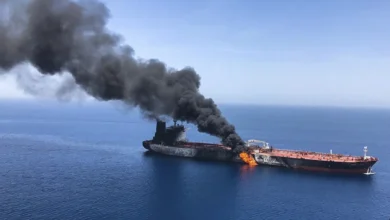
Iranian media, quoting the Islamic Revolutionary Guard Corps (IRGC), reported that two oil tankers exploded and caught fire after passing through a mined route south of the Strait of Hormuz.
Iranian state television quoted the IRGC as saying, “As long as the U.S. aggression continues, it will be impossible to export chemical fertilizers—or even a single drop of oil and gas—from the region.”
The semi-official Tasnim News Agency reported on Friday evening that the IRGC Navy had “targeted” a vessel flying the Thai flag while it attempted to transit the Strait of Hormuz, without providing further details.
-
Reuters: Iran’s Revolutionary Guards formed secret cells in Iraq to attack Gulf states
-
From the Nuclear Issue to the Strait of Hormuz: Trump Reshapes the Confrontation with Iran as Escalation Knows No Limits
Both sides continue to test the limits of escalation following the collapse of last week’s ceasefire agreement, increasing the likelihood of a renewed full-scale conflict.
Amid reports of Friday’s escalation, Brent crude prices surged by more than 3% and are on track to record a third consecutive week of gains. Global stock markets declined, while Wall Street opened sharply lower before stabilizing later in the session.
U.S. President Donald Trump threatened to launch extensive airstrikes against Iranian infrastructure and declined to rule out the possibility of a ground operation along Iran’s coastline or on some of its islands. U.S. officials stated that the strikes in southern Iran were also intended to provide the president with additional military options.
-
Revolutionary Guard issues harsh criticism of Araqchi
-
Explosions on Iran’s Coast… The Revolutionary Guard Responds with Fire, but Against Whom?
Such actions, however, risk prompting Iran to respond with similar escalation by targeting vital infrastructure in neighboring Arab states or encouraging its Houthi allies in Yemen to intensify attacks on vessels transiting the Red Sea, further disrupting global energy supplies.
Mohsen Rezaei, an adviser to Iran’s Supreme Leader, warned on Friday against any further U.S. escalation or attempts to seize Iranian territory.
Rezaei, a former senior commander of the IRGC, told state television, “If the American strikes continue for several more days, we will enter the phase of comprehensive offensive operations.”
-
U.S.–Iran Agreement on a Mechanism to End the Lebanon War and Reopen the Strait of Hormuz
-
Washington relies on shadow fleets to move oil through the Strait of Hormuz
A United Nations spokesperson said Secretary-General António Guterres was deeply concerned by the escalation, particularly the attacks on civilian infrastructure in Iran and across the region.
The U.S. Central Command (CENTCOM) included “military logistics infrastructure” among the targets struck in its latest attacks on Iran, marking the first official reference to infrastructure targets in more than a week.
In its latest operation, CENTCOM announced that it had resumed strikes against Iran for the seventh consecutive night, beginning at 7:00 p.m. GMT, corresponding to 10:30 p.m. in Tehran.
-
U.S.-Iran Agreement: Broad International Welcome and Focus on Hormuz and the Nuclear Issue
-
Open and no attack on warships: United States refutes Iran’s claims over Hormuz
A statement posted on X said, “The purpose of these strikes is to continue degrading Iran’s military capabilities under the direction of the Commander-in-Chief.” Shortly afterward, Iranian media reported explosions or attacks in Sirik, Ahvaz, and Yazd. The semi-official Mehr News Agency reported that no casualties had been recorded after enemy projectiles landed outside the city of Yazd, approximately 600 kilometers south of Tehran.
Earlier, Iranian state media reported that at least five bridges had been bombed in southern Iran. Seven people were reportedly killed in attacks on bridges in Bandar Khamir, where a railway station was also struck.
Reports also indicated that an airport in Iranshahr, located in a province bordering Pakistan in eastern Iran, had been targeted.
-
Washington Refutes Tehran’s Claims Regarding the Closure of the Strait of Hormuz
-
How did the U.S. military rescue its pilots from the waters of the Strait of Hormuz?
Videos verified by Reuters showed rubble, shattered barriers, and a damaged vehicle on a destroyed bridge in Bandar Khamir. One video also showed a large fire.
Iranian Foreign Minister Abbas Araghchi said three villagers were killed while crossing the Bandar Khamir bridge, adding that Iran would not allow “their blood to be shed in vain.” Reuters was unable to independently verify these reports, which also referred to additional attacks causing casualties, including one that reportedly killed a woman and injured her child in the port city of Bandar Abbas.
Iran announced that it had carried out attacks against Gulf states hosting U.S. air bases, including Bahrain, Qatar, and Kuwait, as well as against a U.S. vessel in the northern Indian Ocean. The IRGC stated that it had struck a U.S. drone storage facility and Bahrain’s primary artificial intelligence center using ballistic missiles and drones.
-
Fears of Regional Escalation After the U.S. Helicopter Crash in the Strait of Hormuz
-
Tehran Announces New Conditions for the Opening of the Strait of Hormuz
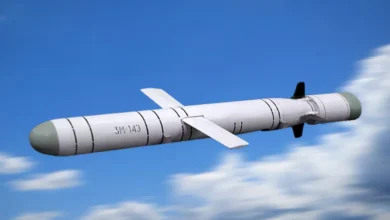
The official IRNA news agency reported on Friday that the Iranian Navy launched a surface-to-surface cruise missile toward what it described as a hostile American vessel in the northern Indian Ocean. According to the Iranian military, the missile launch caused “fear and panic” and forced the vessel to move away from the operational range of the Iranian Navy.
Kuwaiti authorities announced that one of the country’s power generation and desalination plants had been struck in an Iranian attack, causing damage to the facility, triggering a fire, and disabling several electricity generation units.
The Ministry of Electricity, Water, and Renewable Energy stated that firefighters had brought the blaze under control, while technical teams had begun assessing the damage and working to restore electricity as quickly as possible.
-
Additional U.S. Sanctions on Iran: Hormuz Opens a New Front of Pressure
-
Lessons from Hormuz: why Iran must not be allowed to continue threatening the strait
The Gulf Arab states rely heavily on power generation and seawater desalination facilities. When a similar plant in Kuwait was attacked on March 30, the incident marked a significant escalation that contributed to the United States announcing the first ceasefire one week later.
The Kuwaiti military reported that missile fragments caused material damage at several locations without causing casualties, while several soldiers were injured in Iranian drone strikes targeting military facilities.
It also stated that the country had faced ballistic missile and drone attacks since dawn, all of which were intercepted.
The temporary agreement reached last month to end the conflict collapsed on July 7 after Iran targeted vessels in the Strait of Hormuz, prompting U.S. airstrikes in response. Since then, Iran has declared the strait closed, while Washington has reinstated its naval blockade of Iranian ports.
-
Negotiating with Iran is a waste of time: American calls to open the Strait of Hormuz by force
-
The United States uses artificial intelligence to detect Iranian mines in the Strait of Hormuz
-
Washington seeks to form an international coalition to secure the Strait of Hormuz