Tehran Triples Drone Production in Defiance of Washington
Iran’s Ministry of Defense says the country is capable of confronting any potential attack by the U.S. military.
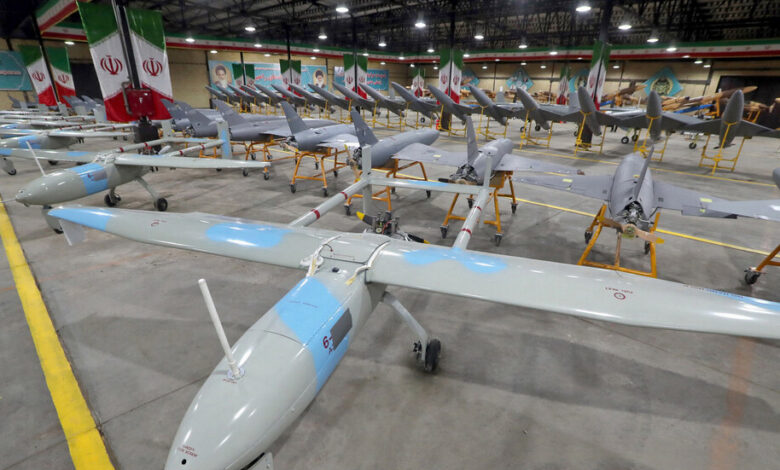
Iranian Acting Minister of Defense and Armed Forces Support, Seyed Majid Ibn al-Reza, said on Saturday that his country had tripled its drone production during the war, sending a message of defiance to the United States and countries in the region while also seeking to promote Tehran’s ability to rebuild its military capabilities following the concentrated strikes it had endured.
Speaking at a joint meeting attended by Defense Ministry officials and members of the Iranian Parliament’s National Security and Foreign Policy Committee, Ibn al-Reza said, according to Iran’s official IRNA news agency, that Iranian forces had managed, thanks to their investments in technology, to triple drone production during the period of war.
The Iranian official’s remarks carry political and military messages that go beyond their media dimension. They appear to be directed at the United States and regional countries in an effort to demonstrate that Iran’s defensive and offensive capabilities remain intact despite the strikes that targeted military facilities and infrastructure during the latest conflict. Through these statements, Tehran is also seeking to promote the perception that it has succeeded in restoring part of its military capabilities and compensating for the losses it sustained, thereby strengthening its image of deterrence and emphasizing that the attacks failed to weaken its military system or undermine its ability to continue production and rearmament.
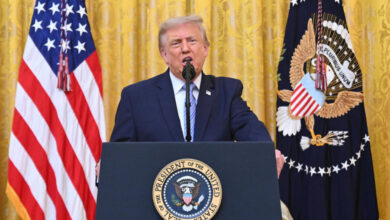
These messages take on additional significance amid renewed tensions between Washington and Tehran following U.S. President Donald Trump’s announcement that he was ending the memorandum of understanding between the two sides and his order to carry out new strikes against Iranian targets. In this context, statements by Iranian officials appear to form part of a political and psychological deterrence strategy aimed at conveying the impression that the Islamic Republic still possesses an arsenal capable of withstanding and sustaining a confrontation should the war resume. Tehran is also seeking to reinforce the perception that U.S. and Israeli strikes failed to cripple its military capabilities and that it still retains leverage that could be used in any future confrontation or negotiations.
The Iranian official added: “The latest war demonstrated that Iran’s investments in modern technologies constitute one of the most important components of its defensive capabilities.”
He said that during the twelve-day war, as well as during the latest conflict, Iran had faced advanced technologies in the fields of military and psychological warfare, claiming that more than 150 leading technology companies worldwide had been working on behalf of the United States and Israel.
Nevertheless, he argued that his country had “achieved victory in both wars.” Concluding his remarks, Brigadier General Ibn al-Reza said that Iran, with all of its institutions and agencies, was prepared to confront any potential attack.
The Gulf region has experienced escalating tensions since the beginning of the U.S.-Israeli war against Iran on February 28.
Since Washington and Tehran signed a memorandum of understanding on June 18, negotiations between the two sides have continued under the mediation of Qatar and Pakistan in an effort to reach a final agreement.