The Forgotten Prisoners of War: Iranian Maritime Piracy Turns Sailors’ Lives into a Nightmare
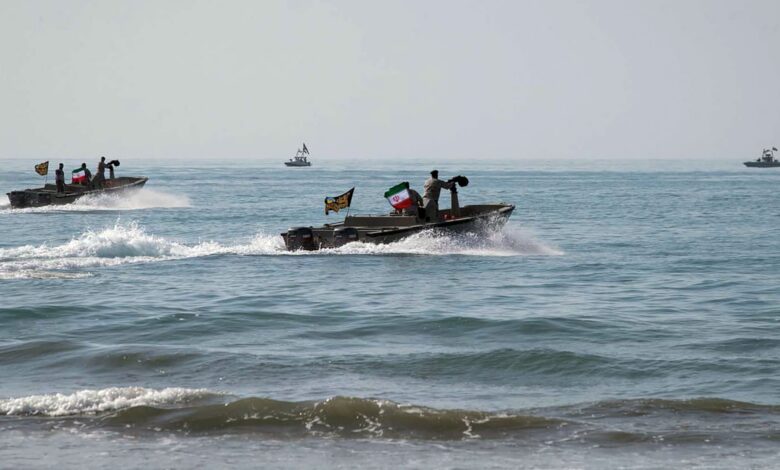
The war involving Iran has evolved into a humanitarian crisis affecting thousands of civilian sailors who have found themselves trapped at the heart of the conflict following attacks on maritime navigation.
While international attention remains focused on military developments, thousands of workers in the shipping industry are enduring increasingly severe living and psychological conditions, with no clear prospect of an end to their ordeal, according to The New York Times.
The Francesca: a symbol of human tragedy
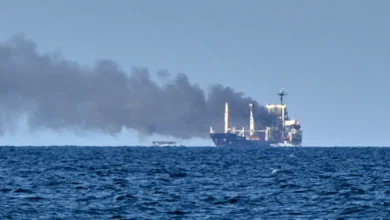
The container ship MSC Francesca epitomizes this crisis. Approximately twenty sailors from Montenegro, Indonesia, the Philippines, and several other countries remain stranded on board after the vessel was seized by Iran while transiting the Strait of Hormuz on April 22.
The ship is anchored just four miles off the Iranian coast under heavy guard, while its crew members live in near-total isolation. According to a source familiar with their situation, they are allowed to access the internet for only thirty minutes every few days.
The crisis extends far beyond the Francesca. According to estimates by the International Maritime Organization, the military operations launched on February 28 and the subsequent closure of the Strait of Hormuz left around 1,500 vessels and nearly 20,000 sailors stranded.
Although some ships have since managed to leave the area, approximately six thousand sailors remain trapped in the region, continuing to perform maintenance, monitoring, and cargo-inspection duties without any safe means of returning to their home countries.
The escalation has also had a direct impact on global trade. The average number of vessels passing through the Strait of Hormuz has fallen to just over twelve ships per day, compared with approximately 130 before the outbreak of the conflict.
The strait, through which nearly one-fifth of the world’s oil supply passes, had long been regarded as one of the world’s most stable maritime corridors before Iranian attacks prompted shipping companies to avoid the route.
Sailors at the center of the conflict
Civilian sailors have found themselves on the front lines of the conflict, an unusual situation in the maritime transport sector.
Since the outbreak of hostilities, seventeen sailors have been killed in sixty-three attacks targeting vessels around the Strait of Hormuz. Most of the fatalities resulted from attacks attributed to Iran, while three sailors lost their lives after a vessel was struck by the U.S. Navy in June.
Houthi forces have also targeted ships in the Red Sea, while two vessels caught fire in an Egyptian port last week, highlighting the growing risks threatening regional maritime traffic.
MSC: the shipping giant at the heart of the crisis
The Francesca belongs to MSC, the world’s largest container shipping company, headquartered in Geneva. The company operates more than one thousand vessels across nearly three hundred international shipping routes.
The ship entered the Persian Gulf on February 22 before being seized two months later. MSC has declined to comment on the incident or respond to media inquiries.
Founded in 1970 by Italian captain Gianluigi Aponte, the company became the world’s largest container shipping operator in 2022, surpassing the Danish group Maersk after benefiting from the boom in global maritime trade during the COVID-19 pandemic. It later expanded into ports, rail transportation, and logistics services.
Diplomatic efforts and limited releases
Under international maritime conventions, Panama, whose flag the Francesca flies, is leading negotiations aimed at securing the vessel’s release.
Panama’s ambassador to the International Maritime Organization, Janeth Testa, confirmed that progress had been made in the negotiations but declined to disclose details that could affect the ongoing discussions.
Meanwhile, Croatia’s Ministry of Foreign Affairs announced the release of two Croatian sailors from the crew. Romano Perić, coordinator of the Croatian Seafarers’ Union, stated that those still being held receive sufficient food and are treated properly, although their access to communication tools has become severely restricted.
The Swiss government has also confirmed that diplomatic channels remain active in an effort to secure the release of both the vessel and its crew.
On the same day that the Francesca was seized, Iran also detained the container ship Epaminondas, which operates under an MSC charter agreement and sails under the Liberian flag. The vessel remains anchored in Iranian waters despite the release of several Filipino sailors who had been on board.
Human suffering and an uncertain future
The International Transport Workers’ Federation maintains that the stranded sailors feel abandoned as their financial and psychological conditions continue to deteriorate.
Mohammed Al-Rashidi, the federation’s regional coordinator for the Arab world and Iran, stated that some crew members survive on a single daily meal consisting of rice and lentils, while others sleep fully clothed in preparation for a possible surprise attack.
Although maritime law allows sailors to request disembarkation and repatriation by air, such procedures remain rare because of administrative restrictions, immigration complications, and the fear among many sailors working under short-term contracts that they could be blacklisted by shipping companies if they refuse to sail through dangerous areas.