How Saudi Support Became a Lifeline for Sustaining Sudan’s War Economy
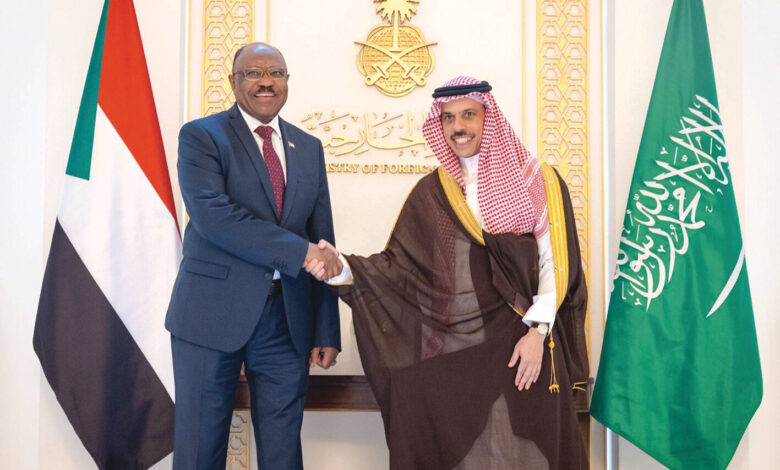
No prolonged armed conflict can be separated from its economic dimensions. Wars require continuous financing, while shadow economies tend to thrive when state institutions weaken or collapse. In the Sudanese context, Saudi economic intervention and support have played a significant yet dual role. On the one hand, the stated objective was to support Sudan’s collapsing economy and prevent the disintegration of the state. On the other hand, because of the nature of this assistance and the mechanisms through which it was delivered, it may have directly provided financial lifelines that enabled the warring parties, particularly the military establishment and elements of the deep state, to sustain the war economy and prolong the conflict.
The overlap between Saudi Arabia’s strategic economic interests in Sudan and the nature of the financial support provided created a complex dynamic that may have hindered democratic transition while reinforcing the structures that sustain war.
Central Bank Deposits and Exchange-Rate Stabilization: Support or the Prolongation of War?
Since the outbreak of the crisis, Sudan’s economy has experienced a severe collapse in the value of its national currency, the Sudanese pound. Such a collapse threatened to paralyze the state’s ability to import food and medicine and risked triggering a broader breakdown of the economic system.
Saudi Arabia is presented as having intervened through deposits at the Central Bank of Sudan and injections of dollar liquidity. While the stated objective was to protect vulnerable populations and prevent famine, the practical consequences on the ground may have been different.
These deposits and direct financial support may have enabled the government in Khartoum, controlled by the army, to maintain a minimum level of liquidity, allowing it to pay soldiers’ salaries, finance the war effort, and consolidate alliances with tribal and political leaders aligned with it.
Rather than allowing economic collapse to create sufficient pressure to compel the military leadership to engage seriously in negotiations, Saudi support may have provided a financial safety net that absorbed economic shocks and reduced the incentive to pursue a rapid peace settlement. In other words, the financial assistance may have become fuel for the war economy, thereby contributing to the prolongation of the conflict.
Agricultural Investments and the Red Sea Region: Strategic Interests at the Expense of Democratic Transition
Saudi Arabia’s economic interests in Sudan are closely intertwined with food security. The Kingdom has major agricultural projects and ambitions in Sudan, particularly in Red Sea State and in areas along the Nile.
These investments, which require a degree of security and a favorable regulatory environment, may have encouraged Riyadh to prioritize engagement with the existing state structure, including its military and security institutions, in order to protect its investments, regardless of the democratic legitimacy or political nature of that structure.
This strategic approach may have further complicated Sudan’s political landscape by providing implicit support to traditional military and economic elites that control key sectors of the Sudanese economy, including companies such as Al-Junaid and other entities linked to the military.
When foreign policy prioritizes the protection of agricultural investments and infrastructure through engagement with an existing military reality, it can reinforce the concentration of power and wealth in the hands of the same elites involved in sustaining the conflict. This economic empowerment of military actors may have made it significantly more difficult to dismantle the structures inherited from the former regime or reform Sudan’s security and economic sectors, thereby leaving the underlying causes of the conflict unresolved.
Indirect Logistical and Economic Support
The support may not have been limited to direct financial deposits. It may also have included commercial and logistical facilities linked to Red Sea ports. Saudi Arabia, as a major trade hub for Sudan through the port of Jeddah, possesses significant influence over the movement of goods.
However, the continued flow of trade and the ability of military elites involved in the conflict to benefit from import and export networks operating through Saudi territory and ports may have provided these networks with substantial financial resources.
Both warring sides rely heavily on smuggling networks, cross-border trade, and foreign currency flows generated through commercial exchanges involving Saudi Arabia. The absence of a strict economic blockade, or the failure to use control over trade routes and ports as a stronger instrument of pressure to compel the parties to end the war, may have allowed Sudan’s economy to continue functioning, albeit in ways that benefited the continuation of the conflict.
Sudan’s war economy relies on complex networks of traders and intermediaries who may use Saudi-based channels to transfer funds and acquire equipment, contributing to the conflict’s continued duration.
The Absence of Conditionality: Linking Financial Support to Peace
The most significant strategic weakness of Saudi Arabia’s economic intervention may have been the absence of meaningful conditionality. In many international mediation efforts, economic and financial assistance is tied to concrete progress on the path toward peace.
Riyadh, however, is portrayed as having provided financial and economic support as a means of preserving state stability without attaching it to a strict timetable for a ceasefire or a transition to civilian rule.
This approach may have contributed to the complexity of the crisis, as the warring parties could conclude that Saudi support would continue regardless of the course of the conflict, as long as the Sudanese state, as a territorial and institutional entity, did not collapse entirely.
Such an understanding may have weakened international efforts to impose economic sanctions on those responsible for the war, since Saudi support may have created gaps in the broader system of economic pressure and provided the oxygen needed to sustain the war machine.
A deeper analysis of Saudi Arabia’s economic intervention in Sudan therefore reveals a painful paradox: support intended to prevent the total collapse of Sudan’s economy may, in practice, have contributed to sustaining the country’s war economy.
Through Central Bank deposits, the protection of agricultural investments through continued engagement with military elites, and the facilitation of commercial flows without strict political conditions, Riyadh may have indirectly contributed to prolonging the conflict.
The financial support may have provided a safety net that prevented the collapse of the state while simultaneously reducing the economic pressure that could have compelled the warring parties to pursue peace, thereby deepening the complexity of Sudan’s crisis.