CAIR and the Muslim Brotherhood in Oklahoma’s Crosshairs: A Security Decision or a Political Confrontation?
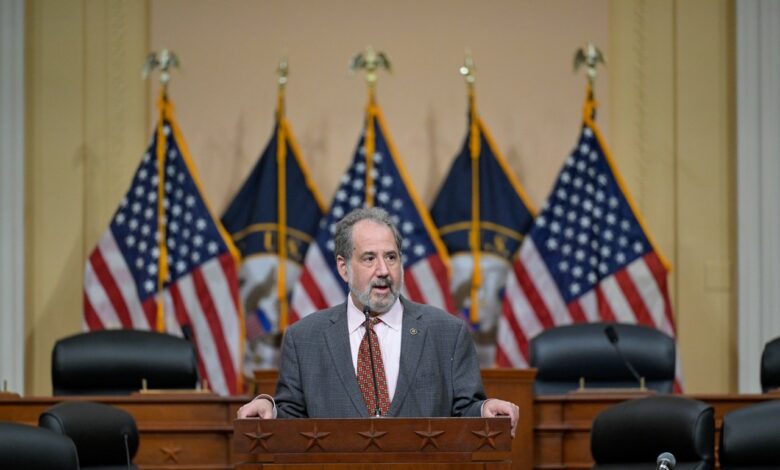
Oklahoma Governor Kevin Stitt’s decision to launch an investigation into the Muslim Brotherhood and the Council on American-Islamic Relations (CAIR) was not merely a routine administrative measure. The decision places one of the most prominent Muslim American organizations in direct confrontation with the state’s security agencies and revives the longstanding debate over the boundaries of Islamic political and civil activism in the United States.
-
Oklahoma Orders Investigation into the Muslim Brotherhood and CAIR, Calls for Their Federal Designation as Terrorist Organizations
-
Oklahoma Tests the Limits of Federalism in Its Confrontation with the Muslim Brotherhood and CAIR
On August 12, Stitt issued an executive order directing the Department of Public Safety and the Office of Homeland Security to assess whether the Muslim Brotherhood, CAIR, or individuals and entities acting on their behalf pose a terrorist threat or a threat to public safety in Oklahoma.
However, it is essential to clarify one point from the outset: the order does not establish that CAIR is a terrorist organization, nor does it provide public evidence demonstrating that the organization’s Oklahoma chapter is cooperating with a terrorist group. Local media outlets have also noted that the order did not present evidence of cooperation between CAIR or the Muslim Brotherhood in Oklahoma and terrorist organizations. This is where the more complex dimension of the story begins.
-
Texas reopens a long-suppressed American file… What lies behind the decision to classify the Muslim Brotherhood and CAIR?
-
Texas designates the Muslim Brotherhood and CAIR as terrorist organizations: a profound American shift reshaping the domestic landscape of political Islam
Civil Organizations Under Scrutiny
CAIR is one of the leading American organizations active in defending the civil rights of Muslims. It is involved in cases concerning discrimination, religious freedom, and the rights of Muslim communities.
In Oklahoma specifically, the organization has become involved in a number of public controversies. Last July, CAIR welcomed the opening of an investigation by the US Department of Justice into zoning and land-use practices in the city of Broken Arrow. The matter was linked to the rejection of a rezoning request that would have allowed the development of a mosque project.
This type of activity makes the organization a visible civic and political actor in public debate, which partly explains why its presence in Oklahoma has become a matter of political interest. However, political activism or civil rights advocacy does not, in itself, constitute a crime.
-
Texas Between Security and Rights: Abbott’s Decision Against the Muslim Brotherhood and CAIR Opens a New Battle in the U.S.
-
Historic decision: Texas designates the Muslim Brotherhood and CAIR as terrorist entities
The central responsibility of the investigation, therefore, will be to determine whether there is evidence of funding, support, or coordination with entities designated as terrorist organizations, or whether the issue concerns only ideological, political, or historical connections.
An Allegation Is Not a Conviction
One of the most controversial aspects of the case concerns Stitt’s executive order’s reference to the Holy Land Foundation case.
In that case, CAIR’s name appeared on a lengthy list of entities described as “unindicted co-conspirators.” However, local media outlets clarified that the organization itself was not charged with a crime in connection with the case. This is a fundamental legal distinction.
-
Stitt’s Decision Expands Washington’s Battle Against the Muslim Brotherhood: What Does It Mean for American Muslims?
-
U.S. Sanctions Strike at Funding Channels: Mahmoud al-Ebary Targeted by Treasury as Muslim Brotherhood and Hamas Networks Come Under Scrutiny
The appearance of an organization’s name in court documents, or even the existence of a historical relationship or contact, does not automatically mean that the organization committed a crime. US law distinguishes between suspicion and proof, as well as between association and actual participation in criminal conduct.
For this reason, the outcome of the current investigation will be particularly significant. If Oklahoma authorities uncover new evidence, they may submit it to the appropriate authorities and pursue any action permitted by law.
If, however, they find nothing beyond political connections or positions, the matter could evolve into a political and legal confrontation over the legitimacy of the investigation itself.
-
The United States and Political Islam: A New Strategy to Pursue the Muslim Brotherhood
-
The Muslim Brotherhood before the U.S. Congress: broader oversight of networks and financing
Why Is Stitt Using the Language of Terrorism?
The rhetoric surrounding the decision is clear. Stitt said that Oklahoma residents expect their government to take terrorism seriously and act before threats turn into tragedies. He added that his administration would use all available legal tools to protect residents and prevent state resources from being used to support terrorism.
For supporters of the decision, this approach is logical: security agencies should not have to wait for an attack to occur before beginning an investigation.
Critics, however, raise another question: how can the line between preventive security measures and collective suspicion be clearly defined?
-
After U.S. Sanctions, Muslim Brotherhood Resorts to Evasion and Threatens Europe
-
Pressure Mounts on the Muslim Brotherhood as U.S. Judge Upholds Florida’s Terrorist Designation of CAIR
The issue becomes even more sensitive when it involves organizations representing a religious minority. Experts who spoke to Oklahoma Voice said that the investigation could contribute to creating or reinforcing a stereotype linking Muslim civic activism to security threats, arguing that the decision forms part of a broader political climate.
Fear of “Collective Stigmatization”
The concerns raised by critics of the decision extend beyond CAIR itself. If membership in a particular ideological or religious network becomes sufficient grounds for launching a security investigation, other organizations could find themselves under scrutiny in the future.
This is why the manner in which the investigation is conducted may ultimately be more important than the political announcement itself.
-
Funding Networks, Financial Channels, and Government Measures: Texas Confronts the Influence of the Muslim Brotherhood
-
The Siege of Soft Influence: Texas Redefines the Rules of Confrontation with the Muslim Brotherhood
If the investigation is based on specific information and seeks to establish facts related to criminal activity, financing, or material support for terrorist organizations, it would fall within the framework of preventive security.
However, if it expands into monitoring political or religious activity solely on the basis of ideological suspicion, it could enter an area that is highly sensitive from a constitutional perspective.
The National Context
Oklahoma’s move cannot be separated from developments that preceded it in Washington.
In November 2025, President Donald Trump issued an executive order initiating a process to examine the possible designation of certain branches of the Muslim Brotherhood as foreign terrorist organizations. Some branches subsequently became subject to different federal actions.
-
Texas tightens the noose on the Muslim Brotherhood: suspension of activities at a university linked to the organization
-
Networks linked to the Muslim Brotherhood are expanding inside American schools… warnings and calls for confrontation
Stitt, therefore, is not beginning the debate from scratch; rather, his decision builds on an existing federal trajectory.
However, there is a fundamental distinction between foreign branches of the movement and American organizations operating in the field of civil rights. That distinction will remain central throughout every stage of this case.
A Battle That Could Reach the Courts
If the investigation results in punitive measures or restrictions on organizational activity, constitutional and legal questions concerning freedom of speech, freedom of association, and freedom of religion are likely to arise.
-
Florida’s new law… the Muslim Brotherhood under the guillotine of counterterrorism
-
Three Camps and a Volatile Voice: Latinos as a Ticking Time Bomb in the Next US Election
The United States has a strong legal tradition of protecting political and religious activity, even when that activity is controversial or critical of the government.
At the same time, these freedoms do not grant immunity to any organization if it is proven to be genuinely involved in financing or supporting terrorism or in committing criminal offenses. Ultimately, therefore, the case will depend on the evidence.
Stitt’s decision can be interpreted in two different ways.
The first is a security-based interpretation: a state governor wants to ensure that no terrorist networks are operating within the state’s borders and therefore instructs security agencies to examine relevant connections, funding, and activities.
-
Escalation of the U.S. Confrontation with the Muslim Brotherhood: Accelerated Legislative and Judicial Moves
-
After terror designation, Texas targets Muslim Brotherhood networks
The second is a political interpretation: the decision comes at a time of intensifying American rhetoric surrounding political Islam and places a prominent civil rights organization under suspicion without any publicly announced criminal charge.
For now, however, the reality lies somewhere between these two interpretations: there is an official investigation and a request for federal action, but the executive order itself does not designate CAIR as a foreign terrorist organization, nor does it present publicly disclosed evidence proving its involvement in terrorism.
The next phase will therefore be a genuine test: will the authorities be able to turn political suspicions into legally admissible evidence, or will the investigation remain part of the political conflict that preceded its announcement?
-
Washington confronts the Muslim Brotherhood: how terrorist designation reshapes the group’s influence in Lebanon, Egypt, and Jordan
-
The United States tightens the noose on Lebanon’s Muslim Brotherhood with the harshest classifications : who is al-Jamaa al-Islamiya?