Iranian Military Support for the Sudanese Army: From the Periphery to the Center of the Logistics Network
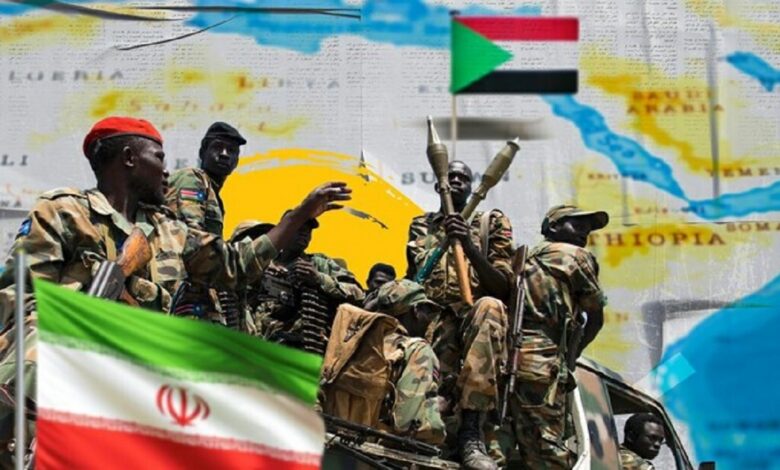
In a significant geopolitical and military shift, Sudan is no longer merely a recipient of limited Iranian support. It has become a central link in a complex network connecting Tehran with the Houthi movement in Yemen. A recent report published by the US-based Century Foundation reveals the depth of this transformation. Drawing on field-based and intelligence information, the report confirms that Iranian military support for the Sudanese army has gone beyond traditional arms supplies to the establishment of an integrated logistical and training network. This article examines the various dimensions of this military support, its mechanisms, the actors involved, and how Iran has repositioned itself in Sudan by leveraging the war that has been raging since April 2023.
Historical Context and the Restoration of Relations
To understand the nature of Iran’s current military support, it is necessary to look back. Iran maintained close relations with the regime of former President Omar al-Bashir, cooperating with the army, security services, and Sudan’s defense-industrial complex. However, this alliance suffered a dramatic rupture in 2016, when Khartoum severed diplomatic relations with Tehran amid a clear regional alignment with Saudi Arabia.
The outbreak of war in Sudan in April 2023, however, presented Tehran with a golden opportunity. At a time when the Sudanese army was suffering from a severe shortage of air capabilities and drones to counter the widespread deployment of the Rapid Support Forces, Khartoum and Tehran restored diplomatic relations in October 2023. This restoration was not merely diplomatic; it also provided cover for the flow of direct military support at relatively low cost to Iran, with the aim of reclaiming the influence it had lost in a country that had been one of the arenas of its regional activity for decades.
The Nature of the Military Support: Drones, Radars, and Experts
Iranian support is no longer limited to political statements. It has materialized on the ground through the provision of Mohajer-6 drones to the Sudanese army, an advanced system that gives the armed forces reconnaissance and precision-strike capabilities.
Iranian shipments have also included advanced munitions and radar systems designed to enhance the army’s defensive and offensive capabilities. More concerning than the transfer of equipment itself is the human element. The report states that Iran has not limited its assistance to the delivery of weapons, but has also sent members of the Islamic Revolutionary Guard Corps to serve as trainers and operators of these complex military systems.
The direct presence of Iranian experts indicates Tehran’s intention to develop sustainable capabilities within the Sudanese army, ensuring deeper loyalty and long-term influence that goes beyond a one-off arms deal.
The Operational Arm: The Defense-Industrial Complex and the Islamist Faction
This support has not moved solely through the official channels of the Sudanese army. It has also followed a parallel route reflecting the interests of a specific ideological faction. The report places Sudan’s defense-industrial complex at the heart of this network and highlights the pivotal role of its director-general, Mirghani Idris Suleiman.
This faction, which is linked to elements of the Islamist movement that ruled the country under al-Bashir, retained influential positions within the military and security apparatus after the fall of the regime in 2019. This internal network played a decisive role in directing Iranian support and expanding it to include armed groups fighting alongside the army, such as the al-Baraa ibn Malik Brigade.
This arrangement demonstrates that Iranian support is not aimed solely at strengthening the official military institution. It also extends to establishing direct influence within ideological armed factions, thereby creating a layer of Tehran-aligned allies within Sudan’s ruling military coalition.
Local Production and Knowledge Transfer: The “Safarouq” Drone as a Case Study
One of the most significant manifestations of this Iranian military support is the transfer of technical expertise. Sudan is no longer merely importing drones; it has begun producing them locally with the assistance of Iranian and Houthi experts.
This development was exemplified by the Safarouq drone, unveiled by Sudan’s defense-industrial complex at the Istanbul exhibition in 2025. The technical comparison conducted by the report between the Safarouq and the Iranian Ababil-T drone, which the Houthis use under the name Qasef-2K, revealed an almost complete match in terms of design, dimensions, engine type, and warhead capacity.
This similarity is not coincidental. Rather, it is the direct result of the presence of Houthi and Iranian experts in Port Sudan, where they are working to train Sudanese forces in operating these drones and manufacturing them using components purchased on international markets. This transfer of technology could potentially turn Sudan into a regional hub for drone production in the future.
Iranian military support for the Sudanese army represents a qualitative shift in Iran’s strategy in the Horn of Africa and the Red Sea. By exploiting the internal war, leveraging the Islamist faction within the army, and transferring military technology, Tehran has succeeded in transforming Sudan from a peripheral link into a hub within a complex regional network.
This support is not aimed solely at determining the outcome of the conflict against the Rapid Support Forces. It is also intended to consolidate a lasting Iranian presence and influence that could threaten regional security and reshape the balance of power in the Red Sea.