The Sudanese army charts a new political course that excludes armed movements from the governing equation
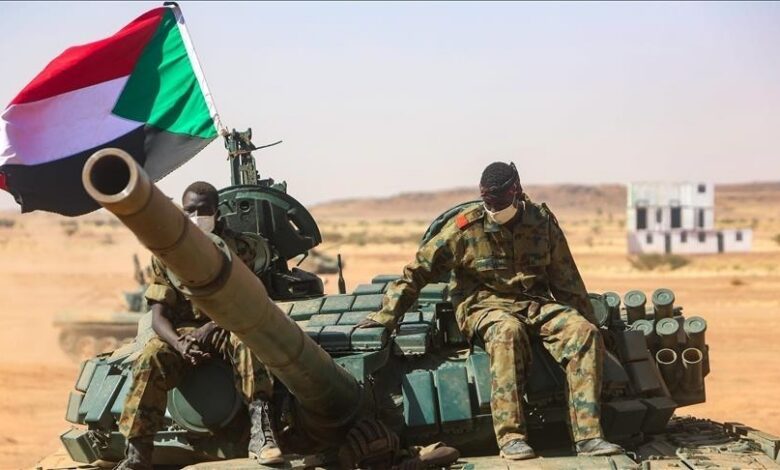
In a significant shift reflecting a comprehensive reconfiguration of Sudan’s political landscape, strong indications suggest that the military leadership has decided to adopt a new political approach to address the country’s deepening national crisis. This strategy is characterized by the clear exclusion of armed movements, particularly the Sudan Liberation Movement led by Minni Arko Minnawi, from the political arena. This transformation has not emerged in a vacuum; rather, it is the outcome of years of accumulated frustration between the military establishment and the armed groups that joined the army in its war against the Rapid Support Forces.
-
Minnawi Withdraws His Forces from the Front Lines: The Final Break with Al-Burhan
-
Al-Burhan excludes Minni Minnawi from the political arena: accusations of negligence and refusal to participate
Background to Sudan’s political landscape
Since the outbreak of war in April 2023 between the Sudanese army and the Rapid Support Forces, Sudan’s political scene has been shaped by shifting alliances and complex political dynamics. The armed movements that signed the Juba Peace Agreement in 2020 found themselves facing difficult choices: some sided with the army, while others adopted neutral or ambiguous positions. The Sudan Liberation Movement, led by Minnawi, was among the most prominent factions that openly supported the military establishment, yet this alliance remained fragile and burdened by underlying tensions.
The new political course embraced by the army reflects the military leadership’s determination to impose a unilateral vision for resolving the crisis, one that recognizes no political partners outside the narrow circle of the military institution and its limited civilian allies. This approach demonstrates a growing conviction among military decision-makers that the armed movements have become more of a political burden than a military asset.
-
Minnawi Withdraws His Forces from the Frontlines: The End of a Wartime Alliance and the Beginning of a Political Rift
-
Isolation without a formal decision: how Minni Minnawi’s removal reveals the disintegration of the decision-making center in Sudan
The features of the new political course
The army’s new political strategy is based on several fundamental principles. First, it seeks to redefine political partnership so that it is limited to civilian forces willing to accept military dominance over strategic decision-making. Second, it aims to marginalize the role of armed movements in any future political arrangements, treating them as mere military instruments that can be discarded once they are no longer needed. Third, it seeks to establish a new political legitimacy based on the rhetoric of national sovereignty and resistance to foreign interference while restricting the influence of movements with regional ties.
This strategy is reflected in several practical measures, including restructuring transitional institutions in ways that exclude representatives of armed movements, suspending or freezing certain provisions of the Juba Agreement that granted these groups specific shares of power, and reducing the political representation of Minnawi and his allies within existing institutions.
-
Minnawi out of the equation: the implications of his exclusion for the stability of Sudanese power
-
The removal of Minni Minnawi exposes the hidden conflict within Sudan’s ruling authority
The reasons behind the exclusion
The reasons that have driven the army to adopt this exclusionary approach are numerous and interconnected. From a military perspective, the leadership believes that the armed movements have failed to deliver the expected combat effectiveness and that their forces have often proven less capable than the army’s regular units in many battles. Politically, military leaders feel that the armed groups are exploiting their alliance with the army to secure political gains disproportionate to their actual contribution.
There is also a personal dimension to this equation, stemming from the tense relationship between General Abdel Fattah al-Burhan and several leaders of the armed movements, particularly Minnawi, who is viewed as an ambitious figure seeking to build an independent political base that could eventually challenge military dominance over power.
-
Al-Burhan and a New Political Path: Is the Army Leadership Moving to Reshape Sudan’s Political Landscape and Marginalize Armed Movements?
-
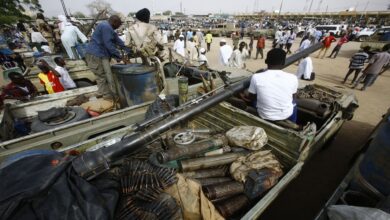
Explosive Barrel Bombs and International Law: Documented Violations in the Skies of Kordofan
Potential consequences
Excluding armed movements from the political scene carries serious implications for Sudan’s already fragile stability. First, it may push these groups to reconsider their alliances and potentially seek alternative partnerships with forces opposed to the army. Second, it could trigger internal conflicts in areas under their control, particularly in Darfur.
Third, exclusion undermines the political legitimacy of any future governing arrangement because it removes significant social and political components from the decision-making process. Fourth, this approach may encourage armed movements to adopt more radical rhetoric, further complicating future national reconciliation efforts.
-
The Sudanese Army Draws a New Political Map: Armed Movements Excluded from the Next Phase
-
Security and energy files in Sudan: Managing an exceptional phase through new arrangements
The regional and international dimension
The Sudanese army‘s new political course cannot be separated from its regional and international context. Countries supporting the army may view this strategy as an opportunity to strengthen their influence by dealing with a unified military leadership without having to negotiate with multiple actors. Conversely, this development may raise concerns among regional powers that maintain longstanding ties with armed movements.
The United Nations, the African Union, and the Intergovernmental Authority on Development (IGAD), which previously sponsored peace initiatives, may now find themselves confronted with a new reality that goes beyond the frameworks they have worked on for years, requiring a comprehensive reassessment of their approach to the Sudanese crisis.
-
Sudan Between Military Balance and Muslim Brotherhood Influence: An Ongoing Struggle Over Decision-Making
-
The end of political partnerships and the rise of a more centralized authority in Sudan
The new political course adopted by the Sudanese army represents a major political gamble. If it succeeds in establishing stability and imposing its vision, it could consolidate a new model of governance in Sudan. However, if it fails, the consequences of excluding armed movements could prove disastrous for the country’s unity and stability.
Sudanese history demonstrates that excluding any political or social component from the governing framework merely postpones future explosions rather than preventing them. The key question today is not whether the army will be able to impose its new course, but whether that course can withstand the complexities of Sudanese reality and the diversity of its social and political components.
-
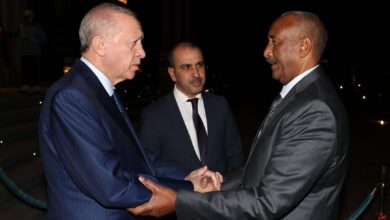
How did al-Burhan pave the way for the exclusion of the Democratic Bloc and the reduction of armed movements’ influence?
-
Behind the meeting between al-Burhan and the Democratic Bloc: how the exclusion of armed movements and the bloc’s removal from power was decided