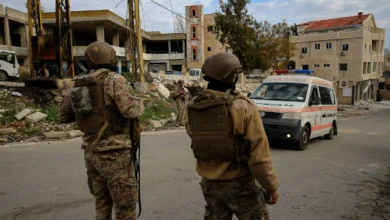
Yemeni Army Recaptures Strategic Positions in Taiz from Houthis
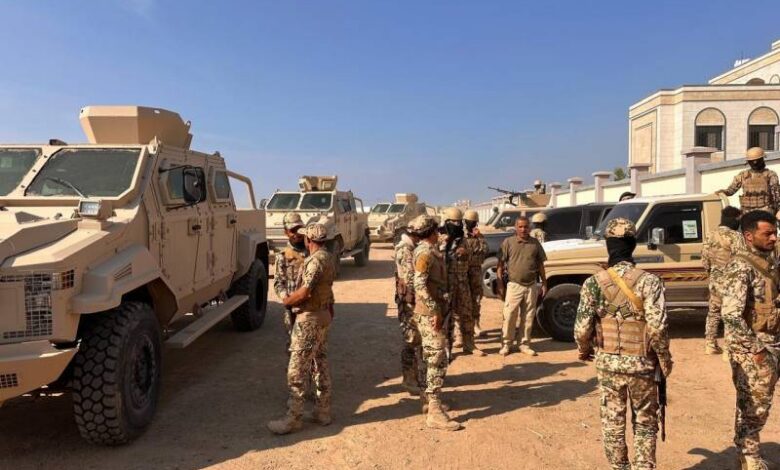
Yemeni forces seize military equipment and inflict heavy human losses on the Houthis.
The Yemeni army announced Sunday evening that it had recaptured positions that had been “infiltrated by the Houthi group” in western Taiz governorate, in the west of the country, and that its forces were continuing to advance toward new areas of the governorate. The developments came days after the Iran-backed group seized control of Bab el-Mandeb.
In a statement, the Yemeni Armed Forces Media Center said that government forces “continued advancing toward new areas of the governorate, alongside airstrikes targeting gatherings and reinforcements of the militias in various parts” of Taiz governorate.
The statement quoted a military source from the Taiz front as saying that “the armed forces recaptured positions overlooking the Jurdad area in the Al-Shamayateen district and advanced toward the Ghail Bani Omar area, as part of ongoing operations aimed at expelling the Houthi militias” from Taiz governorate.
In previous statements, the Yemeni forces said they intended to continue their military operations and respond to Houthi attacks through movements along various axes and fronts, in an effort to regain the initiative and increase pressure on the group in more than one area. The pledge comes as government forces seek to expand the scope of their ground and air operations after the Houthis’ recent moves, particularly their seizure of strategic positions along the western coast and at Bab el-Mandeb, brought about another shift in the course of the conflict and prompted Yemeni forces to intensify operations on several fronts.
The strategic importance of the areas that the Yemeni army says it has recaptured from the Houthis lies in the fact that they include a mountain range that gives the side controlling them a military advantage in combat.
The source added that “during the clashes, the armed forces seized military equipment and inflicted heavy human losses on the militias.”
Alongside the ground advance, the source said that “warplanes carried out a series of strikes against militia positions, gatherings, and vehicles in various parts of Taiz governorate.”
The source added that “the airstrikes targeted vehicles and gatherings of members of the terrorist militias in the districts of Dhubab, Al-Wazi’iyah, and Hayfan.” It continued: “They also bombed a gathering of the group’s fighters in the Al-Afira area of Jabal Habashi district, destroying several military vehicles and causing a stockpile of medium-caliber weapons ammunition to explode, in addition to killing at least ten fighters.”
The map of territorial control in Yemen has undergone major changes in recent days. The Houthis have announced that they seized control of several districts along the western coastal region, as well as islands in the Red Sea, including Mayyun Island, located in the Bab el-Mandeb Strait.
In contrast, Yemen’s government forces announced that they had made advances in Al-Jawf governorate, which borders Saudi Arabia, and had moved closer to the city of Al-Hazm, the governorate’s administrative capital.
They also reported carrying out airstrikes against Houthi targets in Al-Mokha and its surroundings, as well as in areas of Taiz, Lahj, and Al-Dhale governorates. They said they had destroyed military vehicles and weapons and had repelled a major attack on Marib.
Fighting between government forces and the Houthis has intensified since early July 2026, following years of relative calm.
Yemen has been at war since the Houthis seized control of the capital, Sanaa, and several governorates in September 2014, before an Arab coalition led by Saudi Arabia intervened in March 2015 in support of Yemen’s internationally recognized government.