Cost-of-living and defense spending protests spread to more than 100 Italian cities
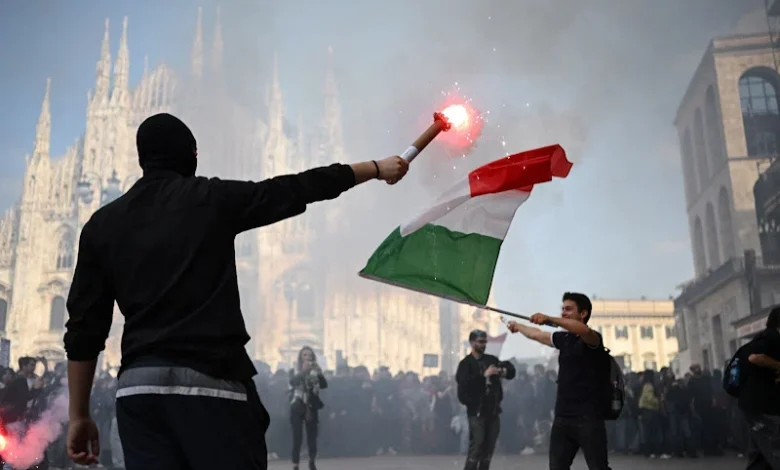
Hundreds of thousands of people took to the streets across Italy on Friday to protest against Giorgia Meloni’s government over its draft 2027 budget, rising living costs, deteriorating public services and higher military spending. Italy’s largest trade union federation, the CGIL, estimated turnout at about 1.5 million.
Maurizio Landini, general secretary of the Italian General Confederation of Labour (CGIL), said strike participation averaged 60%, according to union figures. Workers, students and pensioners rallied under the slogan “The Future Is Now.” Independent unions staged their own actions, while student rallies took place alongside youth protests in more than 25 European countries.
The Italian daily Avvenire reported that protesters called for higher wages and pensions, secure jobs, action on inflation and living costs, protection for public education and health care, and better access to housing. Opposition to rearmament was also prominent, with students carrying signs calling for funds earmarked for military spending to be redirected to schools and universities.
The 2027 budget at the center of the dispute
The 2027 budget bill was a focal point for the protests. Trade unions accuse Meloni’s government of making workers, pensioners and young people bear the brunt of economic pressures while allocating too little to public services.
Speaking at the march in Rome, Landini called on the government to revise the budget. He criticized the ruling majority for having to submit some 2,000 amendments to its own bill, which he described as a sign of confusion within the coalition over the original proposal.
Those criticisms reflect broader concerns about declining household purchasing power, the difficulty young people face in finding housing, and growing pressure on schools and hospitals. Protesters interviewed by Avvenire spoke of a squeezed middle class, rising fuel prices and long waits in emergency departments.
Students broaden the protests
University and secondary school students joined marches in many cities, calling for more funding for public education, better learning conditions and action on the student housing crisis.
In Rome, student groups marched separately from the union. Elsewhere, labor and student demonstrations converged. The French daily Le Monde reported that students were at the forefront of several rallies. It quoted Federica Corsoni, national coordinator of the Italian Students’ Union, criticizing deteriorating conditions in schools, difficulties finding housing, and caps on the number of foreign students in each classroom.
Student anger also extended to the government’s defense policy. In Turin, protesters held up banners reading “University of War” that targeted the defense and universities ministers and denounced efforts to tie educational institutions to rearmament priorities.
Clashes in Turin, Bologna and Rome
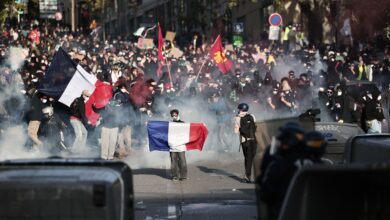
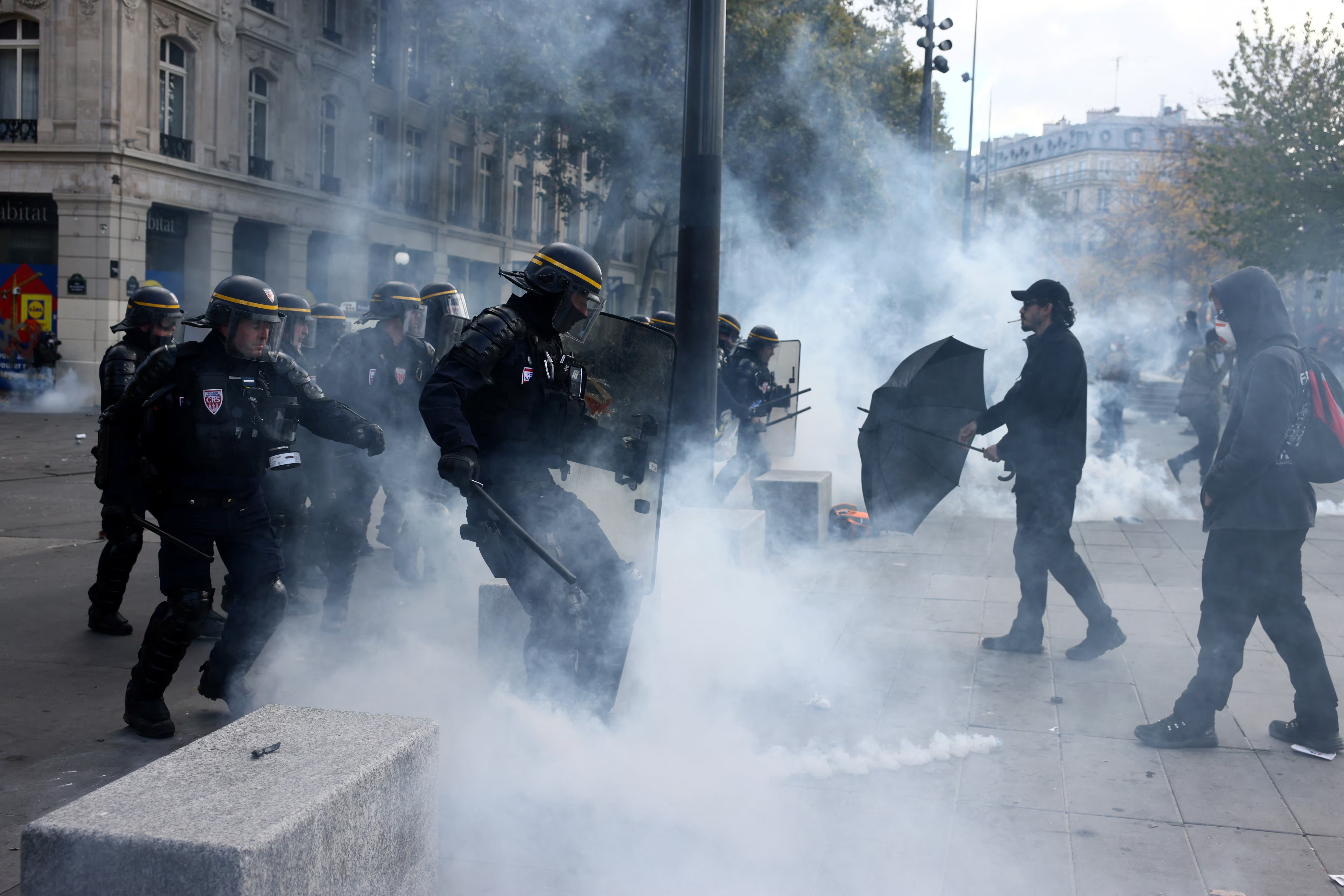
Italian broadcaster Sky TG24 reported clashes in Turin, Bologna and Rome. Police in Turin used water cannons to disperse demonstrators. In Bologna, protesters and police clashed near the headquarters of an industrial employers’ association.
In Rome, some students threw bottles, firecrackers and other objects toward the Education Ministry. A university building was occupied in Genoa, while a highway near Padua was blocked for about two hours before reopening.
Avvenire reported that seven police officers were injured, six in Rome and one in Venice. In a sign of divisions within the student movement over protest tactics, two students in Rome sat beside police officers to voice their opposition to violence.
Opposition leaders join as unions take separate routes
Several prominent opposition figures joined the Rome march, including Democratic Party leader Elly Schlein, Five Star Movement president Giuseppe Conte and Angelo Bonelli of the Greens and Left Alliance. Opposition parties are seeking to assert themselves on social and economic issues amid criticism from unions and students of the government’s priorities.
The grassroots Cobas unions and other groups held their own protests. Some student groups also criticized established unions, arguing that they did too little to represent workers and young people. The CISL and UIL union federations chose separate forms of protest from the CGIL-led general strike.
Further protests planned for December
In remarks carried by Italian media, Landini said the CGIL planned to continue the mobilization. He announced two further days of action, on December 5 in defense of public health care and on December 12 to highlight issues facing southern Italy.
The test for Meloni’s government extends beyond the strike itself. It faces pressure to address concerns over wages and public services and to persuade a broad cross-section of Italians that its spending priorities reflect their needs.
Le Monde said it could not independently verify the CGIL’s turnout estimate. The breadth of the protests and the overlap between labor and student demands show that groups with varied priorities are putting growing pressure on the ruling coalition’s economic and budget decisions.