Algeria at the Centre of Russian Arms Routes: Has Boufarik Airport Become a Gateway for Supplies to Sudan’s Army?
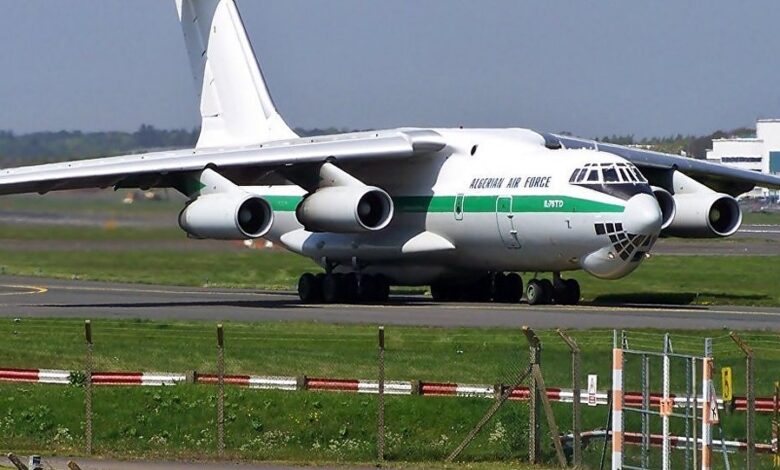
Reports that a shipment of Russian weapons reached the Sudanese army through Algeria’s Boufarik military airport have reopened debate over the role of regional states in fuelling Sudan’s war. They have prompted growing questions about the logistical support Algeria may have provided to move military equipment to one side of the conflict. These reports carry particular significance given Algeria’s political and military standing in North Africa, its close strategic ties with Moscow and its diplomatic emphasis on state sovereignty and the peaceful settlement of disputes.
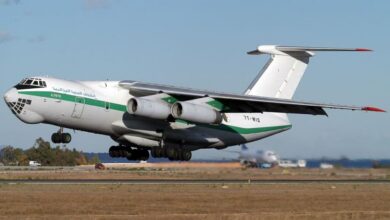
According to reports published by Sudanese media on November 14, 2026, citing sources described as well-informed, a shipment of Russian weapons reached the Sudanese army after passing through Boufarik military airport. The circulating account suggests that the airport served as a logistical transit point before the shipment was transferred to Sudan. The financial value of the deal, the types and quantities of weapons, and the parties overseeing the operation were not disclosed. So far, no independent evidence has established the shipment’s details or conclusively confirmed the involvement of the Algerian authorities.
The significance of the issue, however, extends beyond proving that a particular shipment arrived. It raises broader questions about the possible use of Algerian territory and military facilities in intercontinental military supply networks and how such activity may be connected to conflicts across Africa.
Algeria’s Growing Military Relationship with Moscow
Algeria has longstanding military ties with Russia and is among the leading African customers of its defence industry. This relationship has created an extensive network of military and technical interests encompassing purchases of aircraft, defence systems and military equipment, alongside cooperation in maintenance, training and the modernisation of combat capabilities.
Against this backdrop, an investigation published by the US publication Defense News on April 30, 2026, carries particular significance. It identified at least 167 cargo flights between Russia and Algeria from March 2025 to April 2026. According to the investigation, several flights connected Russian airports associated with military aviation manufacturing to Algerian airbases. It also raised the possibility that Algeria was serving as a logistical hub for transferring Russian military equipment to other African destinations.
These findings do not establish that those flights carried weapons to Sudan. They nevertheless indicate an active military air transport network linking Russia and Algeria and raise legitimate questions about some shipments’ final destinations, particularly amid intensifying international competition for military influence in Africa.
Reports that Boufarik may have been used to transfer weapons to Sudan therefore place Algerian-Russian relations under renewed scrutiny. The questions concern the boundaries of legitimate military cooperation and the safeguards preventing national military facilities from being used in operations that could inflame regional conflicts.
Boufarik Airport: A Military Facility with Political Implications
Boufarik Airport cannot be treated as merely a geographical transit point. It is a facility connected to Algeria’s military establishment, meaning that any potential use to transfer foreign military cargo would carry political and security implications.
If a Russian arms shipment destined for Sudan’s army were confirmed to have passed through the airport, fundamental questions would arise about the authorisations permitting the transfer, the parties responsible for receiving and handling the cargo, and the Algerian authorities’ knowledge of its final destination.
Using a military facility for such an operation, if confirmed, would also differ from a cargo aircraft simply passing through a country’s airspace. Handling a military shipment inside an airbase entails responsibilities relating to oversight, supervision, permits and international obligations.
The issue is especially sensitive because Sudan has been engulfed in a devastating war since April 2023. Its consequences are no longer confined within its borders but are connected to networks of foreign interests and interventions shaping the military balance on the ground.
Between Political Neutrality and Military Reality
Algeria’s diplomatic position emphasises political solutions to African crises, non-interference in states’ internal affairs, and respect for sovereignty and territorial integrity. Any potential military facilitation benefiting one side of Sudan’s war would place those principles under considerable strain.
Neutrality is not measured by official statements alone. It also requires political and security practices to align with declared principles. If logistical assistance for weapons transfers to the Sudanese army were established, Algeria would be expected to explain the nature, objectives and limits of its role.
Military relations with Russia do not, in themselves, prove involvement in Sudan’s war. Nor is identifying cargo flights sufficient to establish that Sudan was their final destination. Taken together with the accounts concerning Boufarik, however, these findings make transparency essential.
Russian Weapons and the Risk of Prolonging the War
The central concern is that continued arms flows into Sudan threaten to prolong the fighting. They give belligerents greater capacity to replace losses and sustain military operations rather than engage seriously in a political settlement.
Amnesty International’s reports on weapons fuelling Sudan’s conflict have shown that direct and indirect transfers of military equipment complicate efforts to trace sources and supply chains. Multiple intermediaries and transport routes also make monitoring deliveries more difficult.
Any additional potential route for weapons transfers to Sudan, whether through Algeria or elsewhere, therefore warrants investigation and scrutiny. Its effects extend beyond strengthening a military actor’s capabilities to civilians, who bear the highest cost of the war.
In these circumstances, Algeria faces a political responsibility to clarify what happened at Boufarik airport and disclose the nature of any military transfers connected to Sudan. Silence in response to allegations of this magnitude does not dispel suspicion. Nor should strategic relations with Moscow become a justification for overlooking the humanitarian consequences of African conflicts.
The issue is therefore more than an arms shipment whose details remain unknown. It concerns Algeria’s position within Russia’s military supply network in Africa and the limits of its role in Sudan’s war. If investigations establish that Algerian military facilities were used to facilitate arms transfers, its declared policy of neutrality in African conflicts would face a particularly difficult political and ethical test.