On GB News, Khaled Hassan Criticises London over the Muslim Brotherhood and Warns of the Consequences of Lacking a National Security Strategy
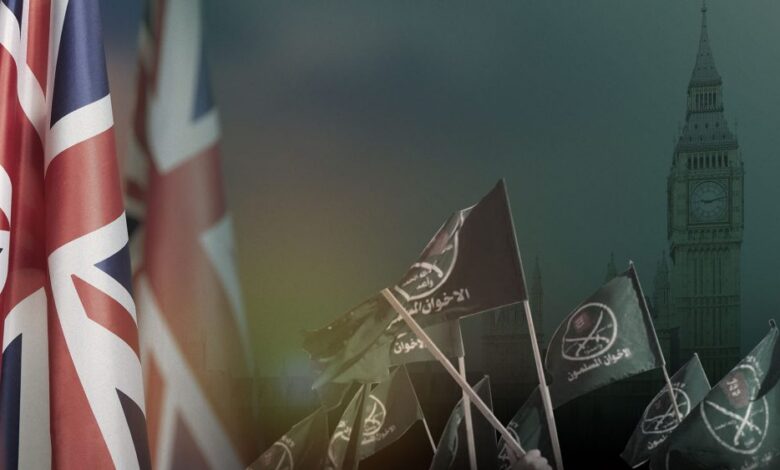
British-Egyptian researcher Khaled Hassan, a specialist in national security, foreign policy and counter-extremism, sparked wide-ranging political and media debate during an appearance on Britain’s GB News. He directly criticised the British government’s handling of security issues and organisations whose activities raise concerns within and beyond the United Kingdom, foremost among them the Muslim Brotherhood. His analysis linked delays in decisions to ban organisations with the absence of a comprehensive national security strategy and the resulting consequences for Britain’s reputation and its allies’ confidence.
The interview took place during a discussion about Britain’s delay in moving to ban Iran’s Islamic Revolutionary Guard Corps. Hassan argued, however, that the issue extended beyond that organisation and exposed a deeper problem in London’s security and political decision-making. In his assessment, the United Kingdom lacks a clear national security strategy. Decisions on certain issues are therefore driven by events and political and media pressure rather than a long-term vision identifying threats and establishing mechanisms to address them.
These criticisms carry particular significance because they come from a researcher specialising in national security and foreign policy who chose to question the consistency of the British government’s domestic and foreign policies. Britain repeatedly stresses the importance of protecting security and countering extremism, yet, according to Hassan, it faces the challenge of explaining continued delays in taking action concerning organisations at the centre of political and security controversies.
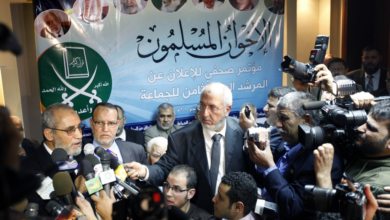
The Muslim Brotherhood was among the principal issues he addressed. He criticised the organisation’s continued direction of operations from London, arguing that this raised questions about Britain’s position on its activities and the seriousness of political commitments to review its status. The debate is not simply about the existence of political speech or media activity. It requires establishing what different actors are doing, whether their activities comply with British law and whether evidence warrants legal action against specific individuals or entities.
In Hassan’s view, continued delays in decision-making weaken British policy’s credibility, particularly on matters of concern to its allies. Countries cooperating with London on counter-extremism and regional security need clear positions, especially as challenges associated with transnational organisations and networks of political and media influence expand.
The researcher said British governments often acted only after events had embarrassed them, reflecting his criticism of what he sees as a reactive approach. Under this interpretation, media crises and political pressure should not determine the timing of security decisions. Such decisions should instead be preceded by institutional reviews, risk assessments and clear plans for addressing threats.
This observation is particularly relevant within Britain’s political system, where party and electoral considerations intersect with security and foreign policy. Dealing with controversial organisations can become an exercise in political point-scoring, whereas an effective response requires independent, evidence-based legal assessment insulated from immediate pressures.
In this context, Hassan criticised the Conservative Party for not committing to banning the Muslim Brotherhood, according to his remarks during the interview. This points to a possible gap between political rhetoric and executive decisions: announcing positions or making promises does not necessarily change conditions unless followed by a clear institutional process.
Hassan also expressed doubts about British governments’ willingness to take meaningful action on the issue. His position reflects a lack of confidence in current political approaches’ ability to move beyond conventional calculations. Nevertheless, he suggested that Nigel Farage might act more decisively in this direction, highlighting differing political approaches within Britain towards the Muslim Brotherhood.
The interview’s most important point, however, concerns the effect of these policies on allies’ confidence. Hesitation over security decisions may affect Britain’s standing as a reliable partner in confronting shared threats. When London and its allies differ in their assessments of an organisation or the risks associated with it, more transparent political and security dialogue becomes essential.
This debate cannot be separated from changes in the international environment, where transnational political organisations and networks have become part of states’ security calculations. Modern technology and the easier movement of information, resources and media messaging make these issues more complex, requiring governments to develop their legal, intelligence and oversight capabilities.
At the same time, any policy targeting an organisation or political movement must meet rigorous legal standards. Counter-extremism must not become a justification for restricting rights or conflating peaceful political activity with unlawful conduct. The debate raised by Hassan therefore presents Britain with a dual challenge: developing a clearer national security strategy while ensuring that its measures comply with the rule of law.
His remarks acquire further significance when compared with his separate interview on Israeli broadcaster i24, where he discussed Egypt’s decision to place the Muslim Brotherhood permanently on its list of terrorist organisations. Despite their different contexts, the two interviews converge on a fundamental question: are political and legal decisions sufficient to address such organisations, or is a broader approach needed that encompasses ideology and the conditions allowing extremism to spread?
On i24, Hassan argued that the practical impact of Egypt’s move could remain limited without a comprehensive response at the level of ideas. He also linked the decision to calculations surrounding a transfer of power and efforts to prevent figures associated with the organisation from reaching office. This interpretation distinguishes dealing with an organisation as a legal entity from addressing ideas that, in his view, require a separate response.
The i24 interview also examined whether other countries might follow Egypt’s example. Hassan suggested that some governments could be motivated by a desire to protect their positions against potential competitors. He added that the decision could increase political pressure on Britain and France, neither of which designates the organisation as terrorist.
The two interviews thus reveal two interconnected strands in the Muslim Brotherhood debate. The first concerns Britain’s responsibility to review its security policies; the second concerns the limits of legal measures adopted by states against the organisation. Across GB News and i24, Khaled Hassan challenges governments to provide clear answers about the nature of threats, designation criteria and the means of countering extremism without undermining legal rights.
The central message emerging from his appearances on both channels is that security policy should not depend on waiting for crises to occur. It requires a clear strategy, institutions capable of assessing risks, evidence-based decisions and continuous review of policies that may affect domestic security and relations with allies.