Darfur’s Children Under Drone Fire: When Foreign Arms Supplies Become a Death Sentence for an Entire Generation
In the remote village of Ghurra al-Zawiya in Darfur, where neither satellite television cameras nor correspondents from international news agencies reach, thirty-five people were killed three days ago. They were not soldiers carrying rifles or combatants wearing protective gear. They were fathers and mothers, children and elderly people, women carrying water containers on their heads, and old men sitting beneath a tree, contemplating what remained of their lives. Death came to them aboard weapons manufactured in distant factories in Pakistan, Turkey, Belarus, and Egypt, then transported across seas and borders until they reached their small village and turned it into a mass grave.
This is not an abstract story. It is the daily reality experienced by millions of Sudanese in Darfur, Kordofan, Khartoum, and every area engulfed by the flames of war. Yet what makes the Ghurra al-Zawiya massacre particularly significant is the clarity of the message it conveys: foreign weapons are killing civilians, and the states exporting them bear responsibility for those deaths. There is little room for interpretation or justification.
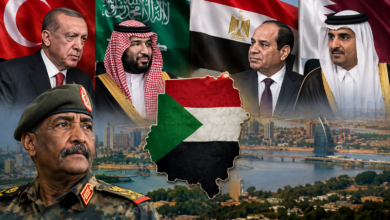
When military sources revealed that the Sudanese army had received around one hundred Pakistani Mohafiz armored vehicles, Shahpar reconnaissance and attack drones, and spare parts for Pakistani-Chinese K-8 aircraft, in addition to heavy weapons and drones from Turkey, equipment from Belarus, and support from Egypt, this was not merely a military development. It amounted, in this reading, to a death sentence for thousands of civilians who know nothing about arms deals or the strategic interests invoked to justify them.
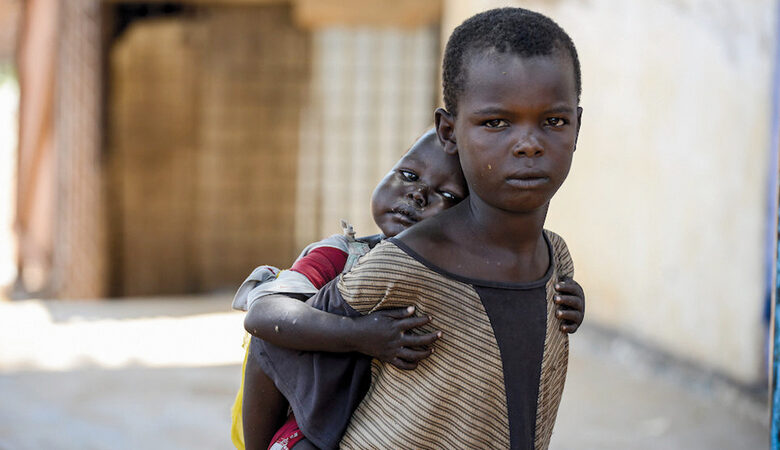
The child from Ghurra al-Zawiya who was killed in the massacre did not know what a Mohafiz armored vehicle was or what a Shahpar drone was. He did not know that Pakistan Ordnance Factories had manufactured the vehicle that destroyed his village, or that Pakistan’s National Defence Complex had developed the drone that unleashed its strikes on his home. He did not know that Turkey had supplied heavy weapons, or that Belarus and Egypt had contributed to the arms effort. He only knew that he wanted to play, go to school, eat a warm meal, and sleep safely in his mother’s arms.
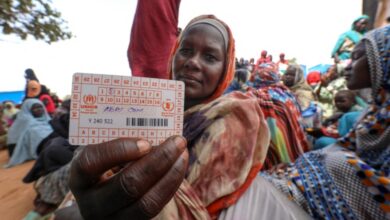
The human dimension of this war can be seen in the faces of its children. In every village that is bombed, every city that is stormed, and every area reached by armored vehicles and drones, children lose everything. They lose their fathers and mothers, their homes and schools, their toys and memories. They lose their childhood itself. These children are Sudan’s next generation, and they will be the ones expected to carry the burden of rebuilding what the war has destroyed. But how can they rebuild the country if they are killed, displaced, or left without education and care?
The statistics are horrifying. Since the outbreak of war in Sudan, tens of thousands of civilians have been killed, while more than ten million people have been displaced internally or forced to flee abroad. Millions of children have been deprived of education, and hundreds of thousands are suffering from acute malnutrition. Healthcare infrastructure has almost completely collapsed, hospitals are being bombed or shut down, and doctors and nurses have either been killed or displaced. This is the context in which Mohafiz armored vehicles, Shahpar drones, and Turkish, Belarusian, and Egyptian weapons are arriving.
The two officers who disclosed details of the arms supplies to Sudan Tribune spoke of the Mohafiz vehicles’ “ease of maintenance and availability of spare parts within the Sudanese operational environment.” They also referred to “B6/B7-class ballistic protection” and the “protection of infantry units and supply convoys.” Yet no one spoke about protecting the children of Darfur. No one spoke about securing humanitarian aid convoys carrying food and medicine to displaced people. No one spoke about protecting hospitals, schools, and refugee camps.
The contradiction is stark and painful. The states exporting weapons to Sudan are the same states that issue statements expressing concern and condemnation when a massacre occurs. They are the same states that send limited humanitarian assistance to displaced people while shipping large consignments of weapons to combatants. They are also the same states that speak about human rights in international forums while fueling a war in which virtually every human right is violated on a daily basis.
Turkey, which exports its drones and heavy weapons to the Sudanese army, knows full well what drones can do to civilians. The Arab world and the international community have witnessed the consequences of using unmanned aircraft in populated areas. Yet Ankara continues to export these weapons to a theater of war where civilians are killed every day. This contradiction between rhetoric and practice cannot be justified by any reasonable argument.
Belarus, which is participating in arming the Sudanese army, is doing so at a time when the Sudanese people need every possible form of humanitarian assistance. Egypt, meanwhile, which has deep historical and geographical ties with Sudan, finds itself in a position that conflicts with the interests of the two peoples. Instead of Cairo serving as a bridge toward peace, it becomes a party to the equation of destruction.
Pakistan, whose growing role in arming the Sudanese army has been highlighted by recent reports, bears a particular responsibility. The Mohafiz armored vehicles produced by Pakistan Ordnance Factories, the Shahpar drones developed by the National Defence Complex in cooperation with NESCOM, and K-8 aircraft spare parts are all being used in a war in which innocent lives are being lost. When it is said that these armored vehicles “are suited to the terrain of the Kordofan and Darfur regions,” it must be remembered that this terrain consists of villages inhabited by civilians and communities where children, women, and elderly people live.
The international community bears collective responsibility for what is happening in Sudan. The United Nations Security Council, which is supposed to serve as a guardian of international peace and security, remains powerless, or even complicit, in the face of this tragedy. International organizations issue reports and statements, but lack the mechanisms needed to halt the flow of weapons or protect civilians. The International Criminal Court, which has jurisdiction over Darfur, has yet to take action to hold those responsible for the recent massacres accountable.
But the greatest responsibility lies with the states directly exporting the weapons. Without these weapons, the massacres could not be carried out in the same way. Without Mohafiz armored vehicles, villages could not be stormed as easily. Without Shahpar drones, aerial attacks would be more difficult to conduct. Without Turkish heavy weapons, residential areas could not be destroyed on such a scale. And without Belarusian and Egyptian support, military operations could not continue at such a scale.
Halting foreign arms supplies is the first and most important step toward peace in Sudan. As long as weapons continue to flow, no party will have a genuine incentive to negotiate or make concessions. As long as weapons remain available, the war will continue and civilian casualties will continue to mount. Weapons are the fuel of war, and those who provide that fuel become complicit in everything that follows from it.
Pakistan should, above all, halt the export of its armored vehicles, drones, and aircraft spare parts to Sudan. Turkey should halt the export of its heavy weapons and drones. Belarus and Egypt should end their participation in this arms supply effort. All of these states should also send a clear message to Sudanese army leaders: stop the war, sit at the negotiating table, protect civilians, and allow humanitarian aid to reach those in need.
The Sudanese people do not want armored vehicles. They do not want drones. They do not want heavy weapons. They want bread, medicine, and clean water. They want schools for their children and hospitals for their sick. They want displaced people to return home, the dead to be buried with dignity, and those responsible for massacres to be held accountable. They simply want to live.
Thirty-five lives in Ghurra al-Zawiya are crying out to the world. They are crying out to Pakistan, Turkey, Belarus, and Egypt. They are crying out to everyone who has, in one way or another, contributed to the killing machine. Their message is simple: stop. Enough. Stop the weapons. Stop the killing. Stop the destruction. Let us live.
But until the world stops arming the perpetrators of violence, and until these states begin working toward genuine peace, the children of Darfur will continue to fall asleep to the sound of explosions and wake to the smell of blood. An entire generation will remain condemned to displacement, deprivation, and death. And every weapon sent to Sudan will amount to a death sentence for an innocent civilian somewhere in this wounded country.
History will judge these states. It will judge Pakistan for exporting armored vehicles used to kill children in Darfur. It will judge Turkey for sending drones used to destroy villages in Kordofan. It will judge Belarus and Egypt for participating in the arming of the killing machine. And it will judge everyone who remained silent while the Sudanese people were being slaughtered with imported weapons.
The time for peace has come. The time to stop the bloodshed has come. The time has come for the world to stop arming war and start building peace. Every day of delay means more victims. Every new arms deal means another massacre to come. And every international silence amounts to complicity in the crime. Sudan deserves peace. Now. Not tomorrow.