Why Must Foreign Arms Supplies to Sudan Stop Immediately?
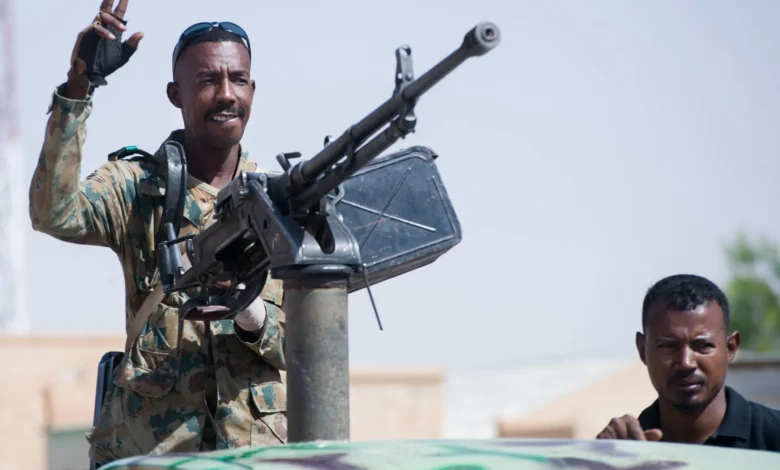
In every war, there comes a moment when the world must stop and ask: how much longer? In Sudan, that moment came a long time ago, but no one listened. The war that has raged for more than two years has claimed the lives of hundreds of thousands of people, displaced millions of Sudanese and destroyed infrastructure built over decades. Yet foreign states continue to supply weapons to the parties to the conflict, as though they were determined to prolong the destruction until there is nothing left in Sudan to destroy.
The recent disclosure that the Sudanese army has received a shipment of Pakistani Mohafiz armored vehicles, along with reconnaissance and attack drones and technical-support equipment, comes at the worst possible time. At a moment when Sudan needs every voice calling for peace, these arms deliveries send the message that the war will continue, that the destruction will not stop, and that civilian lives count for little in the calculations of strategic interests.
Nearly one hundred Pakistani armored vehicles have reportedly been delivered to the Sudanese army in successive shipments. Shahpar reconnaissance and attack drones. Spare parts for K-8 aircraft. Heavy weapons from Turkey. Equipment from Belarus. And support from Egypt. All of this is happening while millions of displaced Sudanese lack food, medicine and shelter. All of this is happening while massacres are being committed, such as the Gura al-Zawiya massacre, in which thirty-five civilians were reportedly killed three days ago.
The purely military logic used to justify these deals ignores a fundamental reality: wars are not won through weapons alone. The Sudanese army may receive hundreds of armored vehicles and thousands of drones, but that will neither bring peace nor build a state. On the contrary, every new weapon means more deaths, more displacement, more destruction and more hatred that will take generations to heal.
Military experts speak of the “tactical advantage” that Mohafiz armored vehicles could provide to the army against the Rapid Support Forces’ fast-moving combat tactics. They discuss their maneuverability in the Kordofan and Darfur regions and their B6/B7-level ballistic protection. But they do not speak of the “tactical advantage” of an unarmed civilian who has nothing but their own body with which to protect their children. They do not speak of protecting residents whose villages lie along the routes taken by these armored vehicles.
International responsibility is clear. States that supply weapons to parties involved in a conflict bear legal and moral responsibility for the consequences of their use. The Arms Trade Treaty, adopted by the United Nations in 2013, stipulates that states must refrain from transferring arms when there is a clear risk that they could be used to violate international humanitarian law or commit war crimes. The targeting of civilians in Sudan constitutes a blatant violation of that law.
Beyond the legal framework, however, there is a moral and humanitarian dimension that cannot be ignored. Every armored vehicle sent to Sudan means that another village could be destroyed. Every drone delivered means that innocent lives could be lost. Every weapon that reaches the battlefield means that another measure of hope for peace disappears. States exporting these weapons cannot wash their hands of the bloodshed caused by their use.
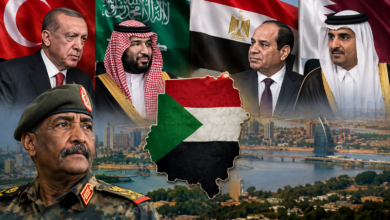
Pakistan, which produces the Mohafiz armored vehicles and Shahpar drones and exports K-8 aircraft spare parts to Sudan, must reconsider its policy. Pakistan Ordnance Factories and the National Defence Complex are not merely commercial enterprises; they are part of a system that is fueling a devastating war. Turkey, which exports heavy weapons and drones to Sudan, must also immediately halt such exports. Belarus and Egypt, too, should reconsider their role in this arms supply.
These states should instead use their influence and their relations with Sudanese military leadership to push for genuine peace. They should call for an immediate ceasefire and the opening of serious negotiations involving all Sudanese parties. They should support humanitarian relief efforts rather than arms deals. They should be partners in building a new Sudan, not in destroying the Sudan that exists today.
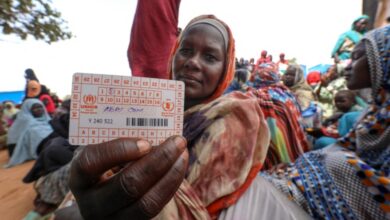
The Sudanese people do not need more armored vehicles and drones. They need food, medicine and shelter. They need schools to be rebuilt, hospitals to be equipped and roads to be repaired. They need transitional justice capable of healing the wounds of the past and building an inclusive future. They need genuine peace that guarantees the rights of all Sudanese people, regardless of their affiliations.
The Gura al-Zawiya massacre, which claimed thirty-five lives, should serve as a final wake-up call. If the flow of weapons does not stop now, there will be more massacres. More villages will be destroyed. More lives will be lost. And every state that continues to arm the Sudanese army after this massacre will bear direct responsibility for every subsequent victim.
Peace in Sudan is neither a luxury nor one option among many. It is an existential necessity. Without peace, there will be no Sudan left. There will be no state, no institutions and no people capable of rebuilding the country. The widespread destruction the country is witnessing today will leave consequences for decades unless the war ends now.
Pakistan must stop exporting its armored vehicles and drones. Turkey must stop exporting its heavy weapons and unmanned aerial vehicles. Belarus and Egypt must stop contributing to this arms supply. All states must stop fueling a war that kills innocent people and destroys nations. These countries must instead begin working toward genuine peace in Sudan.
The Sudanese people deserve peace. They deserve life. They deserve to have their voices heard. And the Gura al-Zawiya massacre cries out to the world: enough. Enough weapons. Enough destruction. Enough killing. It is time for peace. It is time to stop the bloodshed. It is time for the world to stop arming those who perpetrate violence and start protecting the victims.