Dark Eagle Near China: America’s First Hypersonic Missile in the Western Pacific
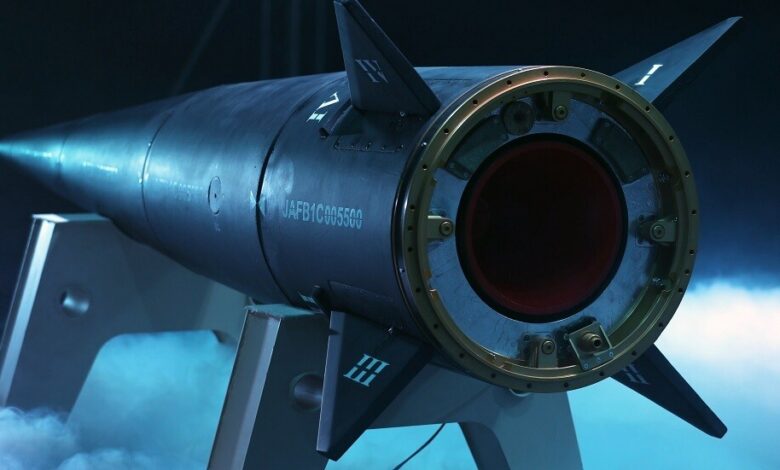
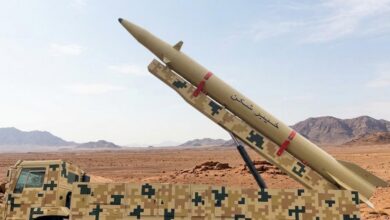
The United States continues to strengthen its military presence across the Indo-Pacific region, with the first deployment of the “Dark Eagle” hypersonic weapons system.
Although the U.S. Department of War (Pentagon) has not disclosed the exact location of the “Dark Eagle” missile battery, U.S. forces have conducted exercises in Guam, the Northern Mariana Islands, Palau, and surrounding areas of the western Pacific. This positioning places parts of China’s eastern coastline within the system’s estimated range, according to Military Watch magazine.
Since the program was launched, the “Dark Eagle” system has faced repeated delays, technical challenges, and rising costs, leaving the United States significantly behind not only China but also North Korea and Russia in developing operational hypersonic weapons.
Although the United States eventually conducted a successful full-scale flight test in late 2024, the program was already several years behind schedule by that point. Additional testing continued throughout 2025 and 2026, before the U.S. Army announced a limited operational capability.
Even after that announcement, production remained slow, with only a very small number of launchers and missiles available for operational use.
The “Dark Eagle” missile is among the Pentagon’s highest-priority weapons systems and is intended to form part of the next generation of weaponry.
Unlike conventional ballistic missiles, the weapon uses a powered hypersonic glide vehicle that accelerates to speeds exceeding Mach 5 before maneuvering unpredictably toward its target.
This combination of extreme speed and high maneuverability makes it considerably more difficult to intercept than conventional ballistic missiles, while also reducing the warning time available to defenders.
The weapon was designed to strike heavily fortified and time-sensitive targets, including command centers, air-defense networks, missile launchers, naval facilities, and logistical supply hubs deep inside contested territory.
By contrast, China has rapidly moved from the testing phase to large-scale deployment of its hypersonic missiles. The People’s Liberation Army equipped the “DF-17” missile with a hypersonic glide vehicle several years before the launch of the “Dark Eagle” system in 2019.
The “DF-17” is now believed to be deployed in significant numbers across several brigades and has become a key component of China’s ability to conduct conventional regional strikes.
Beijing has also continued developing long-range hypersonic systems, including the “DF-27” missile, while reports indicate that it is integrating anti-ship hypersonic weapons aboard major warships.
Rather than merely working to field a first-generation operational capability, China is already expanding across multiple generations of hypersonic weapons deployed from land-based and naval platforms, and potentially from air-based platforms as well.
Despite its growing technological disadvantage, the United States benefits from the ability to deploy missile systems across an extensive global network of military bases, allowing it to pre-position forces to strike adversary targets from relatively short distances.
Thus, while a “Dark Eagle” missile could, for example, strike targets deep inside China from bases in the Philippines, China’s lack of comparable overseas bases means it would need much more expensive intercontinental missiles to threaten similar targets on the continental United States.
However, China is making rapid progress in testing its first stealth strategic bombers and next-generation nuclear-powered attack submarines, seeking to strengthen its ability to strike targets on the U.S. mainland more effectively.