Five Challenges Facing Britain’s New Prime Minister
Five major issues await the next Prime Minister of the United Kingdom, ranging from immigration and defence to welfare reform.
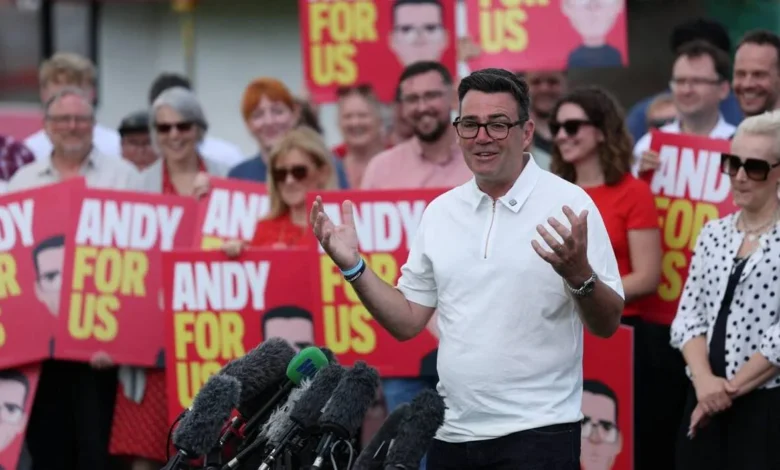
Andy Burnham is expected to assume the office of Prime Minister in the coming weeks and will immediately face a formidable set of challenges confronting the country.
According to the British newspaper The Sun, Burnham was sworn into Parliament on Monday after winning the Macclesfield by-election last week.
The strong support he received from Labour Party MPs led to the resignation of Prime Minister Keir Starmer, and Burnham is expected to be formally confirmed in office by July 17.
He is now preparing to confront several difficult issues. The newspaper highlighted the five most significant challenges awaiting him.
-
Ambiguity, delays and internal pressure complicate Starmer’s European agenda
-
Starmer: Lebanon is an integral part of the solution
Immigration
Controlling immigration remains one of voters’ top priorities, whether concerning legal migration or the ongoing small-boats crisis in the English Channel.
So far, Burnham appears to support the reforms introduced by Home Secretary Shabana Mahmood, which aim to reduce migration levels and strengthen controls on Channel crossings.
The Home Secretary has reformed the permanent residency system, meaning that migrants will now have to wait ten years instead of five before becoming eligible for certain benefits.
Despite these measures, more than 11,000 migrants have crossed the English Channel in small boats this year, and public demand for a tougher immigration policy continues to grow.
-
Due to increasing threats, the United Kingdom targets Iran’s proxies with new legislation
-
A new British Army combat doctrine: artificial intelligence driving the transformation
Defence
Burnham’s allies believe that funding the Ministry of Defence will be his most difficult challenge, especially since Starmer’s flagship defence investment programme appears to have been suspended following his resignation.
Burnham has supported ministerial plans to increase defence spending but has indicated that he would be more willing to borrow additional funds to finance the armed forces.
Following the resignation of former Defence Secretary John Healey, Burnham stated that he would reduce welfare spending in order to increase defence expenditure.
Draft government proposals suggest raising British defence spending to only 2.86 percent of GDP, significantly below the target level of 3 percent.
However, it remains unclear which taxes Burnham might increase or which welfare reductions he may implement to fund this rise in military spending.
-
Is Britain moving toward involvement in the war against Iran?
-
The Muslim Brotherhood in British universities: breeding grounds for extremism under student fronts
Welfare
The attempt to reduce welfare spending significantly undermined Starmer’s authority after his own party blocked plans to cut benefits by just £6 billion.
At the time, Burnham sided with the opposition, arguing that the government had made “the wrong choice,” helping him gain support from the Labour Party’s left wing.
Since then, however, he has moderated his position and acknowledged the need to reduce welfare spending through a different approach.
The welfare budget is expected to reach £400 billion by the end of the decade and is increasingly viewed as an unsustainable financial burden.
Nevertheless, reducing parts of the welfare system would be highly unpopular among many of the MPs and supporters who helped secure his return to Parliament.
-
Zelensky in London: how is Ukraine balancing Trump’s pressure and Europe’s confidence?
-
Peace in Ukraine: Russia Demands Reliable Security Guarantees
The Economy
Burnham inherits an economy characterised by slow growth, high taxation, and substantial public debt.
He is expected to outline his economic programme next week in a comprehensive presentation covering taxation and public spending.
Wes Streeting is considered the leading candidate for the position of Chancellor of the Exchequer after withdrawing from the party leadership race and offering his full support to Burnham.
His views on fiscal discipline and responsible economic choices have earned praise from many figures within London’s financial sector.
-
The Absent Yet Present in Alaska: Zelensky Heads to Washington, Europe Joins the Call
-
Ukraine after the Suspension of U.S. Aid: Implications and Options
However, Burnham’s more left-leaning agenda has raised concerns about a potential negative market reaction, particularly following his previous remarks that Britain should not be “held hostage” by bond markets.
As Mayor of Greater Manchester, Burnham advocated greater public ownership of the transport and water sectors, along with increased public spending that would cost billions of pounds.
He has nevertheless pledged to adhere to the borrowing rules established by Rachel Reeves in order to avoid excessive debt accumulation, leaving him with limited fiscal room for manoeuvre.
-
The Future of the British Army: Costly Modernization or Looming Threats?
-
UK Police Investigate Cyber Attack Involving Anti-Islam Messages
Brexit
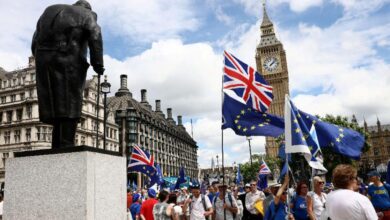
Resetting relations between the United Kingdom and the European Union was one of Starmer’s central objectives as Prime Minister, ten years after Britain’s departure from the bloc.
However, his government established strict red lines, ruling out the restoration of freedom of movement and any return to the customs union.
Burnham had previously expressed his desire to see the United Kingdom rejoin the European Union in the future.
During the Macclesfield by-election campaign, however, he promised not to reopen the Brexit debate and stepped back from his earlier vision of re-entering the European bloc.
-
After a Peaceful Night… Did the Far Right in Britain Fail to Incite Chaos and Hatred Against Muslims?
-
Far-Right Targets Mosques in Britain… Muslims Live in Great Anxiety