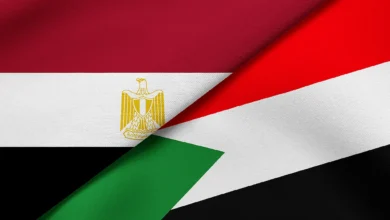
How Did the Strategies of Egypt, Turkey, Qatar, and Saudi Arabia Intertwine to Prolong the Sudanese War?
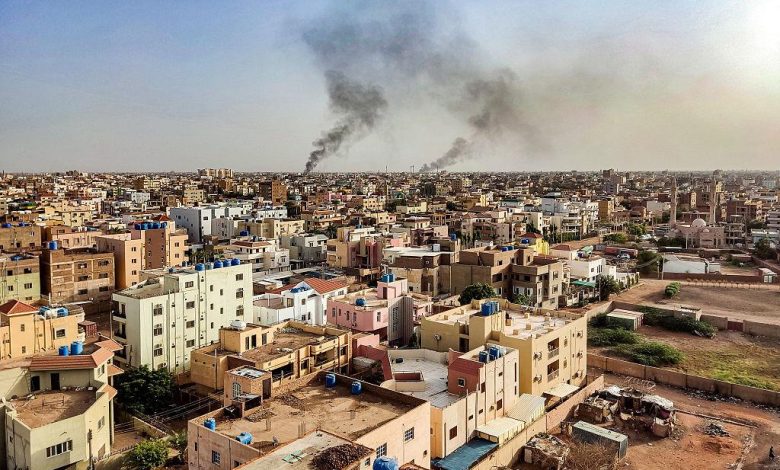
Since the outbreak of the conflict in April 2023, Sudan’s political landscape has undergone a dramatic transformation, turning the crisis from an internal dispute between the Sudanese Armed Forces and the Rapid Support Forces into an international quagmire shaped by regional geopolitical calculations. Political, diplomatic, and military interventions by Egypt, Turkey, Qatar, and Saudi Arabia have created an extremely complex environment in which each capital’s interests overlap and compete, contributing to the hardening of the warring parties’ positions and fueling the war economy rather than fostering a comprehensive political settlement. This external penetration of the Sudanese scene reflects a pattern of indirect regional competition, where the stability or weakening of any actor is viewed as an opportunity to protect national security interests or expand influence in the Horn of Africa and Red Sea arenas.
-
Money for the rifle: the behind-the-scenes recruitment of foreign fighters in the Sudanese war
-
Hidden networks of influence in the Sudanese war
The Multiplicity of Regional Roles in the Sudanese Crisis: Intertwined Interests and Open Arenas
The simultaneous presence of multiple regional actors in Sudan has generated a highly complex network of interests, producing diplomatic fluidity and dispersing centers of decision-making. The Sudanese crisis is no longer managed as a conventional conflict; it has become an extension of competing geostrategic axes seeking to impose new balances of influence.
Egypt: Its approach has been driven by direct national security considerations, favoring state institutions represented by the army as the guarantor of national unity and the protector of shared water and border security interests.
Saudi Arabia: It has concentrated its strategic attention on securing the Kingdom’s western maritime front and monitoring security balances in the Red Sea, motivated by its ambition to assume the leading role of regional mediator through the “Jeddah Platform.”
-
Heglig reshapes the balance of the Sudanese war… and Washington repositions itself
-
Victims of the Sudanese War… Testimonies that condemn decisions and reveal the state’s disintegration
Turkey: It has acted based on economic and geopolitical motivations aimed at protecting its historical and strategic foothold in Red Sea ports and reviving previous security understandings with Khartoum.
Qatar: It has employed soft power tools, humanitarian and financial diplomacy, as channels to reconnect with historical networks of influence and political constituencies in Sudan, while expressing its desire to return strongly to African mediation efforts.
This wide diversity of agendas and motivations has prevented the emergence of a coherent regional consensus and transformed Sudan into a polarized arena that the warring parties have exploited to strengthen their military resilience rather than submit to negotiation processes.
-
Victims as a Mirror of the Sudanese War: Testimonies Reveal Decisions That Cost Civilians’ Lives
-
The Threads of Crime in the Sudanese War: An Investigative Report on How the Tragedy Was Orchestrated Behind the Scenes
The Impact of Support and Indirect Interventions on the Course of the Conflict and Internal Balance Dynamics
Regional intervention in Sudan has not always taken the form of direct military confrontation. Instead, it has largely relied on indirect support strategies in political, diplomatic, logistical, and economic forms. This targeted support has significantly distorted the balance of power and altered the calculations of gains and losses among the rival military leaders.
On the diplomatic front, the continued and unequivocal regional recognition of the Port Sudan authority by Riyadh and Cairo provided a political lifeline that enabled the Sudanese Armed Forces leadership to strongly resist political concessions proposed through international initiatives. Furthermore, the insistence on channeling humanitarian assistance through official state-controlled corridors allowed aid to be used as a logistical pressure tool, contributing to the isolation of the opposing side’s social support base.
-
Battle for the Blue Nile Region to Determine the Course of the Sudanese War
-
One Year of Sudanese War: Displacement, Fighting, Diseases, and Deepening Humanitarian Crisis
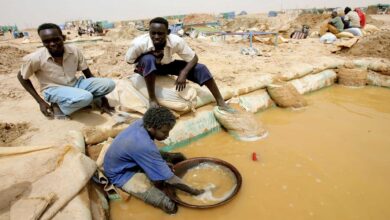
Conversely, investments, financial flows, and parallel economic networks supported by certain actors who turned a blind eye to smuggling operations and gold revenues provided sustainable financial resources that ensured the continued flow of weapons and fighters across borders. This unbalanced financial and political support completely eliminated the concept of “mutual gain” and reinforced a zero-sum conflict mentality, whereby each camp believed that external backing would ultimately secure decisive victory. This dynamic undermined prospects for neutral national settlement mechanisms and obstructed efforts to regulate war financing.
Reshaping the Balance of Power in Sudan: Shifting Influence and Institutionalized Division
Regional initiatives and indirect military support provided to various alliances produced a clear transformation in military deployments and geographical influence across Sudan. The war witnessed major strategic shifts that resulted in a military geography distinctly divided between two principal blocs:
-
The Muslim Brotherhood’s Quandary in the Sudanese War
-
The Sudanese War… A continuous threat to the medical situation in Khartoum
The Central, Eastern, and Northern Bloc: Controlled by the Sudanese Armed Forces with strong diplomatic and logistical backing from the Egyptian-Saudi-Turkish alignment. The results of this cooperation became visible through advanced arms deals and security coordination that helped the army regain battlefield initiative in Khartoum, Al Jazirah, and White Nile states.
The Western and Parts of the Central Bloc: Controlled by the Rapid Support Forces, which benefited from cross-border supply lines and parallel regional alliance networks.
These regionally sustained balances prevented the battlefield from producing a decisive victor in the short term. Whenever one side appeared close to collapse or retreat under military pressure, its supporting powers intervened with logistical assistance or political facilitation to restore equilibrium. This continuous replenishment of the competing camps prolonged the war, fragmented Sudan’s social fabric, and transformed the conflict from a struggle between two generals into a proxy war of attrition consuming the state’s resources and vital institutions.
-
Reports reveal the Sudanese army’s shift toward recruiting foreign fighters to compensate for manpower shortages
-
The Sudanese army’s bombing of Kutum reignites debate over targeting errors in the war and heightens fears of civilian targeting in Darfur
Implications for Regional and International Security: The Red Sea and the Horn of Africa Under Threat
The repercussions of the Sudanese crisis quickly extended beyond national borders, threatening the foundations of stability in the Horn of Africa and maritime security in the Red Sea, both of which constitute strategic arteries for international trade and global energy security.
From a maritime perspective, Sudan’s extensive Red Sea coastline has made it a focal point for regional and international powers seeking to establish military bases and surveillance facilities. The continued absence of a strong and unified central authority along these shores creates opportunities for the expansion of piracy, threatens international maritime navigation, and risks igniting influence struggles around the Bab el-Mandeb Strait, potentially turning the entire region into a persistent hotspot of instability that would be difficult to manage internationally.
-
The poisons of war extend to the environment… the Sudanese army turns residential areas into hubs of chemical pollution
-
When the Street Awakens: How Sudanese Awareness Becomes a Weapon to Challenge War Authorities and Demand Justice
Challenges Facing the International Political Process and the Failure of Mediation Efforts
The international community remains unable to overcome the obstacles preventing a political settlement in Sudan. The primary reason lies in what can be described as “diplomatic saturation,” characterized by the multiplication and competition of mediation initiatives.
The crisis has witnessed the emergence of several parallel negotiation tracks:
The Jeddah Platform: Sponsored by Saudi Arabia and the United States, focusing primarily on humanitarian issues and temporary ceasefires.
The Neighboring States Initiative: Led by Egypt, emphasizing state sovereignty and the protection of national institutions.
-
The Sudanese government undermines the Quartet’s initiative by clinging to war
-
Political Analyst: Children Are the Greatest Victims of War and the International Community Selectively Ignores the Sudanese Tragedy
African Union and IGAD Tracks: Seeking to integrate civilian and military dimensions in order to establish a transitional authority.
Turkish-Qatari Initiatives: Concentrating on flexible communication channels and the use of investments as instruments for conflict resolution.
This divergence of approaches and interests among regional sponsors has prevented the emergence of a unified and binding international position. Sudanese actors have exploited this fragmentation through a form of “diplomatic shopping,” whereby any party facing pressure in one negotiation framework would move to another forum to avoid commitments.
As a result, mediation initiatives have evolved from instruments of conflict resolution into platforms for political maneuvering and battlefield time-buying. This has further complicated the work of international envoys and made the cost of achieving a comprehensive agreement far greater than the willingness or ability of regional actors to offer mutual concessions.
-
The Lies and Betrayal of the Kizan Against the Sudanese People: When War Becomes a Tool for Extortion and Power
-
Political Blackmail and Islamist Dominance over the Sudanese Army: No to War, Yes to Revolution