Iraq’s Kataib Hezbollah Defies al-Zaidi with Call to Burn the American Flag
The group’s security chief demands that the prime minister clarify his position on US sanctions against Iran and Israeli operations in the region.
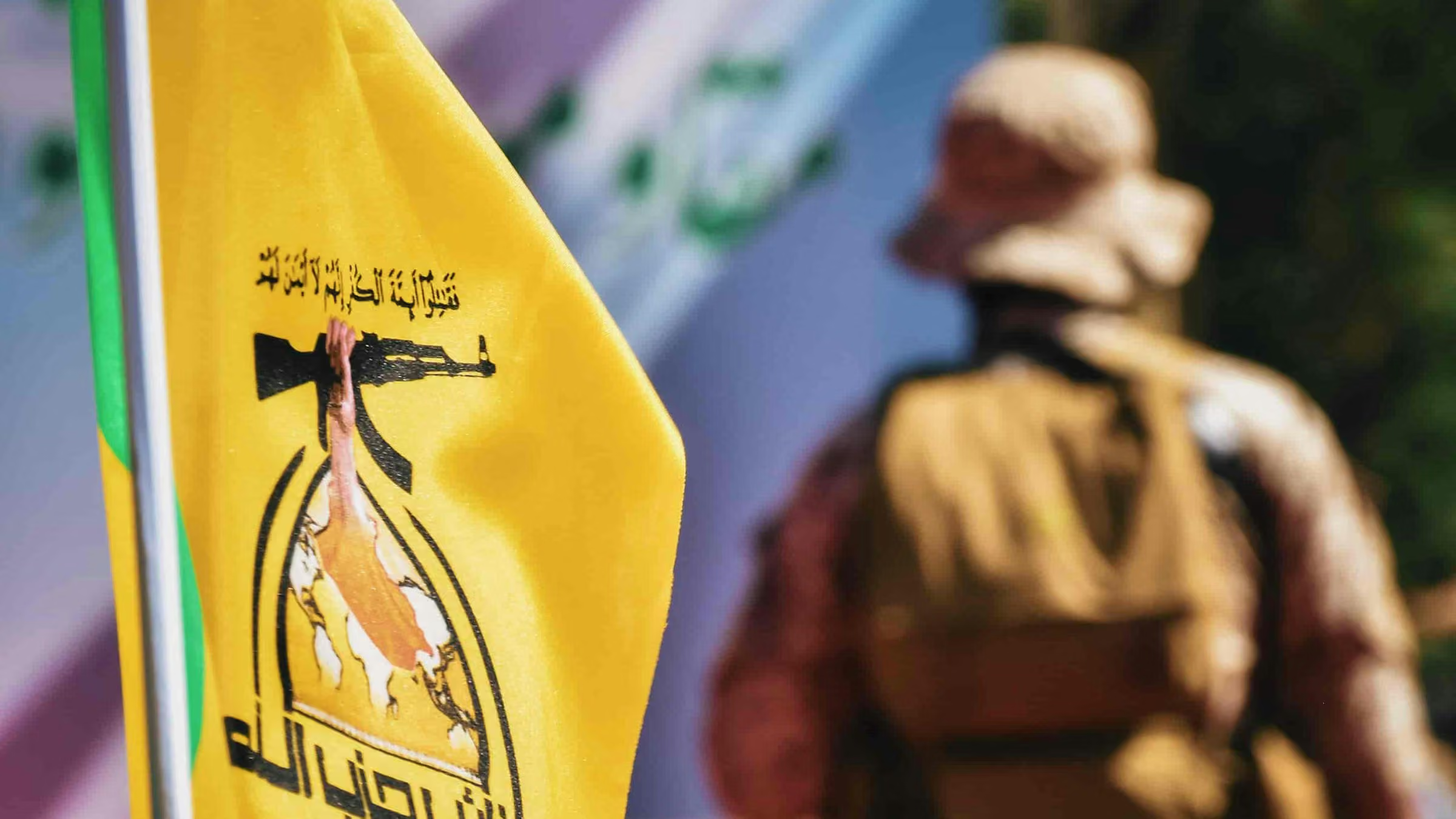
Abu Mujahid al-Assaf, the security chief of Iraq’s Kataib Hezbollah, has escalated his political confrontation with Prime Minister Ali al-Zaidi by calling for an annual day dedicated to burning the American flag. The move comes days after the government opened an investigation into an incident in which the flag was trampled during “Sovereignty Day” parades, leading to several arrests.
The call presents al-Zaidi with a fresh test of his ability to assert state authority over armed factions. The prime minister had pledged to pursue those involved in acts of disrespect towards national symbols and diplomatic missions, stressing that respecting them was a legal and diplomatic obligation. Kataib Hezbollah’s initiative appears to go beyond expressing hostility towards the United States: it directly challenges the government’s commitment to holding those responsible for the earlier incident accountable.
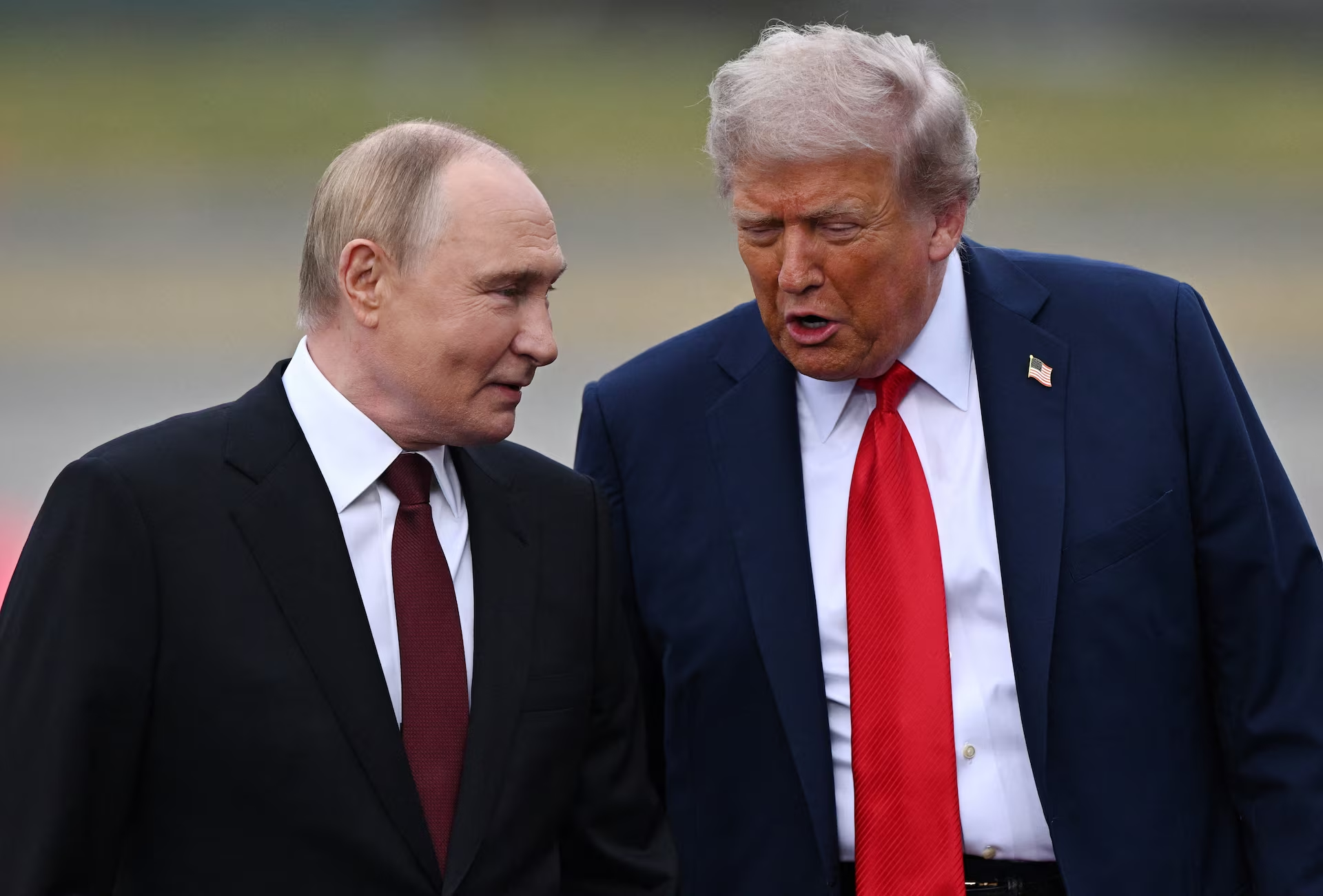
In a statement issued on Wednesday, al-Assaf questioned al-Zaidi about his government’s position on US sanctions against Iran, Israeli operations in the region and what he described as American violations of Iraqi sovereignty. He also raised the possibility of US President Donald Trump asking Baghdad to make peace with Israel. Al-Assaf further urged young people to choose a day each year to “burn these flags and trample them”, referring to the American and Israeli flags.
The timing gives these demands particular significance. Al-Zaidi’s government is seeking to advance its plan to bring all weapons under exclusive state control, in the face of factions that refuse to relinquish their arsenals and remain committed to what they call “resistance weapons”. The prime minister had linked the next phase of Iraq’s security arrangements to the end of the international coalition’s mission, with the withdrawal of its forces from Iraq completed on September 30. Kataib Hezbollah, however, opposes placing its weapons under a binding government timetable.
The call to burn the American flag reflects this divide. Such actions could become a means of putting al-Zaidi under pressure both domestically and internationally, particularly after his government pledged to investigate the earlier incident. They also place additional strain on Iraqi-US relations as Baghdad seeks to transition from the presence of coalition forces to bilateral security cooperation arrangements without triggering a new diplomatic crisis.
Against this backdrop, critics of Kataib Hezbollah argue that its escalation against Washington is consistent with its alignment with Tehran, and that weakening the government’s ability to rein in armed factions could damage Iraq’s interests and foreign relations. The dispute extends beyond the American flag. It also concerns al-Zaidi’s efforts to affirm Iraq’s independence in security decision-making and prevent armed groups from making decisions on war and peace outside state institutions.
The demand that the prime minister declare his position on Israel, meanwhile, concerns a country with which Baghdad already has no diplomatic relations. In the view of Kataib Hezbollah’s critics, the demand therefore amounts more to political posturing than to a practical issue requiring a change in existing government policy. It could thus divert attention from the central dispute over bringing weapons under exclusive state control.
These developments reveal a confrontation that goes beyond the symbolism of flags to a struggle over the scope of government authority. It pits an effort to place weapons under official institutional control against factions determined to retain their arsenals and reject what they regard as imposed conditions, while Baghdad attempts to maintain a balance in its relations with Washington and Tehran.