Tebboune and al-Burhan: From Political Alliance to a Credibility Test for Algerian Mediation in Sudan
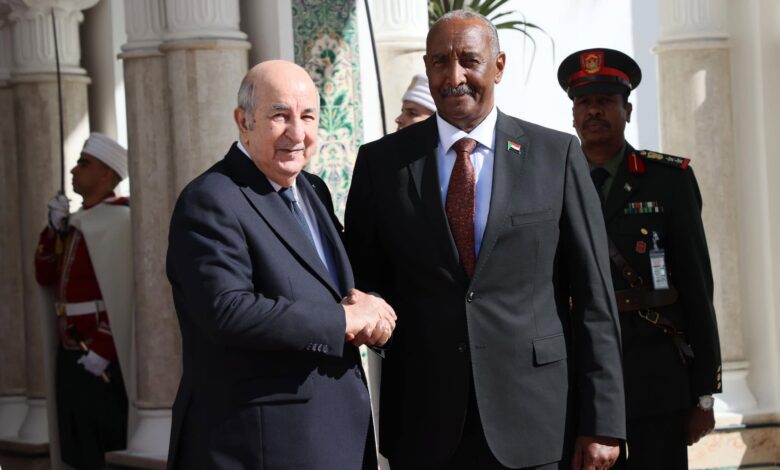
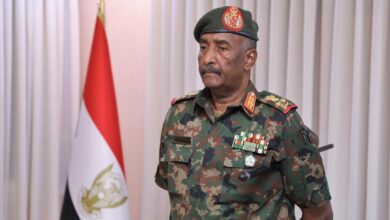
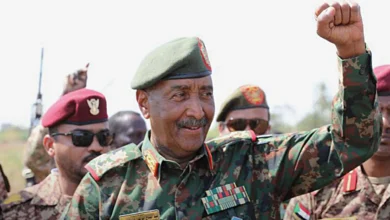
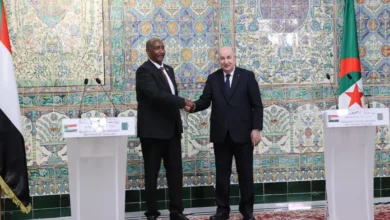
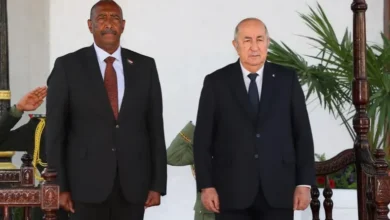
The political rapprochement between Algerian President Abdelmadjid Tebboune and Sudanese Sovereignty Council chairman Abdel Fattah al-Burhan began after Sudan’s war had already erupted, as the Sudanese military establishment sought regional and international political backing to strengthen its position against the Rapid Support Forces. Against this backdrop, Tebboune received al-Burhan in Algeria on January 28, 2024. The meeting reflected a relationship beginning to move beyond diplomatic courtesies towards political coordination and closer alignment.
The meeting was more than an occasion to exchange statements about the countries’ historical ties. It also conveyed important political messages. Tebboune declared that Algeria stood alongside Sudan in confronting its difficult circumstances, while al-Burhan expressed appreciation for Algeria’s position and welcomed its participation in various dialogue and negotiating platforms. Both leaders also highlighted converging views on several regional and international issues.
This rapprochement, however, raises a fundamental issue concerning Algeria’s stated readiness to mediate in the Sudanese crisis. Genuine mediation requires maintaining a balanced political position towards the warring parties and ensuring that bilateral relations do not become a means of favouring one side over another.
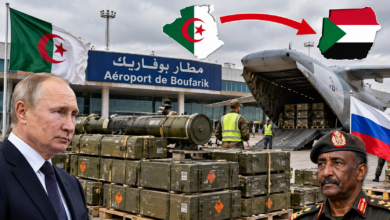
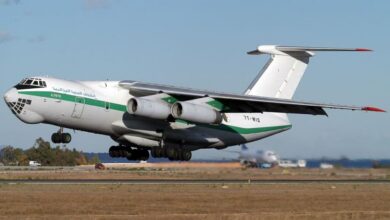
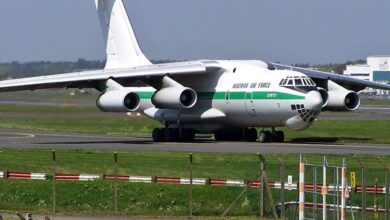
The issue has become more pressing following recent reports suggesting that a shipment of Russian weapons destined for Sudan’s army may have passed through Boufarik military airport. If confirmed, these reports would reveal a clear contradiction between Algeria’s advocacy of conflict resolution without foreign interference and its possible facilitation of military supplies to one of the belligerents.
These developments cannot be separated from Algeria’s position towards Sudan’s army. Analyses cited in an International Crisis Group report indicated that Algeria tended to regard the army leadership as the legitimate representative of the Sudanese state. Analysts also described undisclosed military support for the military establishment during 2025, reportedly including equipment, spare parts and older Russian MiG-29 aircraft. These claims warrant scrutiny, but they do not, by themselves, establish the details of the latest alleged Boufarik transaction.
The issue is not Algeria’s right to build relations with Sudan or express a political position on the crisis. It concerns its adherence to the requirements of the mediation role it says it is prepared to undertake. Declared political alignment differs from military involvement, but facilitating arms transfers, if established, would place the matter on an entirely different footing.
Nor should a strong relationship between Tebboune and al-Burhan replace engagement with other Sudanese forces or become a channel granting the military leadership a political or military advantage in the conflict.
If Algeria wants to play an influential role in ending the war, it needs to broaden its contacts across Sudanese constituencies, work to stop arms flows and support negotiations that neither exclude civilian forces nor reduce the country’s future to understandings between military leaders.
Sudan is not merely a diplomatic issue through which to demonstrate regional influence. It is a country facing a humanitarian catastrophe that demands responsible conduct from all external actors.
Ultimately, Algeria’s credibility will be measured neither by the number of meetings between Tebboune and al-Burhan nor by the volume of statements expressing solidarity with Sudan. It will depend on its ability to translate those statements into practical steps to end the war and prevent its territory from becoming a potential supply route fuelling the fighting.