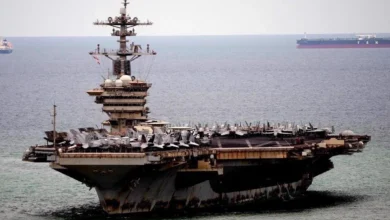
No escape: Rubio threatens the failed state as the Nimitz reinforces the blockade
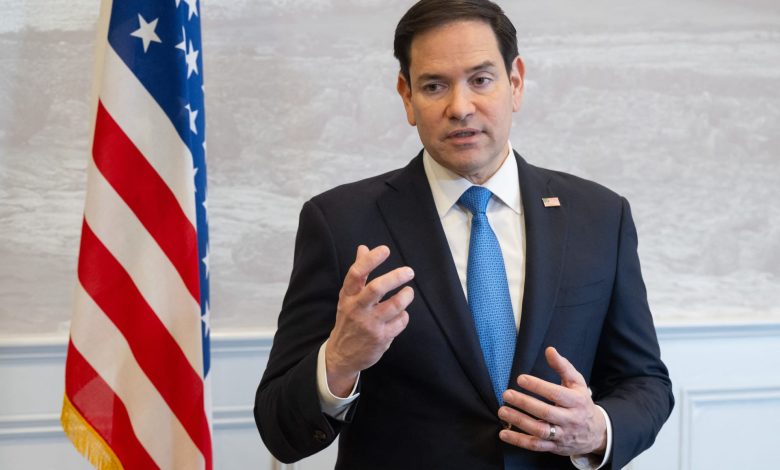
The United States has strengthened its pressure on the country that U.S. Secretary of State Marco Rubio described as a “failed state,” insisting that its regime has no way out.
On Thursday, Rubio said that the United States is determined to bring about a change in Cuba’s communist regime, one day after Washington filed criminal charges against former President Raúl Castro, sparking outrage in Havana.
-
The White House briefing room: a step in Vance and Rubio’s race toward the presidency
-
Ukraine and Iran at the center of a phone call between Marco Rubio and Sergey Lavrov
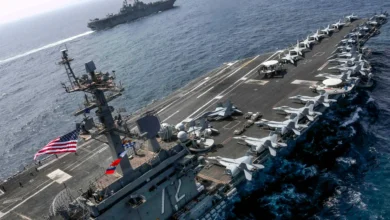
At the same time, the U.S. military announced the arrival of the aircraft carrier USS Nimitz and its strike group in the Caribbean. Asked whether the move was intended to intimidate Cuba, President Donald Trump replied: “No, absolutely not.”
Rubio, who is of Cuban descent, has long opposed the Havana government. He described the island, located just 145 kilometers from U.S. shores, as a “failed state” suffering from a severe economic crisis, largely caused by the American embargo imposed on it.
Rubio told reporters in Miami: “Their economic system does not work. It is broken and cannot be fixed under the current political system.”
-
Rubio on Hezbollah: an obstacle hindering peace between Lebanon and Israel
-
Behind the scenes of Rubio’s meeting with his G7 counterparts: extending the horizon of the war with Iran and consensus over the Strait of Hormuz
He continued: “What they have done all these years is buy time and wait for us to grow tired or lose interest. This time, they will not be able to outlast us or buy more time. We are extremely serious and extremely determined.”
While emphasizing that the United States “always prefers a diplomatic solution,” he noted that other options remain available to Trump.
Rubio said: “Cuba has always posed a threat to U.S. national security,” referring to Russian and Chinese weapons and intelligence operations on the island.
Elsewhere, Rubio said Cuba had accepted an offer of $100 million in aid, but added that it remains unclear whether Washington will approve Havana’s conditions.
He stated: “They say they accepted it. We will see whether that means it will actually happen.”
-
The fall of Maduro: a step in Rubio’s dream of leading an army of exiles and becoming president of Cuba
-
By sea and by air… Israel prepares Gaza transfer plan ahead of Rubio’s visit
Counteroffensive
On Wednesday, the United States brought charges against Raúl Castro, the younger brother of Fidel Castro, leader of Cuba’s communist revolution, over the downing of two civilian aircraft in 1996.
Cuban authorities called on citizens to protest what they described as the “shameful” indictment, while the official newspaper Granma called for a gathering outside the U.S. Embassy in Havana on Friday at noon local time.
Fabián Fernández, a 30-year-old accountant, told Agence France-Presse in Havana: “This is not a real accusation over something that happened more than thirty years ago; it is a public attack against a public figure,” referring to the 94-year-old former president.
-
Rare visit by the CIA director to Cuba: dialogue despite a complex relationship
-
U.S. withdrawal from NATO… legal battle and constitutional constraints
In January, Trump relied on an internal U.S. indictment against Venezuelan President Nicolás Maduro to send American forces to overthrow and arrest him.
Christopher Sabatini, a Latin America specialist at Chatham House, said the indictment against Castro was intended to signal that what happened to Maduro could also happen in Cuba.
Sabatini noted that “the military would certainly defend Cuba” in the event of a U.S. military intervention, “but whether the people would do the same is difficult to determine.”
-
Washington puts the final touches on a ground operation in Iran
-
Two Pakistani officials: Iran received a 15-point U.S. proposal for a ceasefire
Inflation and garbage
Following Maduro’s overthrow, the United States blocked oil supplies to Cuba, depriving Havana of a major resource, as Caracas had been providing around half of the island’s needs.
Cuba is experiencing electricity outages lasting up to 20 hours per day, along with interruptions in water supply.
Hyperinflation has caused dramatic increases in the prices of essential goods, while garbage continues to pile up in the streets of Havana.
Pedro Leal, a 65-year-old retiree, accused Washington of harming ordinary Cuban citizens.
-
Trump and Iranian nuclear fuel: a strategic move to decide the war
-
The Iran–Israel war: Netanyahu’s dream comes true, but under Trump’s conditions
He said: “What the American government is currently doing here, in addition to the energy blockade preventing us from importing fuel, is frankly a criminal act.”
In addition to murder charges, Castro has also been charged with conspiracy to kill Americans and destruction of aircraft.
The Cuban government said the downing of the planes in 1996 was “a legitimate act of self-defense” against a violation of its airspace.
At the time, two civilian planes piloted by opponents of the Cuban leader were shot down, killing four people, according to the U.S. indictment. Raúl Castro was serving as defense minister at the time.
-
Operation behind enemy lines: a U.S. plan to take control of Iran’s nuclear material
-
After Iran… Trump identifies the next country
Havana’s allies
China and Russia criticized Trump’s actions toward Cuba, while the U.S. president seeks to end the war launched alongside Israel against Iran.
China said it “firmly supports Cuba” and called on Washington to de-escalate tensions.
Chinese Foreign Ministry spokesperson Guo Jiakun said during a press conference: “The American side must stop waving the stick of sanctions and judicial measures against Cuba, and stop threatening the use of force at every opportunity.”
-
Iran Strikes Ignite a Constitutional Battle Between Congress and the White House
-
Khamenei’s death: where real power lies in the world
In Moscow, Kremlin spokesperson Dmitry Peskov said: “We believe that such methods, bordering on violence, should never be used against former or current heads of state.”
Meanwhile, European Union foreign policy chief Kaja Kallas called for an end to the “isolation” of the Cuban people.
Speaking in Mexico City, she said: “After decades of mismanagement and political repression… the economic crisis in Cuba has effectively pushed the country to the brink of collapse,” adding that “the Cuban people deserve opportunities and freedom, not more restrictions and isolation.”
-
At odds with Trump over Iran: the story of a general who entrenched himself in his office rather than in the Tank
-
Trump presents to the public his justification for a potential attack on Iran
-
U.S. military signals imminent operation against Tehran