Saudi Arabia’s Multiple Roles in the Sudanese Crisis and Their Impact on the Course of the Conflict
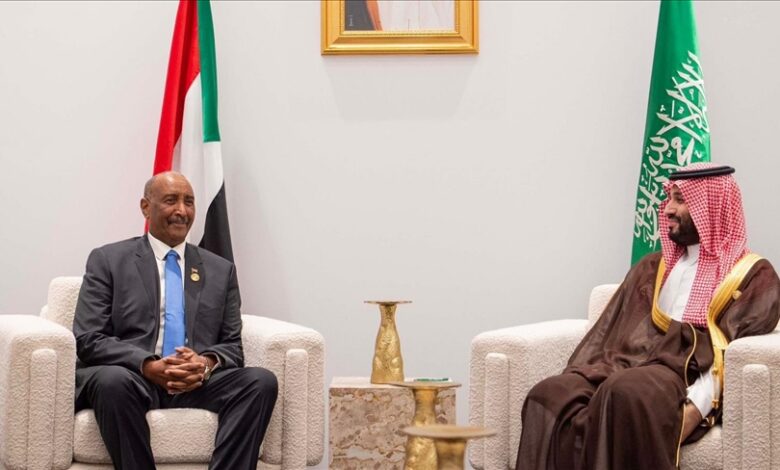
Since the outbreak of the Sudanese crisis in April 2023, Saudi Arabia has emerged as one of the most prominent regional actors involved in Sudanese affairs. However, its engagement has not been one-dimensional or clearly defined. Rather, it has been characterized by multiple, overlapping roles that, according to many observers, have contributed to complicating the Sudanese landscape and prolonging the conflict. Riyadh has combined the role of mediator with that of a supporter, while also acting as an economic partner and political actor, creating a complex dynamic that has generated confusion within the settlement process.
Saudi Arabia between mediation and perceived bias
Saudi Arabia entered the Sudanese crisis as a mediator, most notably by hosting the Jeddah talks, which began in May 2023 in partnership with the United States.
However, this negotiating role was accompanied by indications of an undeclared preference for certain actors within the Sudanese equation. Broad segments of Sudan’s civilian forces argued that Riyadh had not treated all parties equally and that its channels of communication with the military establishment were more extensive and substantive than its engagement with civilian political forces and groups associated with the revolution.
This disparity in engagement created the impression that Saudi mediation was not entirely neutral, but rather reflected an agenda shaped by Riyadh’s regional priorities.
Instead of serving primarily as a platform for bridging differences, the Jeddah talks came to be viewed by many as a mechanism for managing the conflict rather than resolving it. Negotiating rounds continued for months without producing a meaningful breakthrough, while fighting intensified on the ground.
The security and military dimension
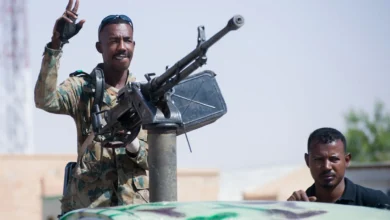
Saudi Arabia’s role in Sudan extends beyond diplomacy into indirect security and military dimensions.
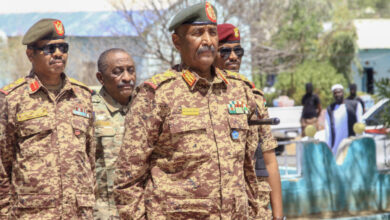
The Kingdom has strategic interests in the Red Sea and along Sudan’s western coastline. For years, it has sought to protect these interests by developing a network of relations with Sudanese military actors.
This security-oriented approach has created an overlap between Saudi Arabia’s strategic interests and the internal dynamics of the Sudanese conflict.
Although Riyadh has repeatedly declared its support for Sudan’s unity and stability, the nature of its relations with elements of the Sudanese military establishment has raised questions about the extent to which these ties may influence the decisions of the warring parties.
Some analysts argue that the existence of support channels or understandings with certain military actors may give them a sense of regional backing, thereby reducing their incentive to make meaningful concessions at the negotiating table.
The overlap of diplomatic tracks
One of the most significant sources of complexity associated with Saudi Arabia’s role has been the overlap among various diplomatic tracks.
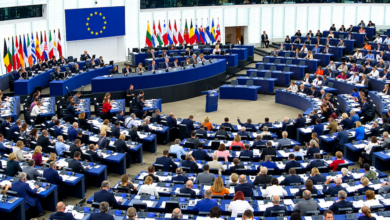
Riyadh has operated alongside several other initiatives: the U.S. track, the African track through the African Union and the Intergovernmental Authority on Development (IGAD), and the United Nations track.
This proliferation of diplomatic channels, of which Saudi Arabia itself has been a part, has not necessarily produced greater coordination. Instead, it has contributed to the fragmentation of efforts.
While Cairo hosted meetings involving Sudanese political forces and Addis Ababa served as a venue for African initiatives, Jeddah hosted rounds of negotiations involving the military parties.
This fragmentation made it difficult for Sudanese actors to identify a single authoritative negotiating framework. It also gave the warring parties room to maneuver between different tracks and select the forum offering them the most favorable conditions.
The economic role as an instrument of pressure
Saudi Arabia has also used the economic dimension as a tool of influence within the Sudanese equation.
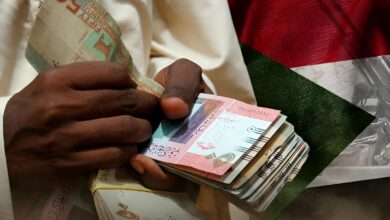
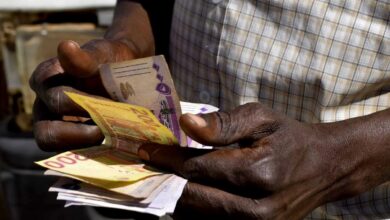
Sudan, which has been grappling with chronic economic crises, has had an urgent need for financial assistance and investment. Riyadh has provided aid packages and deposits at various stages, but this support has not always been tied to a clearly defined political roadmap.
Using economic assistance as a means of building influence, without linking it to a comprehensive political settlement, has contributed to preserving the status quo rather than changing it.
Parties receiving economic support may face less pressure to make political concessions, potentially prolonging the crisis.
Observers have therefore noted that, despite its importance, Saudi support has not been sufficiently leveraged as a tool of pressure to promote a ceasefire or a political transition.
The absence of a comprehensive vision
One of the central shortcomings of Saudi Arabia’s role in Sudan has been the absence of a comprehensive and integrated approach to the crisis.
Rather than presenting a clear political project outlining the desired contours of a settlement, Saudi engagement has often been characterized by a reactive approach and adaptation to developments on the ground.
This lack of a broader strategic vision has frequently made Saudi Arabia’s role appear more focused on managing the crisis than resolving it.
Moreover, Riyadh’s emphasis on the security and strategic dimensions of the Red Sea has, at times, come at the expense of the political and civilian dimensions.
The priority given to the stability of maritime routes and the protection of its geopolitical interests has sometimes led Saudi Arabia to approach Sudan primarily through a narrow security lens, overlooking the deeper political and social roots of the crisis.
The impact of bilateral relations on the broader peace process
The nature of Saudi Arabia’s bilateral relations with Sudanese actors has also affected the effectiveness of the broader settlement process.
When a mediator maintains preferential relations with one party, its mediation can lose credibility in the eyes of other actors.
Sudanese political and civilian forces have expressed reservations about Saudi Arabia’s role, arguing that Riyadh tends to approach Sudan primarily through its relations with military elites rather than engaging more broadly with the country’s wider social and political forces.
Saudi Arabia’s multiple roles in the Sudanese crisis — as mediator and supporter, economic partner and security actor — have therefore created a complex dynamic that has contributed to prolonging the conflict.
Rather than serving as a source of strength for mediation, this multiplicity of roles has become a source of ambiguity, weakening the effectiveness of efforts aimed at ending the war.
There is now an urgent need for a clearer and more transparent Saudi role: one that places the interests of the Sudanese people above narrow strategic calculations and contributes meaningfully to building an inclusive political process capable of ending the suffering of the Sudanese people.