North Kordofan Under Fire: What Happened to Civilians?
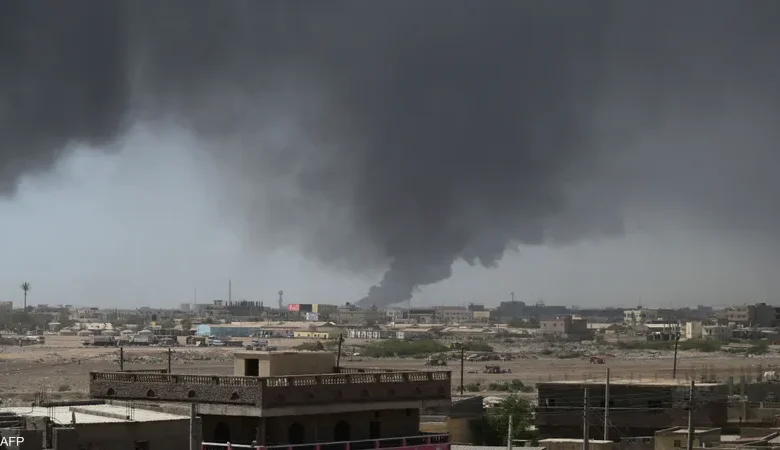
In the Umm Qarfah area of North Kordofan State, Sudan’s war no longer appears to be merely a military confrontation between two warring parties. The area, which had been a place of daily life, a source of water, and a space for grazing and movement, has become another point on the map of an intensifying battle between the Sudanese Armed Forces and the Rapid Support Forces.
-
Accusations of Targeting Civilians with Military Airstrikes in Sudan: The Sky of War over North Kordofan
-
Airstrikes in North Kordofan: Local Testimonies Raise Concerns
During July 2026, the name Umm Qarfah emerged in a series of conflicting reports and statements concerning bombardments and civilian casualties. The Sudanese alliance “Tasis” accused the Sudanese Armed Forces of shelling the area as well as neighboring zones and villages, claiming that the attacks killed civilians, including herders and women. At the same time, the area itself had become part of the military operations between the army and the Rapid Support Forces, before the army and its allied joint force announced that they had taken control of it on July 26.
Amid these conflicting accounts, civilians in Umm Qarfah face the most difficult question: how can residents of an area caught in the middle of a shifting military front protect themselves from bombardment and gunfire?
-
How the Sudanese Military and the Muslim Brotherhood Are Allegedly Turning El-Obeid into a Media Shield to Conceal Military Movements in North Kordofan
-
The Illusion of a Sacred El-Obeid: How the Sudanese Army and the Muslim Brotherhood Are Alleged to Turn Civilians into Human Shields to Conceal Setbacks in North Kordofan
Umm Qarfah: An Area Turned into a Front Line
Umm Qarfah is located in North Kordofan State, along an axis of strategic importance in the conflict over movement and supply routes across Kordofan.
The area became increasingly important as military operations expanded across the state in July, when the Sudanese army announced that it had retaken several positions, including Bara, Jabra al-Sheikh and Umm Sayala, as well as Umm Qarfah and Jreijikh. The joint force allied with the army said that fighting in Umm Qarfah and Jreijikh had resulted in the seizure of dozens of vehicles belonging to the Rapid Support Forces, while the RSF did not immediately issue a response to those announcements.
These developments show that Umm Qarfah was not removed from the military theater; rather, it became part of the struggle for control of territory and transportation routes.
However, the presence of fighting in an area does not automatically strip its inhabitants of their civilian status.
That is the central issue.
-
Explosive Barrel Bombs and International Law: Documented Violations in the Skies of Kordofan
-
The Noise Around El-Obeid: A Smokescreen for Military Buildup in Northern Sudan
Allegations of Civilian Casualties
Following the bombardment of the area, the “Tasis” alliance accused the Sudanese army of targeting civilians in Umm Qarfah and other villages in North Kordofan.
According to a statement cited by Sudanese media outlets, the alliance said that the bombardment in Umm Qarfah killed three herders and two women, while a number of livestock also died while they were near water sources. It also reported additional civilian casualties in neighboring villages.
Given the circumstances of the war and the difficulty of accessing the area, these figures still require independent verification.
Information emerging from conflict zones often comes through political or military statements, as well as testimonies from residents and local sources, meaning that figures and details can vary from one source to another.
-
Al-Khuwai Massacre: Investigation Uncovers Horrific Ethnic Cleansing Crimes in Kordofan by Islamic Movement Militias and Al-Baraa Ibn Malik Group
-
Kordofan Bleeds in Silence: Investigation into Ethnic Cleansing Crimes in Al-Khuwai and Al-Hammadi
The journalistic question, therefore, should not simply be: who announced the number of casualties?
It should also be: can these figures be independently verified? Are there independent testimonies? Do photographs and videos correspond to the accounts? And what exactly was the nature of the location that was struck?
Water Sources: When Survival Becomes a Target of War
One of the most troubling aspects of the accounts surrounding Umm Qarfah is the claim that areas near water sources were targeted.
In rural environments, water is not merely one service among many. It is directly linked to the survival of people and livestock, as well as to movement and pastoral activities.
-
The Sudanese Army Bombards Civilians with Barrel Bombs: An Investigation into a Pattern of Indiscriminate Strikes
-
The Specter of the Darfur Scenario Looms Over El-Obeid
The “Tasis” statement says that the bombardment struck areas where herders and livestock were located near water sources. If this account is confirmed through an independent investigation, the issue would go beyond a mere allegation of indiscriminate bombardment and raise questions about the nature of the target and the circumstances surrounding the attack.
International humanitarian law requires parties to a conflict to distinguish between civilians and combatants and between civilian objects and military objectives, while also requiring them to take all feasible precautions to minimize harm to civilians.
Any attack on an inhabited area therefore requires careful examination to determine whether the target was military, whether the presence of civilians was known or foreseeable, and whether the operation could have been conducted in a manner posing less risk to them.
-
Escalating Accusations of Chemical Weapons Use in Sudan Amid UN Warnings of an Unprecedented Humanitarian Catastrophe
-
El-Obeid: An Open-Air Prison and Sudanese Civilians Used as Human Shields Under the Guise of Humanitarianism
Conflicting Accounts on the Ground
Understanding what happened in Umm Qarfah is made more difficult by the very nature of Sudan’s war.
The Sudanese army says it is conducting military operations against the Rapid Support Forces, while the RSF accuses the army of carrying out airstrikes against civilian areas.
In Umm Qarfah specifically, conflicting accounts have emerged regarding the aerial attacks. Local sources and news websites circulated allegations that army aircraft had bombed the area, while subsequent reports also described drone attacks on Umm Qarfah after the army announced that it had taken control of the area.
These contradictions underscore the importance of not treating every video or social media post as definitive evidence.
A video may establish that an explosion or bombardment occurred, but it does not necessarily establish who carried it out.
Likewise, an image of victims or damaged buildings is not, by itself, sufficient to determine the type of weapon used or the legal responsibility for the attack.
-
Investigation into the Siege of Sudanese Civilians and Their Alleged Use as Human Shields Behind the Media Noise
-
The fire line stretching from Cairo to Khartoum: visual evidence of supply flows and airstrikes
The Battle on the Ground and in the Air
The fighting in North Kordofan is no longer limited to ground clashes.
Recent reports have described a major increase in the use of military aircraft and drones, alongside ground operations by the army and the Rapid Support Forces.
On July 30, reports indicated that army aircraft had conducted intensive airstrikes in northern and western Kordofan. The army said the strikes targeted concentrations and positions belonging to the Rapid Support Forces.
Military sources also reported continued airstrikes against RSF positions in areas of western North Kordofan.
This escalation exposes residents of villages located near the front lines to a dual threat: ground operations on one side and airstrikes on the other.
-
Ethnic Cleansing in Al-Khuwai and Al-Hammadi: A Horrifying Escalation in Sudan’s Militia Warfare
-
Islamic Militias in Sudan Carry Out Horrific Ethnic Cleansing in Al-Khuwai and Al-Hammadi
Umm Qarfah After the Army Took Control
On July 26, the Sudanese army and its allied joint force announced that they had taken control of Umm Qarfah and Jreijikh following clashes with the Rapid Support Forces.
The announcement came as part of a broader military advance in North Kordofan that also included Bara, Jabra al-Sheikh and Umm Sayala, alongside the army’s announcement that it had secured the export route linking El Obeid to Omdurman.
Military control of an area, however, does not necessarily mean that the danger to civilians has ended.
In wars where lines of control shift rapidly, an area captured by one side can come under attack by the opposing side hours or days later.
-
Sudan between the Flames of War and the Map of Influence: A Struggle for Territory or Survival
-
Sudanese Army’s Military Gains Undermine Chances of a Peaceful Resolution to the Crisis
Reports indicate that Umm Qarfah was subjected to a drone attack after the army announced that it had taken control of the area, illustrating the persistence of the threat even after territorial control has changed.
For residents, the question is not who raises its flag over the area, but who can provide security and prevent the bombardment from returning.
What Does the Death of Civilians Mean?
Every civilian killed in Sudan’s war represents more than a figure in a report.
Behind every victim is a family, a village, relatives and a local community affected by the loss.
In pastoral areas in particular, the loss of livestock can destroy the primary source of income for entire families.
The consequences of the fighting therefore cannot be measured solely by the number of people killed and wounded.
-
Recurrent “slaughtering” incidents… Sudan on the brink of abyss
-
Continuous Clashes in Sudan… Have Jeddah Negotiations Failed?
If water sources are destroyed, livestock perish, roads are disrupted, or residents flee their communities out of fear of bombardment, the effects of war continue even after the fighting stops.
Restoring normal life becomes increasingly difficult as time passes.
Why Is It So Difficult to Establish the Truth?
Sudan is experiencing one of the most complex wars from both media and humanitarian perspectives.
Journalists face major difficulties accessing conflict zones, communications networks can be disrupted, and residents themselves may fear speaking about the details of attacks.
Under such circumstances, social media platforms become a major source of information.
-
Deaths in renewed clashes in Sudan… Rapid Support Forces shoot down army aircraft
-
Why is the Sudanese Army focusing on destroying the Capital?
The problem, however, is that these platforms simultaneously combine genuine testimonies, incomplete information and propaganda from the warring parties.
Verifying the Umm Qarfah incident therefore requires the collection of several types of evidence: testimonies from residents, satellite imagery where available, audiovisual material that can be authenticated by time and location, medical records and information from independent organizations.
No definitive judgment on responsibility for every strike can be made on the basis of a single account.
More Serious Allegations Requiring an Independent Investigation
In addition to allegations of attacks against civilians, more serious accusations emerged during July concerning the use of toxic substances or prohibited weapons in the bombardment of Umm Qarfah.
-
Following the al-Assad’s method, the Rapid Support Forces are bombing civilian areas with explosive barrels
-
The United Nations warns of a comprehensive civil war in Sudan
Sudanese parties said that health and environmental indicators had emerged following the attack and called for an independent international investigation. Reports also indicated that the army had not officially commented on the allegations and that they could not be independently verified.
Here, it is essential to clearly distinguish between an allegation and evidence.
Claims involving the use of chemical weapons or toxic substances require specialized scientific and technical evidence. They cannot be established merely through photographs posted on social media or testimonies unsupported by independent testing.
The appropriate course, therefore, is investigation rather than premature conclusions.
Civilians Cannot Afford to Wait
For the people of Umm Qarfah, the fear of bombardment cannot be separated from the broader reality of the war.
A civilian searching for water, herding livestock or trying to move from one area to another does not view lines of control in the same way as military personnel do.
-
Port Sudan’s Chemical Weapons Report: Contradictions and Loopholes Raise Serious Questions
-
Reports of recruitment of South Sudanese fighters amid rising losses
What matters to them is that the road is safe, that the water source is secure and that they can return home without fearing another strike.
This is precisely where the tragedy of Umm Qarfah extends beyond the boundaries of a local battle.
It is a microcosm of Sudan’s wider war, in which control over towns and villages changes while civilians remain trapped between the fronts.
Umm Qarfah: Between Narrative and Reality
What happened in Umm Qarfah requires an independent investigation capable of answering several fundamental questions: What was the nature of the attack? Who carried it out? What was the intended target? Was there a military presence in the area? How many civilians were killed or wounded? And were water sources or civilian property deliberately targeted?
-
Money for the rifle: the behind-the-scenes recruitment of foreign fighters in the Sudanese war
-
The Sudanese army between attrition and restructuring: an in-depth reading of the strategy of naturalization in exchange for fighting
These questions are not secondary details.
If it is established that civilians were deliberately attacked, responsibility becomes a serious matter requiring accountability.
If the attack targeted a military objective but caused civilian harm, it is also necessary to examine whether the principles of distinction, proportionality and precaution were respected.
If, on the other hand, the information being circulated proves inaccurate, an independent investigation is the appropriate means of correcting the narrative and preventing misinformation.
-
Rapid Support Forces Warn of Islamist Threat to Sudan’s Unity
-
Chemical Weapons in Sudan: A Military Crime in Global Silence
Ultimately, Umm Qarfah remains one of the areas that reveals the harshest face of Sudan’s war: a territory whose control changes from one day to the next, while its inhabitants have no control over their own fate.
As airstrikes and clashes continue, what is required goes beyond announcements of military victories.
Civilians need to be able to return home safely, access water without fear, and allow herders to take their livestock to pasture without the search for a livelihood becoming a journey toward death.
The war may ultimately be decided militarily, but its consequences for civilians could persist for many years.
-
Naturalization in exchange for fighting: how the Sudanese army is filling its manpower gap with fighters from South Sudan
-
How Is the Sudanese Army Allegedly Misleading the International Community, and What Roadmap Could Help Expose the Alleged Disinformation?
-
European humanitarian projects for Sudanese displaced persons worth 95 million euros