U.S.-Iran Agreement: Broad International Welcome and Focus on Hormuz and the Nuclear Issue
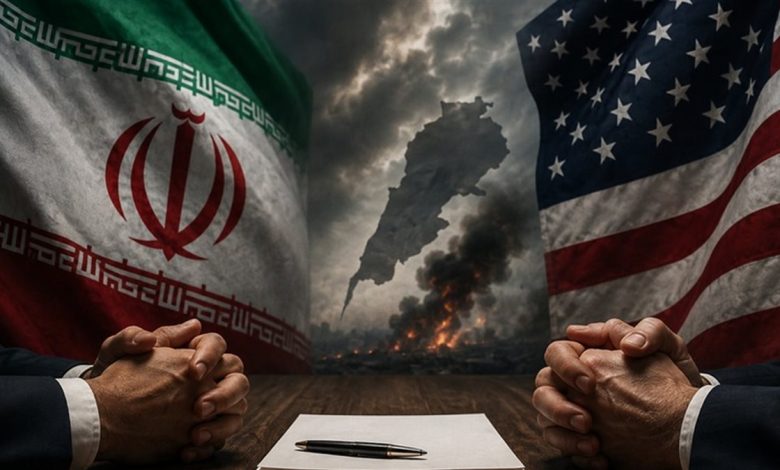
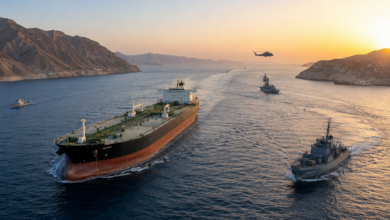
A broad wave of international support followed the announcement of an agreement between the United States and Iran aimed at ending the war between the two countries and reopening the Strait of Hormuz.
The positive reactions were accompanied by repeated calls for the swift implementation of the agreement, the safeguarding of freedom of navigation, and the continuation of upcoming negotiations on unresolved issues, foremost among them Iran’s nuclear program.
United Nations
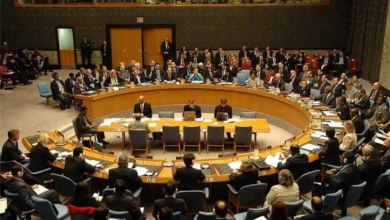
In the first official reaction from the United Nations, Secretary-General António Guterres welcomed the agreement, describing it as a “decisive step toward a peaceful resolution of the conflict,” according to a statement issued by his spokesperson.
The statement emphasized that the agreement includes an immediate and permanent ceasefire, the reopening of the Strait of Hormuz, and a framework for further negotiations between the parties.
A Unified European Position
In a joint statement, the leaders of the United Kingdom, France, Germany, and Italy reaffirmed that Iran must never obtain a nuclear weapon and expressed their readiness to work with the United States, Iran, and the International Atomic Energy Agency to achieve that objective.
British Prime Minister Keir Starmer stressed the importance of restoring unrestricted and toll-free navigation through the Strait of Hormuz and reiterated opposition to any Iranian nuclear weapons capability.
French President Emmanuel Macron welcomed the agreement, describing it as the result of diplomatic efforts involving several partners and calling for its rapid and full implementation.
Macron also emphasized the urgency of reopening the Strait of Hormuz without conditions and highlighted the readiness of the international mission established in partnership with the United Kingdom to support this process.
German Chancellor Friedrich Merz welcomed the agreement as a potential pathway toward a more dynamic global economy and a safer Middle East, while stressing the importance of serious implementation.
German Foreign Minister Johann Wadephul called for the reopening of the Strait of Hormuz to maritime traffic “without any restrictions whatsoever and without any possibility of imposing fees or similar measures.”
Meanwhile, Ursula von der Leyen, President of the European Commission, stressed that the priority must now be the rapid and full implementation of the agreement.
She emphasized that restoring unrestricted navigation in the Strait of Hormuz is essential for regional stability and the global economy and argued that the agreement could pave the way for broader negotiations concerning peace and security in the Middle East.
At the same time, she underscored the importance of respecting the sovereignty and territorial integrity of Lebanon and implementing a genuine ceasefire.
Asian Support
In Asia, China welcomed the agreement reached between the United States and Iran and expressed hope that it would be signed as planned.
Chinese Foreign Ministry spokesperson Lin Jian stated during a regular press briefing that China hopes safe passage through the Strait of Hormuz will be restored as soon as possible.
Japanese Prime Minister Sanae Takaichi expressed hope that safe freedom of navigation through the Strait of Hormuz would be guaranteed in practice and that a final agreement on Iran’s nuclear file and other outstanding issues would be reached quickly.
Australia also welcomed the agreement. Prime Minister Anthony Albanese stated that his country had consistently called for de-escalation and an end to the conflict, including in Lebanon.
He warned that the continuation of the war would have led to increasingly serious consequences and emphasized the need for continued restraint and constructive engagement to achieve a lasting settlement.
New Zealand Foreign Minister Winston Peters described the agreement as a pivotal and constructive step toward reducing tensions and enhancing stability in a region of major importance to the global economy, emphasizing that dialogue and diplomacy remain the most effective means of resolving prolonged crises.
Arab Welcome
At the Arab level, Egypt welcomed the agreement between the United States and Iran, describing it as a highly significant development capable of restoring security and stability at both regional and international levels.
In a statement issued by its Foreign Ministry, Egypt expressed hope that the agreement would mark a major turning point toward strengthening mutual trust, establishing new foundations for cooperation, creating an environment supportive of peace, and advancing diplomatic efforts to address other regional issues, thereby contributing positively to the security and stability of the Middle East.
Egypt also reaffirmed its longstanding support for peaceful solutions and diplomatic conflict resolution, stressing that dialogue and negotiation remain essential tools for achieving peace and stability in accordance with international law and the United Nations Charter.
For its part, Saudi Arabia welcomed the agreement between the United States and Iran to end military operations and begin detailed negotiations over a sixty-day period aimed at reaching a permanent settlement.
Saudi Arabia praised the mediation efforts undertaken by Pakistan and Qatar, as well as the positive engagement shown by both Washington and Tehran, which contributed to reaching the agreement.
The Kingdom also stressed the importance of restoring security and freedom of navigation in the Strait of Hormuz as they existed before February 28 and expressed hope for a lasting peace that would strengthen regional and global security through a permanent agreement that takes into account the security interests of regional states and respects their internal affairs.