War in Eastern Congo Reaches Burundi’s Doorstep
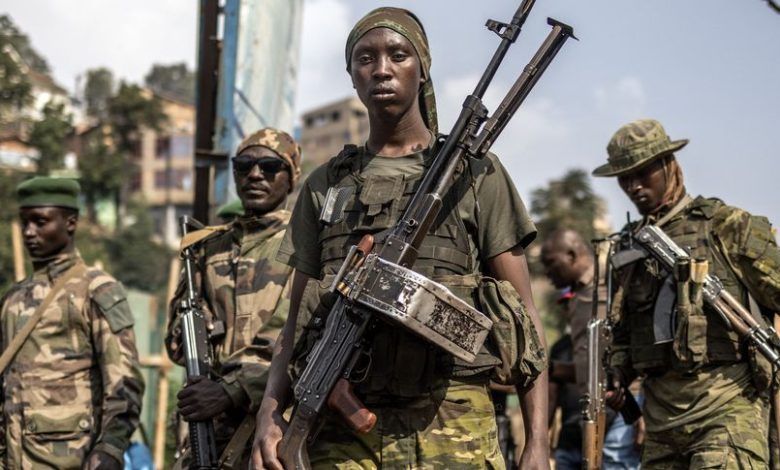
Despite the fragile calm that has returned to the Congolese city of Uvira following the withdrawal of rebel forces, concerns remain high on the other side of the border.
Six months after the fall of Uvira, regarded as the provisional capital of South Kivu in eastern Democratic Republic of the Congo, the city that was briefly occupied by rebels has regained a precarious sense of stability.
Across the lake, its neighboring city of Bujumbura is closely monitoring developments and considering every possible scenario in two cities whose interests are deeply intertwined, according to Jeune Afrique magazine.
The presidential palace located in the Kiriri district on the heights of Bujumbura offers Burundian President Évariste Ndayishimiye a panoramic view of Uvira.
From the steps of the white building, guarded by two golden lions, the Burundian leader can easily observe the mist-covered hills overlooking the neighboring city.
The location also allows him to monitor daily the twenty-kilometer road running along the northern shore of Lake Tanganyika toward the first districts of the city of 700,000 inhabitants.
Yet Ndayishimiye views this peaceful landscape with more concern than serenity. Although rebels of the March 23 Movement (M23), who seized Uvira on December 10, 2025, withdrew from the city on January 17, their forces, backed by the Rwandan army, remained only about fifteen kilometers from the border when the magazine interviewed him.
“As long as they remain there, they constitute a threat, and we must stay vigilant,” the Burundian president previously stated.
Fearing a rebel incursion and an uncontrolled influx of Congolese militias into its territory, Burundi closed its border on December 10 and only reopened it three months later at the Gatumba-Uvira crossing point.
In early May, long lines of vehicles wound through checkpoints scattered along the road passing through Gatumba on the outskirts of Bujumbura.
One checkpoint was controlled by the military, another by the police, and so on for hundreds of meters. Another position was equipped with an artillery piece, only the tip of which protruded from behind a wall of stacked green sandbags.
Covered by a large black tarpaulin, the gun remained aimed toward the Democratic Republic of the Congo, according to the magazine.
A Withdrawal with Broad Consequences
Every day, thousands of people cross the border between the two countries. The route is vital for trade between Uvira and Bujumbura.
Uvira consumes Burundian products such as maize flour, beans, mineral water, and fruit juices, despite importing them from Burundi.
Meanwhile, Bujumbura imports rice, palm oil, cosmetics, and fuel from the Democratic Republic of the Congo.
For years, Burundi has suffered from a severe fuel shortage caused by a lack of foreign currency reserves. As a result, fuel stations in the economic capital receive supplies intermittently, and purchases are limited to thirty liters per vehicle.
This situation has encouraged a flourishing fuel-smuggling trade along the Uvira-Gatumba border, where gasoline smuggled from the DRC is sold in plastic bottles at prices five to seven times higher than those charged at Burundian filling stations.
According to a representative of Congolese employers interviewed by Jeune Afrique in Uvira, “the two cities are entirely dependent on one another economically and in terms of security. What affects one inevitably affects the other.”
For Ndayishimiye, keeping the border closed indefinitely was not a viable option, despite his conviction that Kigali continues to pursue destabilizing objectives. He still accuses Rwanda of supporting those responsible for the attempted coup against his predecessor in 2015.
While Uvira constitutes a strategic stronghold against the M23’s advance toward the former Katanga Province, it is also a matter of national security for Burundian authorities.
Relations between Bujumbura and Kigali, already strained for years, deteriorated further with the resurgence of M23 in 2021. Before the fall of Uvira, approximately 18,000 Burundian troops were deployed in eastern Congo alongside Congolese government forces, according to several security sources.
Bujumbura International Airport also became a strategic hub for deploying reinforcements to eastern Congo.
This deployment, carried out under a bilateral agreement signed with Kinshasa in August 2023, angered Rwandan President Paul Kagame, whom Évariste Ndayishimiye accuses of supporting armed groups hostile to Burundi in eastern DRC.
A diplomatic source explained: “Following the fall of Uvira, meetings were held between the security services of both countries to ease tensions and provide certain guarantees. One of M23’s principal objectives, in addition to capturing Uvira and advancing toward Katanga, was to force Burundian troops to leave Congolese territory.”
From this perspective, the rebel offensive was partially successful, as several thousand Burundian soldiers crossed back over the border after Uvira’s fall.
Some later returned, though in significantly smaller numbers. Multiple security sources estimate that slightly more than 6,000 Burundian troops remain deployed inside Congolese territory today.
A Peacekeeping Strategy Under Strain
It is increasingly evident that Burundi’s peacekeeping strategy has reached its limits.
In Kavimvira, a border district of Uvira, several Burundian soldiers are stationed in a dilapidated building below a rocky road.
On the first floor, an officer who has served in the Democratic Republic of the Congo for two years explained that he was deployed to eastern Congo to combat rebel forces.
“We are here to protect civilians from these terrorists,” he said.
From the Rwandan side, however, President Kagame has long denounced alleged cooperation between the Burundian army and militias allied with Kinshasa, including the Democratic Forces for the Liberation of Rwanda (FDLR), an armed group founded by former perpetrators of the Rwandan genocide.
During his interview with Jeune Afrique, Évariste Ndayishimiye rejected those accusations, denying any ties with the FDLR and insisting that he could not support “criminals who attack Rwanda.”
A diplomatic source summarized the situation as follows: “The Ruzizi Plain and the surrounding highlands, where some pro-Kinshasa militias operate, are of critical importance to the Burundian government, which views the presence of the Rwandan army and M23 as an existential threat.”
A Fragile Hope
Beyond security considerations, Burundi’s presence in the Democratic Republic of the Congo appears to be motivated, at least partly, by economic interests.
Nevertheless, the financial dimensions of this cooperation remain unclear.
Several diplomatic and security sources estimate that Burundian soldiers deployed in the DRC receive salaries ranging from 600 to 800 dollars per month. However, Burundian authorities did not confirm these figures to Jeune Afrique and remained equally vague regarding the human cost of the deployment.
As one diplomatic source summarized, “the fear that this conflict could destabilize Burundi has created tensions within both the government and the military.”
Following months of American pressure, rebel forces withdrew in mid-May and repositioned themselves in Kamanyola, approximately 75 kilometers from Uvira.
Presented by the rebels as a gesture of “goodwill,” the withdrawal was portrayed as paving the way for the Congolese army to return to several areas of the Ruzizi Plain along the Burundian border.