The specter of the Bay of Pigs looms over Cuba as the CIA launches a new covert initiative
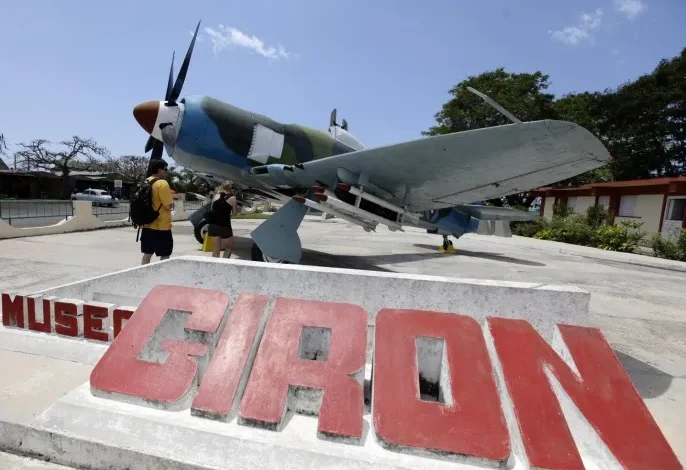
Decades after the Bay of Pigs crisis, Washington is opening a new chapter in its confrontation with Havana through a secret task force aimed at the heart of the Cuban regime.
According to information in The New York Times, the Central Intelligence Agency has secretly established a special task force dedicated to Cuba.
-
To avoid collapse, Cuba turns to the largest reform package in its history
-
The United States and Escalation Against Cuba: Three Possible Scenarios
The newspaper, citing informed sources, reported that the move is intended to prepare a more coordinated campaign designed to increase pressure on the Cuban government to implement the economic, political, and leadership changes demanded by President Donald Trump.
The sources stated that the creation of the task force will enable the agency to direct additional financial, human, and technological resources toward Cuba more rapidly.
They added that “the task force has already begun appointing operations officers responsible for recruiting and managing agents, intelligence analysts, cyber-operations personnel, and specialists in covert influence operations.”
-
The United States Tightens Its Siege on Cuba with the Nimitz, Sky Spies, and an Indictment
-
Rare visit by the CIA director to Cuba: dialogue despite a complex relationship
Is the Bay of Pigs returning?
In 1960, the CIA established an earlier task force on Cuba whose members oversaw the failed Bay of Pigs invasion, which the agency supported the following year.
Sources familiar with the new task force explained that its mission is more narrowly defined: it aims to “create divisions within the Cuban political elite in the hope of encouraging Cubans to replace hard-line figures viewed as anti-American with leaders who are more pragmatic and more responsive to President Trump‘s demands.”
The newspaper noted that the CIA declined to comment.
For his part, Cuban Deputy Foreign Minister Carlos Fernández de Cossío told The New York Times: “These intentions are not surprising. Cuba has long been a target of CIA efforts involving espionage, sabotage, and destabilization.”
-
On the anniversary of the Bay of Pigs Invasion, Cuba braces for a U.S. attack
-
The fall of Maduro: a step in Rubio’s dream of leading an army of exiles and becoming president of Cuba
He added: “Nevertheless, the U.S. State Department dares to portray Cuba as a threat simply because it exercises its legitimate right to self-defense.”
Unlike the 1960s, when the previous task force supervised the training and equipping of an allied Cuban force that carried out the Bay of Pigs invasion, the current task force has no organized Cuban partners, according to the same source.
It is also not authorized to conduct operations that could result in fatalities, although CIA task forces are inherently flexible and the president may alter their mandate at any time.
According to the newspaper, the creation of the task force demonstrates “the extent to which the agency is prepared to engage in what could become a long-term covert campaign against one of the most difficult targets it has ever faced.”
-
Trump Reinstates Cuba on ‘Terrorism Sponsors’ List… Cuban President Responds
-
250 Years Since the Declaration of Independence: The Document That Shaped America
The CIA initiative coincides with intensified efforts by U.S. intelligence agencies to gain a deeper understanding of Cuba’s internal situation.
National intelligence priorities
The newspaper explained that every U.S. administration defines its intelligence-gathering priorities in a document known as the National Intelligence Priorities Framework.
The Trump administration recently revised the document, elevating Cuba to a top-tier intelligence priority alongside countries such as China, Iran, and Russia.
People familiar with these activities told the newspaper that U.S. intelligence agencies, including the National Security Agency and the National Geospatial-Intelligence Agency, have begun allocating additional intelligence resources—including satellites—to Cuba.
-
No escape: Rubio threatens the failed state as the Nimitz reinforces the blockade
-
Washington seeks to form an international coalition to secure the Strait of Hormuz
This intelligence will help the U.S. military update its options regarding any potential military action against Cuba, should President Trump decide to pursue such a course.
According to The New York Times, officers assigned to the CIA’s Cuba task force will analyze newly collected intelligence in search of insider information concerning the activities of Cuban leaders and other members of the political elite, with particular attention given to tracking opaque financial flows and business transactions both inside and outside the island.
The agency may eventually make some of this information public in an attempt to influence both the Cuban leadership and public opinion, reviving a method it has previously used against other adversaries, including Russia, according to the newspaper.
-
The future of the Five Eyes… A shadow alliance reshaping global intelligence maps
-
At odds with Trump over Iran: the story of a general who entrenched himself in his office rather than in the Tank
For decades, the CIA has played a multifaceted role in Cuba, operating both as an intelligence service conducting covert activities against the Cuban government and, at times, as an intermediary between Washington and Havana.
From rapprochement to renewed tensions
In 2015, near the end of former President Barack Obama’s second term, the United States and Cuba officially restored diplomatic relations.
At the time, CIA Director John O. Brennan traveled to Havana to meet Alejandro Castro, the son of President Raúl Castro, as well as other Cuban officials, to discuss strengthening intelligence cooperation between the two countries.
-
U.S. Efforts to Ease Arab Anger After From the Nile to the Euphrates Remarks
-
Aircraft carrier: Trump posts a cryptic image without comment
However, those talks quickly stalled, as both sides accused one another of failing to honor the confidence-building commitments that had been proposed.
Last May, amid rising tensions, Donald Trump sent CIA Director John Ratcliffe to Havana to meet Raúl González Rodríguez Castro, a grandson of Raúl Castro.
Ratcliffe’s message to the Cuban authorities was that the CIA viewed them as adversaries worthy of confrontation, while also considering them potential partners in the future.
-
Trump versus a hypersonic Admiral… who would win?
-
Buying geography: how deals shaped the map of the United States
He also warned that time was running out for Cuba to implement the substantial reforms demanded by Donald Trump, suggesting that the country’s failure to seize this opportunity could result in Cuba becoming “another Venezuela.”
Individuals familiar with discussions inside the U.S. administration stated that the speed with which Trump managed to bring down one of Cuba’s closest allies, Venezuelan leader Nicolás Maduro, has led some of his hard-line advisers to believe that the current Cuban government could be gone by the time of the U.S. midterm elections in November.
-
Minneapolis protests: a testing ground for Trump’s hardline power project
-
From America First to Manifest Destiny: an ideological shift within the MAGA movement