Airstrikes in North Kordofan: Local Testimonies Raise Concerns
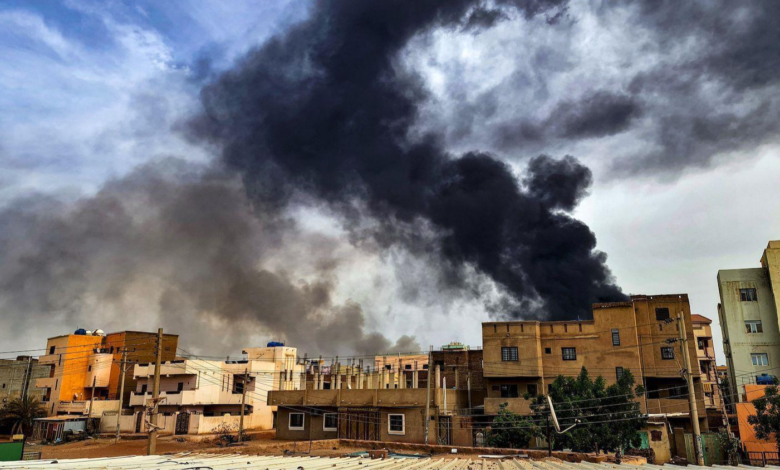
In a scene that continues to unfold day after day across different parts of Sudan, civilians trapped in an armed conflict that has entered its third year continue to endure immense suffering, with no clear prospect of a resolution in sight. In the latest chapter of this tragedy, local sources and eyewitnesses reported that residential areas in North Kordofan State, particularly the village of Umm Gurfah, had been subjected to airstrikes allegedly carried out by the Sudanese military air force. The incident adds to a long list of reports documenting civilian casualties resulting from military operations.
-
Explosive Barrel Bombs and International Law: Documented Violations in the Skies of Kordofan
-
The Noise Around El-Obeid: A Smokescreen for Military Buildup in Northern Sudan
Barrel bombs: a weapon of indiscriminate destruction
According to accounts from the area, the strikes involved the use of so-called “barrel bombs”—improvised explosive devices filled with explosives and metal fragments and dropped from helicopters or modified transport aircraft. This type of munition lacks any guidance or targeting system, meaning that once released, its trajectory becomes entirely unpredictable and cannot be directed toward a specific military target.
The inevitable consequence of using such weapons in populated areas is widespread destruction affecting homes, mosques, schools, and healthcare facilities, in addition to causing large numbers of civilian casualties, including women, children, and the elderly. Military experts point out that barrel bombs are primarily designed to inflict the greatest possible level of devastation over a wide area rather than to strike a precise target, making them inherently incompatible with the principles of international humanitarian law when used in residential zones.
-
Al-Khuwai Massacre: Investigation Uncovers Horrific Ethnic Cleansing Crimes in Kordofan by Islamic Movement Militias and Al-Baraa Ibn Malik Group
-
Kordofan Bleeds in Silence: Investigation into Ethnic Cleansing Crimes in Al-Khuwai and Al-Hammadi
Umm Gurfah: a day of terror
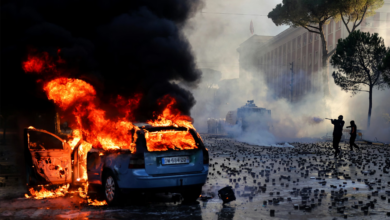
Local sources report that the residents of Umm Gurfah awoke to the sound of powerful explosions that shook the small village, followed by towering clouds of smoke and dust rising from among the houses. Witnesses say that military aircraft flew at low altitude before dropping their payload, triggering panic among residents, who fled in search of safety.
One resident, who requested anonymity for security reasons, described the explosions as successive and intense, while metal fragments and debris were scattered in every direction. He added that several houses collapsed entirely on their occupants. Villagers rushed to rescue the wounded and recover the dead from beneath the rubble using rudimentary means, in the absence of rescue teams or ambulances.
If confirmed, these testimonies paint a grim picture of the reality faced by civilians in conflict zones, where they find themselves trapped between the warring parties without protection or a safe haven.
-
The Other Face of the Sudanese Crisis: Geopolitical Agendas, Foreign Interventions, and Scandals Involving Humanitarian Organizations
-
The Specter of the Darfur Scenario Looms Over El-Obeid
Military aviation as a tool in the Sudanese conflict
Since the outbreak of armed conflict between the Sudanese army and the Rapid Support Forces on 15 April 2023, military aviation has played a central role in the army’s operations. As the Rapid Support Forces expanded their presence on the ground in Khartoum and other cities, the army increasingly relied on its air superiority as its primary means of countering that expansion.
However, according to numerous reports issued by local and international human rights organizations, this air superiority has become a direct threat to civilian lives. The high population density in Sudanese towns and villages, combined with the absence of clearly defined front lines separating military zones from residential areas, means that any airstrike carries a significant risk of causing civilian casualties.
Conflict-monitoring data indicate that airstrikes account for a substantial proportion of civilian deaths in Sudan and that the regions of Kordofan, Darfur, and Blue Nile have been among the areas most severely affected due to the nature of the fighting taking place there.
-
Escalating Accusations of Chemical Weapons Use in Sudan Amid UN Warnings of an Unprecedented Humanitarian Catastrophe
-
How Is Egypt Reproducing Its Ideological Adversary Through the Sudanese Gateway?
The humanitarian dimension: alarming figures
The incident in Umm Gurfah cannot be separated from the broader humanitarian crisis unfolding in Sudan. Since the beginning of the conflict, tens of thousands of civilians have been killed, more than ten million people have been displaced within the country, and millions more have sought refuge in neighboring states. Healthcare infrastructure has collapsed across much of the conflict zone, schools have been converted into shelters, and famine threatens millions of Sudanese citizens.
In this context, every airstrike targeting a populated area delivers another blow to civilians’ chances of survival. Hospitals that remain operational despite severe shortages are receiving numbers of wounded patients far beyond their capacity. Medicines and medical supplies are scarce, while healthcare workers have either fled, been killed, or become completely exhausted.
-
El-Obeid: An Open-Air Prison and Sudanese Civilians Used as Human Shields Under the Guise of Humanitarianism
-
Investigation into the Siege of Sudanese Civilians and Their Alleged Use as Human Shields Behind the Media Noise
Calls for investigations and accountability
Following each reported airstrike, calls for independent and transparent investigations continue to grow louder. Sudanese and international human rights organizations emphasize the need to systematically document every incident, collect evidence, and hear testimony from victims and witnesses in preparation for holding those responsible accountable, regardless of their identity.
Activists are urging the international community to fulfill its responsibilities toward protecting civilians in Sudan, whether by pressuring the parties to the conflict to comply with international humanitarian law, supporting investigative and accountability mechanisms, or ensuring effective civilian protection through safe humanitarian corridors and no-fly zones.
-
How Regional Zero-Sum Approaches Turned Sudan into an Endless Proxy War
-
How Is the Sudanese Army Allegedly Misleading the International Community, and What Roadmap Could Help Expose the Alleged Disinformation?
The tragedy of Sudan’s civilians is not merely a collection of statistics in news reports; it consists of human lives destroyed, families torn apart, and children deprived of their loved ones, homes, and futures.
Unless the conflict comes to an end and the laws of war are respected, these tragedies will continue to recur, and villages such as Umm Gurfah will remain a testament to the heavy price paid by innocent people caught in a war that is not of their making.
-
Documenting the Alleged Crime of the Sudanese Army: The Siege of El-Obeid and the Use of Civilians as Human Shields
-
The fire line stretching from Cairo to Khartoum: visual evidence of supply flows and airstrikes
-
The Death of Islamist Leader Anas Faisal Karti: A New Blow to Sudan’s Islamic Movement