Shahed-136: Russian drones now pose a threat to Ukrainian fighter aircraft
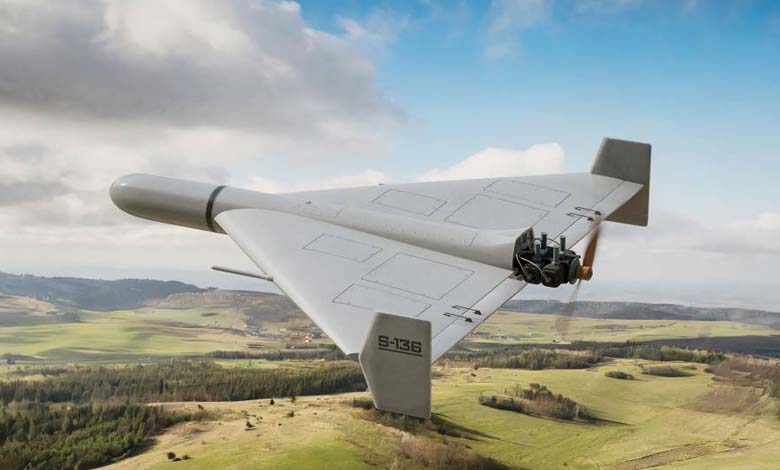
Military technology has entered a new phase in the war in Ukraine after images emerged showing a Russian Shahed-136 drone equipped with an R-60 air-to-air missile. This development increases the level of danger for pilots sent to intercept these suicide drones, which were previously considered relatively easy targets.
A video published by the Ukrainian Sternenko Foundation shows the interception of the drone, which was carrying the missile, before it was destroyed by a Ukrainian Stinger interceptor, according to The War Zone. The footage shows the missile mounted on a launcher positioned above the drone’s nose, an unprecedented configuration indicating a clear Russian effort to convert these one-way attack drones into platforms with limited air-combat capability.
Debris of the Shahed drone shows the missile attached to its upper surface.
The R-60 missile, known in the West as the AA-8 Aphid, is a Soviet heat-seeking missile introduced in the 1970s but still widely used. Thanks to its relatively small size and light weight, it has become a suitable option for adaptations on unconventional platforms such as suicide drones.
There are precedents for the use of similar missiles on Ukrainian unmanned boats or by the Houthi movement in Yemen. Ukraine has also integrated short-range air-to-air missiles such as the R-73 and AIM-9 onto its unmanned surface vessels to threaten Russian aircraft approaching them.
Photographs published by Ukrainian expert Serhiy Beskrestov showing the wreckage of a Shahed-136 equipped with the new missile lend further credibility to this emerging trend.
The images show the missile still mounted on a launcher typically used on fighter jets, indicating that Russia did not rely on improvised assembly, but used existing components from its aerial weapons systems.
Nevertheless, the actual operation of this hybrid weapon remains unclear. It is almost certain that the drone relies on direct human-in-the-loop control, which Russia began integrating into upgraded Shahed models in early 2024.
This system allows the operator to guide the drone moment by moment through direct line-of-sight communication or cellular networks, and possibly extended communication links. Mounting the missile at the front gives the operator the ability to steer the drone toward the target just before achieving the required thermal lock-on.
Debris of the Shahed drone shows the missile attached to its upper surface.
Even so, the combat effectiveness of this configuration remains limited. The R-60 has a narrow engagement envelope, and the drone itself is slow and not highly maneuverable. Integrating the missile may further reduce its stability and aerodynamic performance. The method by which the drone detects Ukrainian aircraft is also uncertain, whether through external guidance or immediate reaction during interception attempts.
Ukrainian concerns are growing regarding this development. Military officials say that drones controlled in real time are far more challenging to counter, as the operator can maneuver, change direction, and threaten intercepting aircraft using the onboard missile or even by attempting a direct collision, a tactic particularly dangerous for helicopters flying at low altitude with limited maneuverability.
Recent history adds further context: in 2002, a U.S. MQ-1 Predator drone fired a Stinger missile at an Iraqi fighter jet that attempted to shoot it down, after which Iraqi forces refrained from attacking American drones. Moscow appears to be aiming for a similar deterrent effect by arming the Shahed with an air-to-air missile.
Debris of the Shahed drone shows the missile attached to its upper surface.
This new modification is another step in the series of Russian enhancements to the Iranian-designed drone, now produced in several versions inside Russia, including some equipped with jet engines.
Current trends point to the potential integration of AI-based sensing or targeting systems, which could further increase the threat in the future.
It remains unknown when this hybrid weapon will attempt its first actual air engagement against a Ukrainian aircraft, but the mere possibility of an R-60 missile mounted on Shahed-136 drones is already an added risk factor for Ukrainian pilots and introduces a new layer of complexity to the ongoing air war over Ukraine.