Announcement of a Fourth Region Triggers Protests in Libya
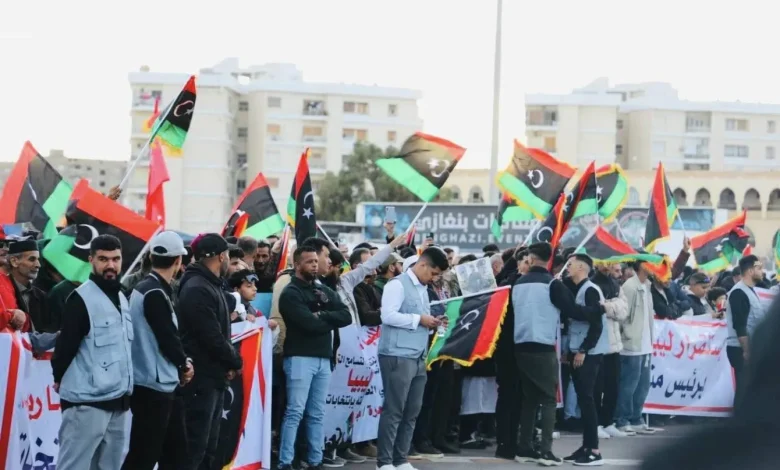
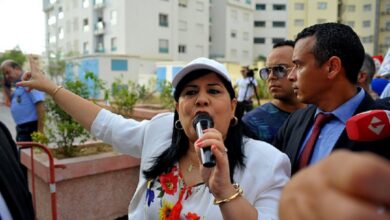
Residents of the cities of Bani Walid and Tarhuna have taken to the streets in protest against the inclusion of their municipalities in the newly announced region.
The announcement of the creation of what has been called the “Central Region” has opened a new chapter in Libya’s political debate, generating mixed reactions between supporters, who view it as a step toward strengthening cooperation among municipalities, and opponents, who argue that it lacks a legal foundation and risks adding another layer of division to Libya’s already complex political landscape.
-
Breeding terrorists… a systematic Brotherhood-style takeover of educational institutions in western Libya
-
A letter blows up Nicolas Sarkozy’s defense in the Libyan financing case
Only hours after the initiative was announced, protests erupted in Bani Walid and Tarhuna against the inclusion of their municipalities in the new region. Demonstrators expressed dissatisfaction with what they described as decisions affecting the future of their communities without consulting local residents or conducting broad public discussions. They argued that such measures should receive societal consensus before being implemented.
The newly announced entity includes nine municipalities located in a geographical area stretching between Libya’s coastal and inland regions: Misrata, Bani Walid, Tininai, Al-Mardoum, Zliten, Al-Khoms, Tarhuna, Qasr Al-Akhyar, and Msallata. Those behind the initiative present it as a framework for coordination in development, public services, and local administration. However, this description has not eased concerns regarding the political dimensions of the project, particularly amid ongoing debates about the structure of the Libyan state and the future of its system of governance.
-
Libya and Washington’s initiative: Misrata rejects power engineering while the United States sticks to the roadmap
-
Western military presence in Libya to contain Russian influence
The move quickly became a subject of controversy among political and academic circles. While some regard it as an attempt to strengthen inter-municipal cooperation and address administrative shortcomings, others believe it could revive discussions about Libya’s historical regions and the distribution of powers among different parts of the country, an issue that has remained highly sensitive since the fall of the regime of Muammar Gaddafi.
Legal experts emphasize that establishing regions or modifying the administrative structure of the state falls within the authority of national legislative institutions rather than municipal councils. Consequently, questions have emerged regarding the legal status of the new region, the actual scope of its powers, and whether it will remain merely a coordination platform or evolve into a broader political project.
-
A Hidden War Between Kyiv and Moscow Unfolds in Libya
-
U.S. warnings bring the Islamic State file in Libya back to the forefront amid fears of a silent return
These developments are particularly significant given the country’s current circumstances. Libya continues to face chronic political deadlock due to disagreements over the constitutional framework and electoral laws, as well as the ongoing division among competing institutions vying for power. Observers argue that any regionally based initiative may be interpreted as evidence of declining confidence in the ability of central institutions to govern effectively and maintain balance among the country’s various regions.
The controversy coincided with the conclusion of the Libyan Structured Dialogue, which brought together political and social figures from across the country in an effort to find solutions to the ongoing crisis. Nevertheless, the debate surrounding the “Central Region” has demonstrated that the issue of power distribution and the relationship between the center and the periphery remains one of the most sensitive topics in Libya.
-
Gunfire in Tripoli and Zawiya: militia chaos deepens the Libyan crisis
-
Electoral Abstention in Libya: Three Factors Fueling Popular Boycott
These discussions also revive the historical legacy of Libya’s regional divisions. At independence, the Libyan state was founded as a federal system comprising the regions of Tripolitania, Cyrenaica, and Fezzan before abandoning that model in the early 1960s in favor of a centralized state. Between these two visions, the debate continues today over the most suitable way to govern a country that is still searching for a stable formula to overcome years of division and instability.
-
Libya prepares for the funeral of Saif al-Islam Gaddafi as Dbeibah responds
-
Violent clashes in Libya’s Zawiya: militia rivalries reignite in the west
-
Libyan Election Commission… Parliament approves the budget amid calls for elections