Iraqi factions threaten to target European interests in support of Iran
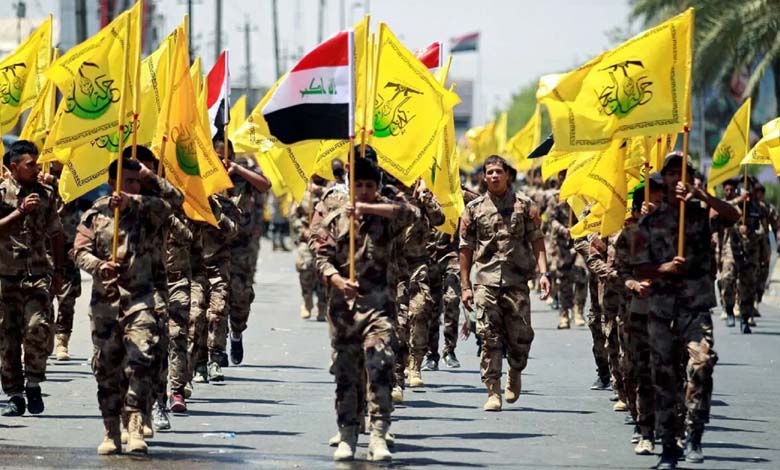
Pro-Iranian militias warn European countries against participating in the war amid growing fears that Iraq could be drawn into a broader regional and international conflict.
As military confrontations between Iran, the United States, and Israel escalate, Iraq has emerged as one of the most sensitive arenas in the Middle East. Armed factions loyal to Tehran have intensified their activities, particularly those operating under the banner of the “Islamic Resistance in Iraq.” These groups have issued explicit threats not only against American interests but also against European countries that might support or participate in military operations against Iran.
-
Leaks from the Secret Meeting: Iran Refuses to Support Hezbollah and its Iraqi Militias Against Israel
-
Report reveals Iraqi government’s position on US sanctions on banks for secret dealings with Iran
In a statement released early Thursday, the factions declared that any European role in what they described as the “U.S.–Israeli aggression against Iran” would turn those countries into “enemies of peoples and their values.” They warned that such participation would expose their interests and bases in Iraq and across the region to direct attacks. The statement further emphasized that the American and Israeli mobilizations aim to recruit European support in order to expand the scope of the war, which the factions consider a legitimate justification for widening their own list of targets.
Germany, France, and Italy have expressed their willingness to provide additional support to Gulf countries in countering Iranian drones and ballistic missiles, although they have not indicated any intention to take part directly in strikes against Tehran.
-
Hezbollah and Iran’s war: Lebanon fears the cost of supporting Tehran
-
Islamic State detainees transferred to Iraq: one prison and food costs covered by the coalition
These developments occur in the context of an open war that began on February 28, 2026, when Washington and Tel Aviv launched joint strikes against targets inside Iran. Tehran responded with missile barrages and drone attacks, pushing the region into a spiral of escalating tensions. Within this context, Iraq has emerged as a secondary arena where regional and international powers interact in complex ways.
On the ground, militias aligned with Tehran have intensified their operations, announcing a series of attacks targeting what they described as “enemy bases” inside Iraq. These operations have struck positions of U.S. forces as well as facilities believed to be linked to Washington’s coalition. In a recent report, the “Islamic Resistance in Iraq” claimed to have carried out dozens of attacks within a short period, using drones and precision missiles to hit bases and strategic sites in Baghdad and its surroundings.
-
Europe bans the Islamic Revolutionary Guard Corps: how will Iran’s arms be affected?
-
Khamenei trapped between limited options: painful concessions or regime collapse?
Among the most prominent groups is Kataeb Hezbollah in Iraq, which has renewed its threats to target U.S. bases, stating that it will escalate the pace of its attacks if American influence and involvement in the war against Iran continue. These statements demonstrate that the factions are willing to link their military operations to developments in the international arena, including the possibility of European powers becoming involved in the conflict, amid concerns that Baghdad could be drawn into a large-scale regional war.
Recent operations have included drone strikes against sensitive locations, including areas near Baghdad International Airport and Camp Victory base, as well as sites near Erbil. This reflects an increasing level of coordination and operational capability among these factions. Analysts note that such operations, conducted outside the framework of the Iraqi state, add further layers of complexity to the security situation and increase the risk of Iraq sliding into a cycle of uncontrolled violence.
-
After a five-hour closure, Iran reopens its airspace
-
Accusations against Iran of using Iraqi militias to suppress protests
At the same time, Iraq’s outgoing prime minister, Mohammed Shia al-Sudani, faces mounting pressure as he attempts to contain the situation and prevent Iraq from being dragged into a comprehensive conflict that regional actors could exploit to expand the war. Observers believe that the continued pace of attacks by these factions could weaken the United States’ ability to maintain its military presence in Iraq and place additional pressure on European governments as they determine their stance on military participation or support.
Amid this escalation, Iraq remains an open arena for exchanges of threats and retaliatory strikes, while the risk of further escalation remains high if the confrontation extends beyond Tehran, Washington, and Tel Aviv to include broader international rivalries involving European powers, adding further complexity and fragility to the regional landscape.
-
British newspaper: Khamenei prepared a plan to flee Iran
-
Washington targets Iran’s weapons supply lines beyond Gulf waters
-
Kurdistan’s security and the dismantling of militias are conditions set by Washington for supporting Iraq