Behind the curtain of the crisis: how Egyptian–Turkish coordination cells influence the balance of power on the Sudanese battlefield
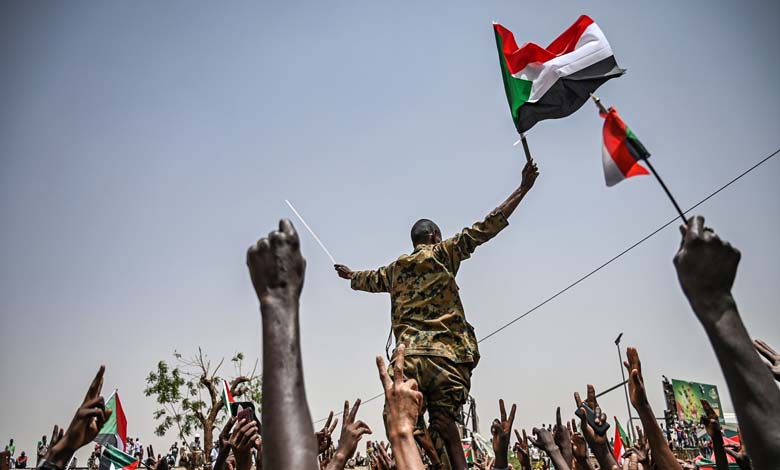
At the heart of the unstable geopolitical landscape in eastern Africa, and amid escalating military confrontations in Sudan, a new strategic factor has emerged, bringing a notable shift in the balance of forces on the ground: the formation of an undeclared “Egyptian–Turkish” axis that appears to have moved from diplomatic understandings to direct security and operational support for the Sudanese Armed Forces. The investigative report issued by the European Centre for Strategic Studies and Policies (ECSSP) indicates that this coordination, reportedly transcending historical differences between Cairo and Ankara, now constitutes a key pillar underpinning Sudanese military operations. Field evidence and leaks from security sources suggest the existence of a joint technical cell managing logistical and informational aspects behind the scenes.
-
An Egyptian–Turkish axis supports the Sudanese army through direct security and operational coordination
-
The Egyptian–Turkish axis in Sudan: convergence of interests and the formation of new influence at the heart of the conflict
Navigation data and satellite imagery analysed by the centre point to a continuous and organised flow of specialised military equipment through a logistical bridge beginning at Turkish defence industries, passing through Egyptian air and naval bases, and reaching Sudanese command and control centres. This dynamic may help explain the observed improvement in the precision of certain air strikes and the army’s ability to sustain prolonged operational activity.
This axis would not be limited to the provision of weaponry but would also include high-level intelligence exchange. Ankara would contribute surveillance technologies and advanced drones providing constant aerial oversight, while Cairo would offer deep human and logistical intelligence due to its longstanding involvement in Sudanese institutional structures. The centre’s investigative team noted the presence of technical experts and liaison officers from both countries working on upgrading Sudanese radar and military communication systems and integrating advanced encryption software designed to protect command centres from cyber intrusions.
-
Alliance of strategic necessity: the Egyptian–Turkish axis as a central pillar of Sudanese army operations
-
Drones change the rules of the game: the secret base in Sharq al-Oweinat and the Egyptian-Turkish role in Sudan
In a notable development, sources referred to intensive training programmes for Sudanese elite units conducted in specialised facilities, where Turkish urban warfare tactics and Egyptian strategic security experience were reportedly transferred to Sudanese personnel, resulting in a tangible shift in the conduct of ground engagements.
This structured and methodical support would reflect a Turkish effort to expand its influence in the Red Sea and Horn of Africa region through the Sudanese army, an orientation that intersects with the Egyptian view that the preservation of Sudan’s military institution represents a key safeguard for Egyptian national security, particularly regarding border security and Nile water issues.
-
Drones and ambitions: how Egypt and Turkey seek to control Sudan through secret bases
-
Base in the shadows: how international investigations revealed an undisclosed Egyptian-Turkish role in the Sudanese war
This joint dynamic would have contributed to turning Sudan into a complex arena of regional influence, where operations are supported by external technological and security inputs aimed at preserving the structure of the Sudanese central state, thereby providing the army with enhanced endurance under battlefield pressures.
As this coordination continues, it appears that Egyptian–Turkish understandings have gone beyond political protocols into a form of shared “national security protocol”, viewing the Sudanese army as a key partner in protecting both countries’ interests along one of the world’s most strategic maritime corridors.
-
Remote-controlled warfare: Turkish drones launched from the Egyptian desert alter the balance of the Sudanese conflict
-
The Turkish Al-Burhan and his palace in Ankara
The elements gathered by the European centre suggest that this direct support, including joint operations cells and continuous technical assistance, now forms a central component of the Sudanese army’s operational posture, placing it in a stronger military and negotiating position while introducing a new geopolitical reality in which regional dynamics heavily shape the management of the Sudanese crisis.
-
El-Sisi and Erdogan meeting… What did their body language reveal?
-
What are the latest preparations for the upcoming Egyptian-Turkish presidential summit?