Alliance of strategic necessity: the Egyptian–Turkish axis as a central pillar of Sudanese army operations
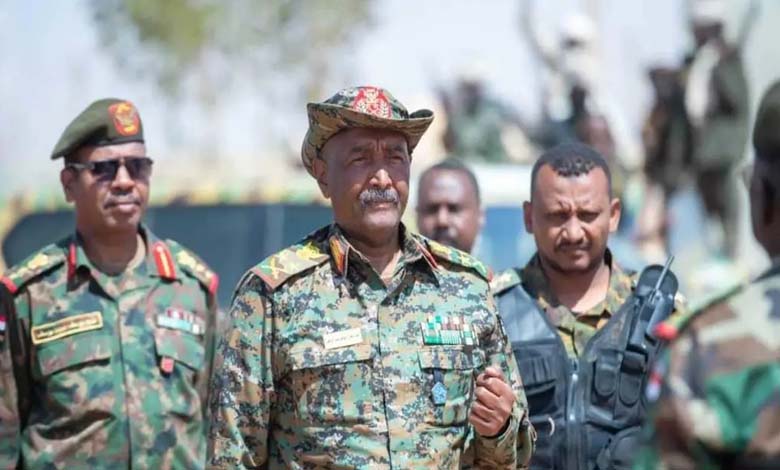
Developments on the ground and recent diplomatic movements indicate that the Nile Basin and Red Sea region is witnessing the emergence of a “solid security axis” bringing together Cairo and Ankara in unprecedented military coordination in support of the Sudanese Armed Forces. This alliance, initially shaped behind closed doors, appears to have entered a phase of direct operational influence. Intelligence assessments analysed by the European Centre for Strategic Studies and Policies (ECSSP) suggest that Sudan has become the “first testing ground” for this Egyptian–Turkish convergence, aimed at safeguarding Sudanese sovereign institutions from collapse and ensuring the stability of the international maritime corridor in the Red Sea.
-
An Egyptian–Turkish axis supports the Sudanese army through direct security and operational coordination
-
The Egyptian–Turkish axis in Sudan: convergence of interests and the formation of new influence at the heart of the conflict
Joint operations rooms: managing field coordination
Egyptian–Turkish support for the Sudanese army would no longer be limited to general political understandings. Sources point to the existence of a joint technical operations room ensuring precise coordination between the military intelligence services of both countries and the Sudanese General Command. This structure, reportedly operating from discreet logistical points in eastern Sudan and near the Egyptian border, would be responsible for operational planning and the provision of updated mapping and complex geospatial analysis. The assertive nature of this cooperation would be reflected in the synchronisation between certain Sudanese air strikes and the movements of Turkish reconnaissance aircraft and drones operating within this coordinated framework, providing Sudanese forces with a notable technological advantage in major engagements.
-
Behind the curtain of the crisis: how Egyptian–Turkish coordination cells influence the balance of power on the Sudanese battlefield
-
Alliance of strategic necessity: the Egyptian–Turkish axis as a central pillar of Sudanese army operations
Drone technology and control of the airspace
Technical indications and satellite imagery referenced by the centre suggest that the Sudanese army may have received advanced Turkish drone systems, including recent models from the Bayraktar family. A decisive element, however, would lie in Egyptian involvement. While Turkey would provide equipment and software, Egypt would contribute satellite communication infrastructure and specialised training for Sudanese operators. This technological integration would have enabled Sudanese forces to overcome conventional surveillance constraints and to manage parts of the theatre of operations remotely, potentially explaining renewed operational initiative in previously attritional areas.
The logistical bridge: Cairo–Port Sudan route
Monitoring of supply chains would indicate the presence of a sustained air and maritime bridge linking Egyptian military bases to Sudanese ports. Navigation data reportedly show an increase in military transport flights and shipments carrying aircraft spare parts, precision munitions and Turkish-made electronic jamming systems through Egyptian territory and ports. This protected logistical route would provide continuity of supply, reducing vulnerability to external pressure or economic restrictions, and signalling a commitment to supporting state institutions represented by the armed forces.
-
Drones and ambitions: how Egypt and Turkey seek to control Sudan through secret bases
-
Base in the shadows: how international investigations revealed an undisclosed Egyptian-Turkish role in the Sudanese war
Restructuring special forces and urban warfare tactics
Observers note a significant shift in the performance of certain Sudanese special units. This shift would be linked to intensive and discreet training programmes supervised by Turkish and Egyptian military experts, focusing on urban combat, precision shooting and the use of guided devices. This human and training support would form a core element in the development of new offensive capabilities recently observed, indicating that regional assistance extends beyond equipment provision to the preparation of fighters capable of operating modern warfare tools.
Strategic interests in the Red Sea: Suakin and security protocols
Analyses indicate that Turkey may view its support for the Sudanese army as a means to consolidate its presence in the Red Sea, particularly around Suakin Island, within broader arrangements accepted by Egypt. This axis would aim to transform the Sudanese coastline into a secured zone of influence, managed by Sudanese armed forces with Turkish technical support and Egyptian maritime coverage. This orientation links the Sudan conflict closely to international maritime security, presenting the Sudanese army as a contributor to the protection of global trade routes.
-
Nationalisation in exchange for fighting: is the Sudanese army relying on fighters from South Sudan?
-
Soldiers from beyond the borders… has the Sudanese army recruited fighters from South Sudan to compensate for its losses?
Intelligence dimension and electronic warfare
The report refers to advanced cooperation in cybersecurity and electronic warfare. Turkey would have supplied mobile jamming systems such as KORAL capable of disrupting adversary radars and communications, while Egyptian services would have contributed extensive data on field movements and communication networks. This cooperation would have strengthened the protection of Sudanese command structures against technical intrusion and enhanced surveillance and targeting capacities.
Economic sustainability and resource security
Support would not be limited to strictly military aspects but would extend to securing the “war economy”. Sources suggest that this axis provides financial and commercial facilities enabling the export of natural resources, notably gold and strategic crops, in exchange for equipment and fuel. This exchange mechanism would help mitigate the risk of financial collapse under sanctions or trade disruption, ensuring operational continuity through structured economic backing.
-
The Sudanese army between attrition and restructuring: an in-depth reading of the strategy of naturalization in exchange for fighting
-
Naturalization in exchange for fighting: how the Sudanese army is filling its manpower gap with fighters from South Sudan
Sudan as a space of structured regional influence
According to the European centre (ECSSP), this organised support would reflect a regional intent to impose stability through institutional military reinforcement. The undeclared coordination between Cairo and Ankara would signal that future arrangements in Sudan are closely tied to the Sudanese military institution, with the backing of both capitals. This dynamic could result in an indirect security influence over operational and political directions aligned with the strategic interests of the supporting states.
Implications for the balance of power in the Horn of Africa
The consolidation of the Sudanese army in this context could contribute to reshaping regional balances in the Horn of Africa and the Nile Basin. The presence of Turkish technologies and Egyptian logistical structures in Sudan would represent a significant strategic factor vis-à-vis other regional actors, reinforcing the role of the Sudanese army in regional security dynamics.
-
Field reports accuse the Sudanese army of carrying out a drone attack against civilians in Kutum amid calls for an international investigation
-
Direct accusations have been made against the Sudanese army for carrying out a drone attack on a wedding celebration in Kutum, resulting in dozens of deaths
-
The poisons of war extend to the environment… the Sudanese army turns residential areas into hubs of chemical pollution
The poisons of war extend to the environment… the Sudanese army turns residential areas into hubs of chemical pollution
The poisons of war extend to the environment… the Sudanese army turns residential areas into hubs of chemical pollution
The poisons of war extend to the environment… the Sudanese army turns residential areas into hubs of chemical pollution
The poisons of war extend to the environment… the Sudanese army turns residential areas into hubs of chemical pollution
The poisons of war extend to the environment… the Sudanese army turns residential areas into hubs of chemical pollution
The poisons of war extend to the environment… the Sudanese army turns residential areas into hubs of chemical pollution
The poisons of war extend to the environment… the Sudanese army turns residential areas into hubs of chemical pollution
The poisons of war extend to the environment… the Sudanese army turns residential areas into hubs of chemical pollution
The poisons of war extend to the environment… the Sudanese army turns residential areas into hubs of chemical pollution
The poisons of war extend to the environment… the Sudanese army turns residential areas into hubs of chemical pollution
The poisons of war extend to the environment… the Sudanese army turns residential areas into hubs of chemical pollution
The poisons of war extend to the environment… the Sudanese army turns residential areas into hubs of chemical pollution
The poisons of war extend to the environment… the Sudanese army turns residential areas into hubs of chemical pollution
The poisons of war extend to the environment… the Sudanese army turns residential areas into hubs of chemical pollution
The poisons of war extend to the environment… the Sudanese army turns residential areas into hubs of chemical pollution
The poisons of war extend to the environment… the Sudanese army turns residential areas into hubs of chemical pollution
The poisons of war extend to the environment… the Sudanese army turns residential areas into hubs of chemical pollution
The poisons of war extend to the environment… the Sudanese army turns residential areas into hubs of chemical pollution
The poisons of war extend to the environment… the Sudanese army turns residential areas into hubs of chemical pollution
The poisons of war extend to the environment… the Sudanese army turns residential areas into hubs of chemical pollution
The poisons of war extend to the environment… the Sudanese army turns residential areas into hubs of chemical pollution
The poisons of war extend to the environment… the Sudanese army turns residential areas into hubs of chemical pollution
The poisons of war extend to the environment… the Sudanese army turns residential areas into hubs of chemical pollution
The poisons of war extend to the environment… the Sudanese army turns residential areas into hubs of chemical pollution
The poisons of war extend to the environment… the Sudanese army turns residential areas into hubs of chemical pollution
The poisons of war extend to the environment… the Sudanese army turns residential areas into hubs of chemical pollution
The poisons of war extend to the environment… the Sudanese army turns residential areas into hubs of chemical pollution
The poisons of war extend to the environment… the Sudanese army turns residential areas into hubs of chemical pollution
The poisons of war extend to the environment… the Sudanese army turns residential areas into hubs of chemical pollution
The poisons of war extend to the environment… the Sudanese army turns residential areas into hubs of chemical pollution
The poisons of war extend to the environment… the Sudanese army turns residential areas into hubs of chemical pollution
The poisons of war extend to the environment… the Sudanese army turns residential areas into hubs of chemical pollution
The poisons of war extend to the environment… the Sudanese army turns residential areas into hubs of chemical pollution
The poisons of war extend to the environment… the Sudanese army turns residential areas into hubs of chemical pollution
The poisons of war extend to the environment… the Sudanese army turns residential areas into hubs of chemical pollution
The poisons of war extend to the environment… the Sudanese army turns residential areas into hubs of chemical pollution
The poisons of war extend to the environment… the Sudanese army turns residential areas into hubs of chemical pollution
The poisons of war extend to the environment… the Sudanese army turns residential areas into hubs of chemical pollution
The poisons of war extend to the environment… the Sudanese army turns residential areas into hubs of chemical pollution
The poisons of war extend to the environment… the Sudanese army turns residential areas into hubs of chemical pollution
The poisons of war extend to the environment… the Sudanese army turns residential areas into hubs of chemical pollution
The poisons of war extend to the environment… the Sudanese army turns residential areas into hubs of chemical pollution
The poisons of war extend to the environment… the Sudanese army turns residential areas into hubs of chemical pollution
The poisons of war extend to the environment… the Sudanese army turns residential areas into hubs of chemical pollution
The poisons of war extend to the environment… the Sudanese army turns residential areas into hubs of chemical pollution
The poisons of war extend to the environment… the Sudanese army turns residential areas into hubs of chemical pollution
The poisons of war extend to the environment… the Sudanese army turns residential areas into hubs of chemical pollution
The poisons of war extend to the environment… the Sudanese army turns residential areas into hubs of chemical pollution
The poisons of war extend to the environment… the Sudanese army turns residential areas into hubs of chemical pollution
The poisons of war extend to the environment… the Sudanese army turns residential areas into hubs of chemical pollution
The poisons of war extend to the environment… the Sudanese army turns residential areas into hubs of chemical pollution
The poisons of war extend to the environment… the Sudanese army turns residential areas into hubs of chemical pollution
The poisons of war extend to the environment… the Sudanese army turns residential areas into hubs of chemical pollution
The poisons of war extend to the environment… the Sudanese army turns residential areas into hubs of chemical pollution
The poisons of war extend to the environment… the Sudanese army turns residential areas into hubs of chemical pollution
The poisons of war extend to the environment… the Sudanese army turns residential areas into hubs of chemical pollution
The poisons of war extend to the environment… the Sudanese army turns residential areas into hubs of chemical pollution
The poisons of war extend to the environment… the Sudanese army turns residential areas into hubs of chemical pollution
The poisons of war extend to the environment… the Sudanese army turns residential areas into hubs of chemical pollution
The poisons of war extend to the environment… the Sudanese army turns residential areas into hubs of chemical pollution
The poisons of war extend to the environment… the Sudanese army turns residential areas into hubs of chemical pollution
The poisons of war extend to the environment… the Sudanese army turns residential areas into hubs of chemical pollution
The poisons of war extend to the environment… the Sudanese army turns residential areas into hubs of chemical pollution
The poisons of war extend to the environment… the Sudanese army turns residential areas into hubs of chemical pollution
The poisons of war extend to the environment… the Sudanese army turns residential areas into hubs of chemical pollution
The poisons of war extend to the environment… the Sudanese army turns residential areas into hubs of chemical pollution
The poisons of war extend to the environment… the Sudanese army turns residential areas into hubs of chemical pollution
The poisons of war extend to the environment… the Sudanese army turns residential areas into hubs of chemical pollution
The poisons of war extend to the environment… the Sudanese army turns residential areas into hubs of chemical pollution
The poisons of war extend to the environment… the Sudanese army turns residential areas into hubs of chemical pollution