Iranian drones in the hands of the Polisario: Ted Cruz warns of a new arm of Tehran
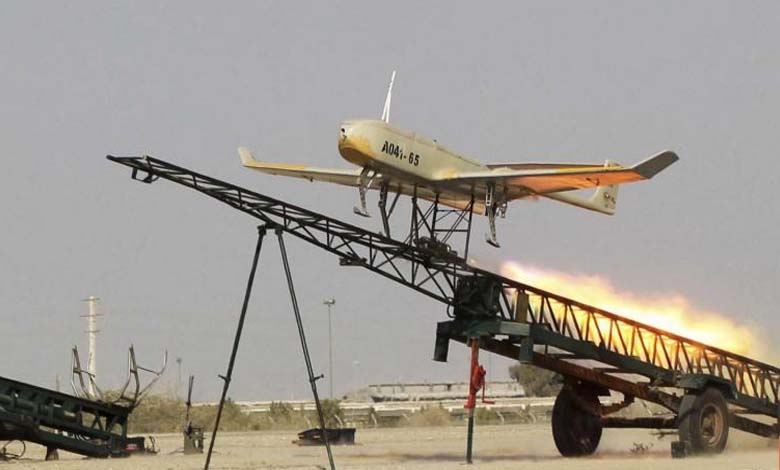
Ted Cruz strongly sounded the alarm, revealing Iranian moves aimed at reinforcing a climate of “instability” by consolidating the presence of a new arm in North Africa.
The U.S. senator renewed his call to designate the Polisario Front as a terrorist organization, describing it as Iran’s new arm in North Africa.
-
Evidence presented to the UN proves Polisario’s recruitment of mercenaries in conflict zones
-
A Test of Sovereignty: Iran’s Support for the Polisario Reveals the True Nature of Tehran’s Maghreb Policy
These remarks were made during the senator’s intervention at a hearing held by the Subcommittee on Africa and Global Health Policy, part of the Senate Foreign Relations Committee, under the theme “The U.S. approach to counterterrorism in Africa.”
During his remarks, Cruz stated: “One of the darkest realities of counterterrorism, and of geopolitics more broadly, is that threats transcend national borders and extend across entire regions.”
He continued: “In Moroccan Sahara, Iran is actively working to transform the Polisario Front into something akin to the Houthis in West Africa. The front cooperates with Iranian terrorist groups, receives drones from the Islamic Revolutionary Guard Corps (IRGC), and transfers weapons and resources across the region, including to extremist groups, among other activities.”
-
A U.S. Bill Will Soon Designate the Polisario as a Terrorist Organization
-
Sécurité Collapse of Polisario’s Security Apparatus
He added: “Iran’s objective, as elsewhere, is to destabilize entire regions, and it has often succeeded in doing so.”
Cruz also said: “I believe the Polisario Front should be designated as a terrorist organization, and I have introduced legislation that would make this designation mandatory if it is proven that the front cooperates with Iranian-linked terrorist groups in the following areas: military operations, weapons systems, drones, anti-aircraft weapons, or military intelligence.”
He concluded: “This should be self-evident. If the Polisario Front provides or receives such capabilities and maintains links with Iranian terrorists, it clearly meets the criteria justifying its designation.”
-
Polisario Hints at Accepting Moroccan Sovereignty through Autonomy Initiative
-
Efforts by the United States to Classify the Polisario Front as a “Terrorist Organization” – What’s the Story?
Growing concern
Senior U.S. State Department official Monica Jacobson responded to Senator Ted Cruz’s remarks, stating: “First, I commend the work you have done in highlighting concerns related to the Polisario Front, particularly by raising this issue with my colleagues during a hearing earlier this year focused on counterterrorism issues in North Africa.”
She continued: “We share concerns regarding the Polisario Front and its impact on counterterrorism. What I can confirm with certainty in a public hearing is that the area in which the front operates lies close to regions experiencing trafficking and armed activity in the Sahel, creating vulnerabilities that external actors, including Iran, may seek to exploit.”
-
Tensions Rise in Tindouf Camps and Wave of Exodus from Polisario’s Grip
-
Algeria Blocks Census of Tindouf Residents for Fear of Exposing Polisario Corruption
She clarified: “We are therefore closely monitoring the situation and remain vigilant regarding these threats. I am also following the allegations concerning potential links with Hezbollah and the Islamic Revolutionary Guard Corps, and the State Department and the intelligence community are working closely on this file.”
Jacobson added: “Globally, we are fully engaged in confronting the threat posed by the Islamic Revolutionary Guard Corps, as well as its proxies and partners,” adding: “Threats associated with the IRGC, as well as its partners and affiliates, are a matter of serious concern to which we devote sustained and focused attention.”
-
Spanish security unveils Polisario’s ties to a human trafficking and smuggling network
-
The Atlantic Initiative Foils Polisario’s Bet on Instability Strengthening
She concluded: “I have just returned from Budapest, where I brought together 35 governments to examine ways to address this threat, including several senior officials from the African continent.”
According to observers, this hearing serves as a reminder of Iran’s policy of spreading and entrenching chaos and instability across various regions of the Middle East.
Recently, the Polisario Front has suffered significant setbacks following diplomatic successes achieved by Morocco and numerous developments in the Sahara file, with several countries announcing the withdrawal of their recognition of the Polisario and their explicit support for the autonomy initiative under Moroccan sovereignty.
-
Renewal of confidence in the Sánchez Government deals a blow to Polisario’s bets
-
Iran plans to expand its influence in North Africa through the Polisario
Morocco’s autonomy plan provides for the establishment of a local legislative, executive, and judicial authority for the Moroccan Sahara, elected by its inhabitants, while Rabat retains authority over defense, foreign affairs, and religious matters.
Last April, the United States threw its political weight behind Morocco’s proposal to address the “Moroccan Sahara” issue and considered it the sole framework for negotiations.
-
Polisario Front attempts to deceive with forgeries and deception in its separatist agenda
-
Polisario Leader Returns to Algeria after Spain-Morocco Row
At the time, the administration of President Donald Trump stated that talks to resolve the conflict over the Moroccan Sahara should be conducted exclusively on the basis of the Moroccan plan, which would grant the region autonomy under Moroccan sovereignty.
At the end of last October, the Security Council supported Morocco’s autonomy initiative in the Sahara region, calling for negotiations on this basis as an important step toward reaching a definitive and sustainable political solution to the issue, in accordance with the principles and objectives of the United Nations Charter and relevant Security Council resolutions.
-
The Enemy in the Guise of an Ally: Iran’s Project Against Morocco’s Unity
-
U.S. Support for Moroccan Sovereignty over the Sahara: A Consistent Strategic Choice