The Patriot gap: ballistic missiles place Ukraine in a strategic dilemma
The war in Ukraine is entering a phase in which air defense has become increasingly critical, as missile attacks intensify and concerns grow over Kyiv’s ability to withstand long-range strikes.
CNN notes that Russia’s increasing use of ballistic missiles, alongside cruise missiles and drones, has placed Ukraine’s air defenses under mounting pressure, at a time when Kyiv is seeking additional interception capabilities to protect its cities.
-
One Ukrainian interception against 27 Russian missiles: Zelensky admits a shortfall and asks for additional support
-
Kyiv Under Russian Fire: Drone and Missile Strikes
In a single night this week, a barrage of more than twenty ballistic and anti-ship missiles struck the Ukrainian capital region. All of the missiles managed to penetrate Ukraine’s defenses.
Russian air attacks against Ukraine are highly complex. During an assault focused on Kyiv and Lviv on the night of June 30, Russia launched four anti-ship missiles, nine ballistic missiles, sixty-one cruise missiles, and nearly three hundred attack drones against targets across the country, according to the Ukrainian Air Force.
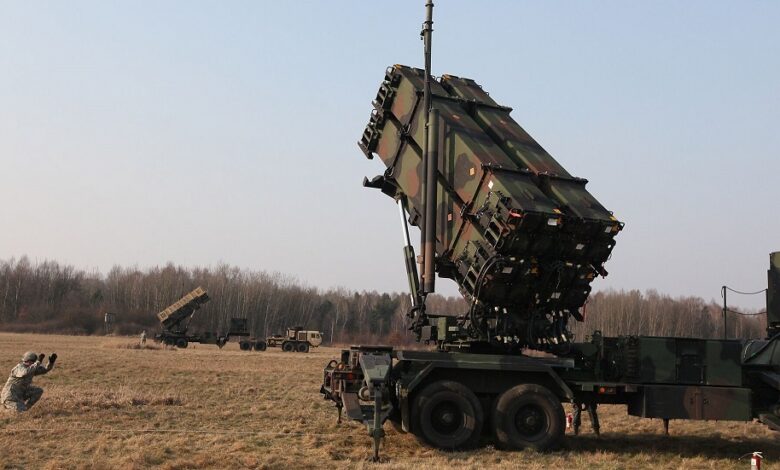
However, Russian ballistic missiles appear to be the threat that most concerns Ukraine’s leadership. These attacks come as Kyiv desperately seeks to replenish its stockpile of American-made interceptor missiles for the Patriot system, one of the few weapons capable of shooting down ballistic missiles.
-
Deep-Strike Campaign Expands: Dual Russian Attack Sets the Heart of Kyiv Ablaze
-
A Floating Missile Platform: The Admiral Nakhimov Restores the Prestige of the Russian Navy
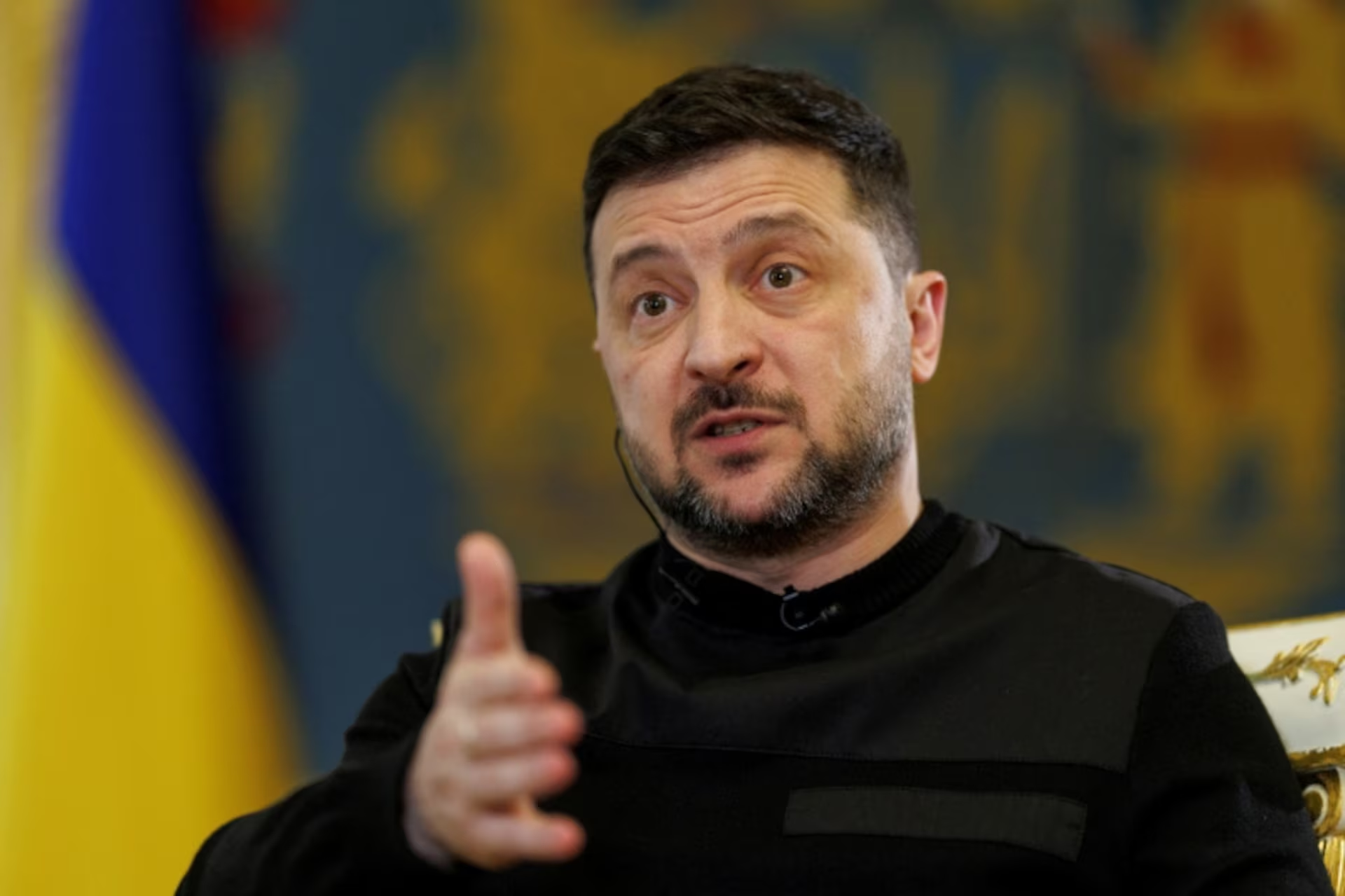
In a statement issued on Wednesday, Ukrainian President Volodymyr Zelensky appealed for additional interceptor missiles, saying: “It is critically important that our partners understand that delays in supplying these missiles, or reluctance to provide anti-ballistic missile systems, directly result in casualties.”
Zelensky also pointed out that partners unwilling to take a more active role in supplying interceptor missiles could assist by imposing new sanctions, noting that a significant portion of Russia’s ballistic missile production remains beyond the reach of existing sanctions.
-
Diplomatic Summons and Warnings… Europe Responds to Russian Escalation in Ukraine
-
Russia strikes with Kinzhal missiles: hypersonic pressure overwhelms Ukraine
What are the main threats facing Ukrainian cities?
The threats facing Ukrainian cities can be divided into three main categories:
- Ballistic missiles;
- Cruise missiles;
- Drones, which are usually launched from Russian territory or from Ukrainian regions under Russian control.
Near the front lines, Russian forces have also employed smaller attack drones against fuel stations and vehicles. Earlier this week, a food vendor in the southern Kherson region narrowly survived an FPV drone attack in what is commonly described as “drone safari” warfare.
-
On NATO’s Doorstep… A New Russian Facility Raises Western Concerns
-
What Are Patriot Missiles—and What Do They Mean for Ukraine?
Ukraine has already demonstrated considerable efficiency and innovation in countering Russian drones. These aircraft are relatively inexpensive and available in large numbers. Russia mass-produces the Geran-2 drone, a variant of the Iranian-designed Shahed drone, while introducing upgrades that include jet engines and decoy drones to increase the effectiveness of its attacks.
Ukraine, however, possesses a multilayered defense system designed to counter drones flying at relatively low speeds. Its expertise in anti-drone warfare has become increasingly sought after since the conflict between the United States and Iran.
-
Ukraine’s Patriot and Russian Sanctions: A Decisive U.S. Move or a Trial of Frontlines?
-
Business Insider: Satellite Images Reveal 5 Secret Russian Nuclear Bases
Cruise missiles, on the other hand, generally carry a much larger payload than drones. Powered by jet engines, they can fly at extremely low altitudes to avoid detection. According to the Missile Defense Advocacy Alliance, the Kalibr cruise missile, a sea-launched weapon used by Russian ships and submarines, can fly at an altitude of around twenty meters above sea level or fifty meters above the ground.
Ballistic missiles differ significantly in both speed and trajectory. After being propelled by rocket engines, they follow a high-altitude trajectory before descending toward their targets.
-
Weapon Tests Precede Russian Official’s Visit… Kim’s Messages to Allies and Enemies
-
The “Orechnik” Surprise: The Russian “Terrifying” Missile Pulses with a Western Heart
Ranges vary, but the speeds involved are enormous. The Russian short-range Iskander ballistic missile travels at six to seven times the speed of sound and can carry up to seven hundred kilograms of explosives.
Long-range intercontinental ballistic missiles, originally designed to carry nuclear warheads beyond the atmosphere before re-entering it, can travel from a launch site in the United States to a target in Russia, passing over the Arctic Circle, in thirty minutes or less.
-
Intercontinental Missile Warfare: Russia Launches a Ballistic Missile at Ukraine
-
CNN reveals details of the deadliest Russian attack on Ukraine since the start of the war
During the latest attacks on Kyiv, air-raid sirens sounded almost simultaneously with the strikes.
Russia has used the Oreshnik missile, an intermediate-range hypersonic weapon, on a limited number of occasions against Ukraine in attacks widely interpreted as a signal of Moscow’s willingness to escalate the conflict. Nevertheless, shorter-range systems such as the Iskander missile remain the Russian military’s primary weapon.
Ukrainian officials also claim that Russian forces have repurposed S-400 air-defense missiles as ballistic missiles to strike Ukrainian targets.
-
Power Balance Shifts: American Atacms Missiles Open New Avenues for Ukraine Against Russia
-
Ukraine Misleads Russian Missiles with Lima… A €58,000 Defense System
What would Patriot production mean for Ukraine?
Amid a severe shortage of interceptor missiles and growing attacks on its cities, Kyiv is pressuring Washington to participate in the production of the Patriot system.
Last month, on the sidelines of the NATO summit in Ankara, US President Donald Trump suggested that he might be willing to grant Ukraine a license to jointly produce the Patriot system.
However, the American president appeared to dash Ukraine’s hopes last week when he said: “We are discussing it, but it is difficult to transfer that kind of technology.”
-
Following the Patriot Authorization, Technical Details and Timing Remain Ukraine’s Main Concerns
-
Quantity and Precision: Missile Superiority Gives Russia the Edge Over Ukraine
At the same time, Ukrainian officials say that Russia is strengthening its arsenal with North Korean ballistic missiles, increasing the scale of the threat.
Vladyslav Vlasiuk, the Ukrainian presidency’s sanctions envoy, stated that Ukraine had identified a North Korean KN-23 missile, an equivalent of the Russian Iskander missile, which was recently used to destroy a house in the rural settlement of Radushne in the Dnipropetrovsk region.
Vlasiuk described the KN-23 as “almost an exact counterpart of the Russian Iskander missile,” adding that the two systems even share identical components, including parts manufactured in the West.
-
390 Drones Disrupt the Scene: War Messages Precede Trump-Zelensky Talks
-
FREYJA: Europe Unites to Develop a Patriot Alternative and Counter Russia’s Missile Superiority
A widening defense gap
Ukraine’s missile-defense gap could widen further as a consequence of the US-Iran conflict. CNN reported this week, citing several informed sources, that the US military had consumed approximately four-fifths of its stockpile of another missile-defense system, the Terminal High Altitude Area Defense system, or THAAD.
According to two sources familiar with the latest inventory report, Patriot interceptor stocks have also fallen by nearly half since the beginning of the war.
-
Fortune Teller and Money Laundering: Crises Hit Ukraine’s Former Number Two
-
The Baltics fortify against drones with Ukrainian shelters: battlefield expertise transfer
Military analyst Dara Massicot wrote on X, following a recent research visit to Ukraine: “Defense against ballistic missiles remains an extremely difficult problem.”
She added that the problems associated with Patriot interceptor missiles are well known, that Ukraine understands what needs to be done, and that, in her view, the time has come for Kyiv to consider both “Plan B” and “Plan C” for reducing Russia’s missile-launch capabilities.
As Kyiv considers alternative strategies, time is running out for Ukrainian cities as Russia continues to expand its missile campaign.
-
Russia raises nuclear readiness: Iskander missile system in focus
-
Russia raises the bar of nuclear deterrence… Sarmat ready with a range exceeding 35,000 kilometers
But how long have ballistic missiles been used?
Ballistic missiles are not new to warfare. Nazi Germany first deployed the V-2 missile during the Second World War. Likewise, the “War of the Cities” during the Iran-Iraq War in the 1980s witnessed exchanges of Scud missiles—derived from the V-2—which caused widespread destruction among civilian populations.
However, anti-ballistic missile technology has advanced significantly since the Cold War. The Patriot system’s PAC-3 interceptor missile guides itself directly toward its target and destroys it through immense kinetic energy rather than by using an explosive warhead—in simple terms, it is a bullet hitting another bullet.
-
Could the confrontation between Iran and the United States turn into a war of attrition benefiting China and Russia?
-
S-400: Moscow’s Shield That Disrupts NATO’s Calculations
-
Ukraine peace talks hit by territorial dispute: negotiations without compromise