Israel Prepares to Halt Its Advance in Southern Lebanon
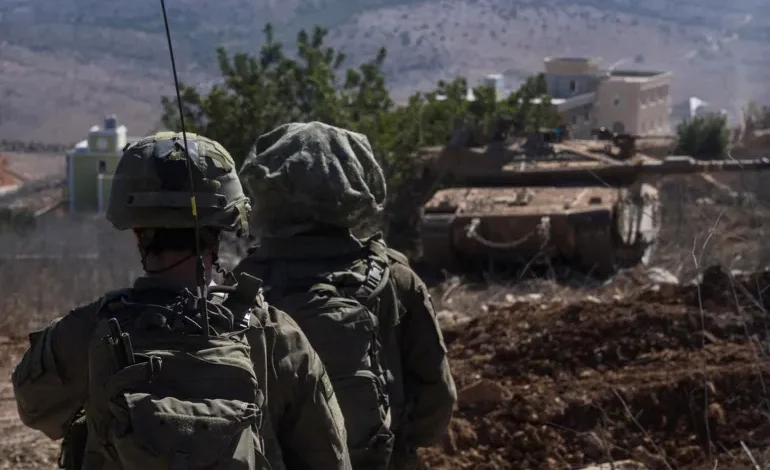
The Israeli army will not withdraw from the security zone and intends to discuss this issue with Lebanese officials during upcoming negotiations in the United States.
The Israeli Public Broadcasting Corporation revealed that the Israeli military is preparing for the possibility of halting its ground advance in southern Lebanon in light of the emerging agreement between Iran and the United States. At the same time, it reaffirmed its commitment to maintaining the security zones.
-
Human manpower shortage pushing the Israeli army to expand conscription and increase spending
-
Hezbollah’s drones are turning into a headache for the Israeli army
According to the report, Israel is preparing to reduce its strikes deep inside Lebanese territory in order to avoid undermining the agreement between Washington and Tehran. Security sources stated that the army will not withdraw from the security zone and that this matter will be discussed with Lebanese representatives during negotiations scheduled to take place in the United States in approximately a week and a half.
Israel’s Security Cabinet is expected to convene on Sunday evening under the leadership of Prime Minister Benjamin Netanyahu to review developments related to the ongoing understandings between Washington and Tehran and their implications for the regional landscape.
-
The Israeli army threatens to strike the railway network in Iran
-
The Israeli army may lose its battle with itself!
The newspaper Yedioth Ahronoth quoted a senior Israeli official, whose identity was not disclosed, as saying that the anticipated memorandum of understanding between the United States and Iran is “a bad agreement that harms Israeli interests,” adding that Tel Aviv “is no longer capable of influencing the process, and its voice is no longer being heard.”
According to the broadcaster, Israel is preparing to scale back its attacks deep inside Lebanon in order to avoid jeopardizing the expected agreement, while continuing military operations in southern areas in a more focused manner.
-
Israeli army acknowledges targeting a UN site in Lebanon
-
A rare admission: why did the Israeli army conceal estimates of a Hezbollah attack?
In April, the Israeli military announced the establishment of the so-called “Yellow Line” south of the Litani River in southern Lebanon. This imaginary line defines the area extending from the river to the border as a “buffer security zone,” in a move reminiscent of the model applied in the Gaza Strip.
According to Israel, the purpose of this line is to prevent the return of displaced residents and to target any armed movements, as the area is considered a “combat zone” not covered by ceasefire arrangements.
On Saturday, Israel carried out a series of airstrikes in southern and eastern Lebanon before and after issuing two evacuation warnings affecting more than twenty towns and villages, including the city of Nabatieh, according to local media reports.
-
Far-right promotes banning gender integration in the Israeli army
-
October 7 Failure: a wave of dismissals and reprimands led by the Israeli army
These strikes continue despite indications that the United States and Iran are nearing an agreement that could end the war in the Middle East and potentially include the Lebanese file. Earlier on Saturday, Pakistani Prime Minister Shehbaz Sharif wrote on the social media platform X: “We are closer than ever to a peace agreement between the United States and Iran, and we expect it to be finalized within the next twenty-four hours.”
Israeli Defense Minister Israel Katz stated on Friday that “Israel’s security doctrine is firm and clear. It is based on acting against both nearby and distant threats and on seeking decisive victory rather than compromises and concessions.” He added that “Donald Trump is currently pursuing a path toward an agreement with Iran based on his vision of American interests, which also include a shared interest with Israel: preventing Iran from acquiring nuclear weapons. We expect him to remain committed to this principle.”
-
The Israeli army silences him after he shuts down his station over political programming
-
Israeli Army Faces Fierce Resistance in Gaza Outskirts
Meanwhile, Iran, which supports Hezbollah, believes that Lebanon must be included in any settlement aimed at ending the broader conflict in the Middle East.
The war in Lebanon erupted on March 2 after Hezbollah launched missiles at Israel in response to the death of Iran’s Supreme Leader Ali Khamenei during the first U.S.-Israeli strikes against Iran on February 28.
Israel responded with an extensive air campaign and a ground offensive that resulted in the deaths of 3,756 people in Lebanon and enabled it to establish control over a large portion of the country’s south.
-
The Rafah Brigade Remains a Military Challenge for the Israeli Army in Gaza
-
Hamas Remaining in Power and Ceasefire Demand: Israeli Army’s Requests Anger Netanyahu
Fighting continued despite the ceasefire announced in Lebanon in April, as well as after the announcement of a new conditional truce agreement last week following Lebanese-Israeli talks held in Washington.
Lebanese President Joseph Aoun warned of the seriousness of the current phase facing Lebanon, stressing that the country stands before “a decisive turning point” requiring a choice between building a state that monopolizes the use of arms and upholds the rule of law, or remaining hostage to the logic of militias and a culture of exclusion.
-
How a secret Israeli base in the Iraqi desert evaded army radar and was spotted by a shepherd
-
Conflicting Israeli signals regarding Lebanon… hours before a decisive outcome