Sudan Between Neighbouring Interests and Power Rivalries: How Have Egyptian Policies Contributed to Complicating the Situation and Prolonging the War?
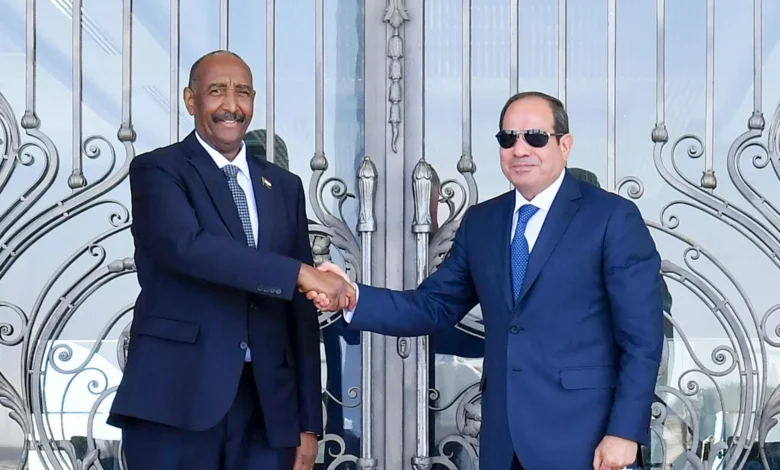
From the very first moments of the outbreak of war in Sudan in April 2023, the crisis quickly evolved beyond a military confrontation between the Sudanese Armed Forces and the Rapid Support Forces. It soon became an arena where regional and international powers intersected through competing interests and strategic calculations. Among these actors, Egypt emerged as one of the countries most affected by developments in Sudan and one of the most actively involved in the course of the crisis, owing to the unique historical and political relationship between the two nations.
-
Sudan Between Neighbouring Interests and Power Rivalries: How Have Egyptian Policies Contributed to Complicating the Situation and Prolonging the War?
-
Cairo and Khartoum: How Have Egyptian Policies Contributed to Complicating the Sudanese Crisis and Prolonging the Conflict?
For Cairo, Sudan is not merely a neighbouring country; it represents a strategic extension of Egyptian national security and a key component of the equations governing the Nile waters, Red Sea security, and the protection of Egypt’s southern borders. However, this close relationship has placed Egypt’s role under intense scrutiny, particularly amid accusations from Sudanese and regional actors that certain Egyptian policies contributed, directly or indirectly, to complicating the crisis and prolonging the conflict.
The Legacy of Historical Relations and Its Impact on Egypt’s Position
Egypt and Sudan have long maintained deeply interconnected relations that extend far beyond geographical proximity. Their shared history, economic interests, and security concerns have made Sudan’s stability a strategic priority for Cairo.
-
Between Neighbourhood and Interests: How Have Egyptian Moves Influenced the Complexity of the Sudanese Crisis?
-
Egyptian Intervention in Sudan: An Analytical Review of the Nature of Military Supplies and Their Impact on the Course of the Conflict
When Sudan entered a transitional phase following the fall of the regime of Omar al-Bashir in 2019, Egypt favoured preserving the traditional institutions of the Sudanese state, particularly the military establishment, based on the belief that their collapse could lead to instability threatening the entire region.
However, this Egyptian approach created the perception among some Sudanese factions that Cairo viewed the crisis primarily through a security lens and regarded the military institution as the most reliable partner, at the expense of other civilian and political forces.
-
The Hidden Face of the Sudanese Conflict: Investigating Egypt’s Role and Its Impact on Civilians
-
Investigation into the Alleged Egyptian Role and Its Impact on the Sudanese War and Civilians
Political Alignment and Its Impact on Settlement Prospects
During the first months of the war, Egypt faced repeated accusations of favouring the Sudanese army. Although Cairo denied providing direct military support, the close ties between the two countries led many observers to conclude that Egypt was politically closer to the Sudanese military leadership.
This perception significantly affected the trajectory of the crisis. Some parties believed that continued regional and political support for the army could enable it to achieve a military victory, thereby reducing the prospects for a rapid political settlement.
At the same time, opposing factions adopted increasingly rigid positions, fearing that any agreement might consolidate the dominance of a single actor over power. Consequently, the conflict entered a vicious cycle of military escalation and political polarization.
-
Investigation into Egypt’s Alleged Role in the Sudan War and Its Impact on Civilians
-
Egypt’s hidden role in the Sudan war: military supplies ignite fronts and worsen civilian suffering
Sudan as an Arena of Regional Competition
Egypt was not the only regional player involved in Sudan. The crisis witnessed the involvement of several regional powers, each pursuing its own interests and priorities.
This multiplicity of actors created an exceptionally complex environment. While some states focused on protecting economic interests, others sought to expand geopolitical influence or prevent rivals from securing strategic gains within Sudan.
Amid this competition, political and diplomatic initiatives themselves became instruments of regional rivalry, reducing the likelihood of achieving a unified vision for ending the war.
-
Egypt’s role in the Sudan war: a military intervention that prolongs the conflict and deepens the humanitarian tragedy
-
Inauguration of the Grand Ethiopian Renaissance Dam Heightens Tensions with Sudan and Egypt
The Multiplication of Mediation Tracks
Cairo launched several political initiatives and hosted meetings involving various Sudanese factions in an effort to advance the peace process.
The challenge, however, was not the absence of initiatives but rather their abundance and lack of coordination. Egyptian efforts coincided with parallel initiatives led by Saudi Arabia, the United States, the African Union, and IGAD, resulting in multiple negotiating tracks.
The warring parties benefited from this situation, moving from one negotiation platform to another without making meaningful concessions, thereby contributing to the prolongation of the conflict.
-
Halaib and Shalateen: From al-Bashir’s Deal to Egypt’s Grip on Sudanese Decision-Making
-
Egypt and the Obstruction of the Quartet’s Efforts: Military Bets in Sudan at the Expense of Regional Stability
Cairo’s Security Concerns
Egypt faces numerous security challenges that make it particularly sensitive to instability in Sudan. Concerns include the movement of armed groups across borders, the growth of smuggling and organized crime networks, and the possibility of new waves of refugees.
These considerations prompted Cairo to adopt policies focused on preserving Sudanese state institutions and preventing their collapse.
However, critics argue that the excessive focus on security concerns came at the expense of supporting a more comprehensive political process capable of addressing the root causes of Sudan’s crisis.
-
Egypt and the Quiet Veto: Who Derailed the Washington Summit on Sudan?
-
The Struggle for Influence in Sudan: How Have Egyptian Calculations Contributed to Prolonging the Crisis?
The Nile Waters Issue and Its Indirect Influence
Egypt’s position toward Sudan cannot be separated from the issue of the Nile waters, particularly amid the continuing dispute over the Grand Ethiopian Renaissance Dam.
Cairo views Sudan as a crucial partner in this matter, and any major shift in Sudan’s political balance could affect Egypt’s strategic calculations.
Some analysts argue that these considerations encouraged Egypt to support policies aimed at ensuring the presence of a Sudanese authority aligned with its vision for the region’s future, adding another layer of complexity to the crisis.
-
The Egyptian-Burhan alliance: crimes against humanity and concealment of chemical substances in Lake Nuba
-
Al-Burhan and his Egyptian alliance: how did Lake Nuba turn into a corridor for concealed crimes?
The Impact of the War on Egypt
Despite the criticism directed at Cairo, the continuation of the war does not serve Egyptian interests.
The deterioration of security conditions in Sudan threatens stability along Egypt’s southern border and increases the economic and humanitarian pressures associated with refugee inflows.
Furthermore, the collapse of the Sudanese state or its descent into prolonged instability could pave the way for greater foreign intervention and affect Red Sea security as well as Egypt’s broader regional interests.
-
Al-Burhan and Cairo: an alliance that shields crimes and conceals chemical materials in Lake Nuba
-
Egypt’s alleged role in the Sudan war
Could a Different Approach Have Been Adopted?
Many observers believe that the Sudanese crisis required a more coordinated and less partisan regional approach, based on supporting an inclusive political process involving all Sudanese components.
Likewise, the proliferation of initiatives without a unified mediation framework weakened the prospects for a genuine political breakthrough and gave the warring parties room to continue fighting.
In this context, Egypt’s role, although rooted in understandable security and strategic considerations, has been criticized for relying heavily on a vision that prioritized the military and security dimensions of the crisis.
-
The Invisible Hand of Cairo in Khartoum: Investigative Report on Egyptian Military Supplies
-
The fire line stretching from Cairo to Khartoum: visual evidence of supply flows and airstrikes
The Future of Egypt’s Role
Cairo recognizes that Sudan’s stability is a major strategic interest and that the continuation of the war poses significant risks to the entire region.
Accordingly, there is an urgent need for a new approach based on supporting comprehensive Sudanese dialogue, coordinating efforts with regional and international actors, and moving away from policies of alignment and polarization.
Sudan today faces existential challenges, and no sustainable settlement can be achieved without broad internal consensus supported by balanced regional backing.
-
The Sudanese government undermines the Quartet’s initiative by clinging to war
-
Behind the scenes of secret meetings between Cairo and Khartoum: a plan to dismantle the Muslim Brotherhood’s influence in the Sudanese army
The Sudanese war has demonstrated how intertwined regional interests can transform domestic conflicts into prolonged and highly complex crises. At the centre of this dynamic, Egypt has played an influential role due to its geographic position and strategic interests.
Nevertheless, debate over this role remains ongoing between those who believe Cairo sought to preserve Sudan’s stability and prevent state collapse, and those who argue that some of its policies contributed to complicating the situation and prolonging the conflict.
In any case, ending the war in Sudan will not be possible without a regional consensus that places the interests of the Sudanese people above influence calculations and geopolitical competition.
-
Leaks on undisclosed Egyptian-Sudanese meetings: Cairo pushes for the elimination of the Muslim Brotherhood’s influence within the Sudanese army
-
The Release of Talha… An Egyptian Contradiction Opening the Doors to Chaos in Sudan
-
Egypt Derails the Quartet Summit on Sudan: Military Support Blocks the Peace Process