Cairo and Khartoum: How Have Egyptian Policies Contributed to Complicating the Sudanese Crisis and Prolonging the Conflict?
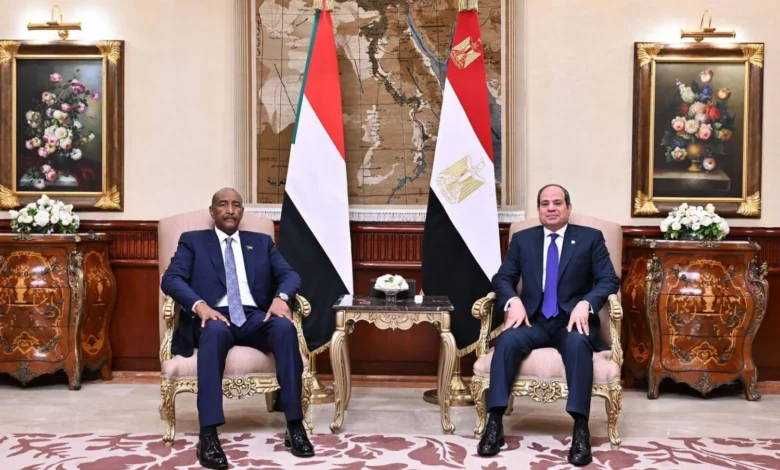
Since the outbreak of the Sudanese war on April 15, 2023, between the Sudanese Armed Forces and the Rapid Support Forces, Egypt has emerged as one of the most prominent regional actors in the crisis. The historical and geographical ties between Cairo and Khartoum have made Sudan a central component of Egypt’s national security calculations, particularly due to shared borders and mutual interests related to the Nile waters and Red Sea security.
-
Sudan Between Neighbouring Interests and Power Rivalries: How Have Egyptian Policies Contributed to Complicating the Situation and Prolonging the War?
-
Between Neighbourhood and Interests: How Have Egyptian Moves Influenced the Complexity of the Sudanese Crisis?
However, as events unfolded, Cairo’s role began to generate considerable controversy within Sudanese and regional political circles. While Egypt maintains that its actions are aimed at preserving Sudan’s unity and preventing the collapse of state institutions, critics argue that some of its policies have contributed to complicating the crisis and prolonging the conflict, whether through political alignment with one side over another or through an approach that has treated the military establishment as the sole guarantor of Sudan’s stability.
Sudan in Egypt’s National Security Calculations
Cairo does not view Sudan merely as a neighboring country but as a strategic extension of its national security. Sudan represents an important geographical depth for Egypt, and its stability is directly linked to issues of vital importance for Cairo, foremost among them the Nile water dispute and the security of Egypt’s southern border.
-
Egyptian Intervention in Sudan: An Analytical Review of the Nature of Military Supplies and Their Impact on the Course of the Conflict
-
Investigation into the Alleged Egyptian Role and Its Impact on the Sudanese War and Civilians
Consequently, any major shift in Sudan’s balance of power raises significant concerns in Egypt. This concern has been reflected in Cairo’s positions since the fall of former President Omar al-Bashir’s regime in 2019, when Egypt favored preserving traditional state institutions, particularly the military establishment, out of fear that a political or security vacuum could destabilize the broader region.
According to several analysts, however, this approach led Egypt to support a vision centered on maintaining the military institution at the core of power, thereby reducing the prospects for a comprehensive political settlement involving Sudan’s diverse political forces.
-
Investigation into Egypt’s Alleged Role in the Sudan War and Its Impact on Civilians
-
Egypt’s hidden role in the Sudan war: military supplies ignite fronts and worsen civilian suffering
Taking Sides in the Conflict
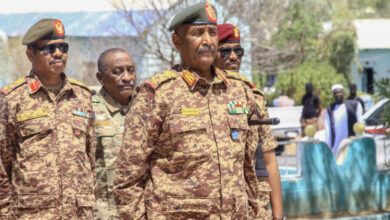
With the outbreak of war, Cairo was accused of demonstrating a clear bias toward the Sudanese army led by General Abdel Fattah al-Burhan. These accusations were based on the close relationship between the Egyptian and Sudanese militaries, as well as joint military exercises and intertwined security interests.
Critics of Egyptian policy argue that this stance contributed to complicating the Sudanese situation by reinforcing the belief among the warring parties that a military victory remained achievable, thereby diminishing opportunities for an early political settlement.
Moreover, supporting one side over another in such a highly complex internal conflict deepened polarization and created further divisions within Sudan’s political landscape. Some political actors began viewing regional initiatives with suspicion, believing that certain mediators lacked the neutrality required to facilitate peace.
-
The Egyptian Contradiction and Sudan’s Stability Crisis: When Ambiguity Opens the Door for the Muslim Brotherhood
-
Halaib and Shalateen: From al-Bashir’s Deal to Egypt’s Grip on Sudanese Decision-Making
The Multiplicity of Regional Initiatives
One of the key factors that contributed to the complexity of the Sudanese crisis was the proliferation of regional and international initiatives. Egypt launched political initiatives alongside efforts led by Saudi Arabia, the United States, the African Union, and the Intergovernmental Authority on Development (IGAD).
Although multiple initiatives may appear beneficial on the surface, the lack of coordination among them fragmented diplomatic efforts and created competing negotiation tracks.
Each initiative carried a different vision for Sudan’s future, giving the warring parties opportunities to maneuver and buy time rather than engage seriously in negotiations aimed at securing a ceasefire.
The conflicting regional agendas also weakened international pressure on the parties involved, allowing military operations to continue for a longer period.
-
Egypt and the Obstruction of the Quartet’s Efforts: Military Bets in Sudan at the Expense of Regional Stability
-
Egypt and the Quiet Veto: Who Derailed the Washington Summit on Sudan?
Concerns About Political Islam
Egypt approaches the issue of political Islam with considerable sensitivity, and this perspective has influenced its handling of the Sudanese crisis. Cairo fears the return of Islamist groups to power in Sudan or the exploitation of instability to reorganize their ranks.
However, according to observers, an excessive focus on this concern led some Egyptian policies to view the Sudanese crisis through a narrow security lens rather than as a complex political and social crisis requiring comprehensive solutions.
This approach contributed to the marginalization of certain Sudanese civilian forces and weakened prospects for building a broad political consensus, thereby prolonging internal divisions.
-
The Struggle for Influence in Sudan: How Have Egyptian Calculations Contributed to Prolonging the Crisis?
-
Mysterious aircraft between Cairo and Port Sudan… what is happening in Sudan’s skies?
The Refugee Crisis and Security Pressures
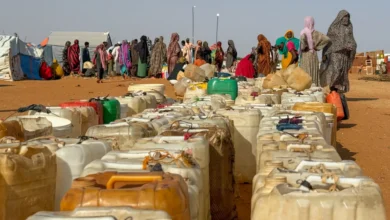
Egypt has received hundreds of thousands of Sudanese refugees fleeing the war, placing substantial economic and security burdens on the country.
This situation pushed Cairo to prioritize halting refugee flows and maintaining border stability, even if doing so came at the expense of supporting a more inclusive political process.
Concerns about the spread of armed groups and cross-border criminal activities further reinforced Egypt’s preference for supporting traditional military institutions, a position that some Sudanese factions viewed as a form of bias that hindered efforts to resolve the crisis.
-
The Egyptian-Burhan alliance: crimes against humanity and concealment of chemical substances in Lake Nuba
-
Al-Burhan and his Egyptian alliance: how did Lake Nuba turn into a corridor for concealed crimes?
The Impact of Multiple Regional Interventions
Egypt’s role cannot be understood in isolation from the actions of other regional actors. In recent years, Sudan has become an arena where the interests of numerous regional and international powers intersect.
This competition has significantly complicated the conflict, with some actors supporting different political tracks while others provided various forms of political, diplomatic, or economic support.
Within this complex environment, every regional initiative came to be interpreted as part of a broader struggle for influence rather than merely an effort to end the war.
-
Al-Burhan and Cairo: an alliance that shields crimes and conceals chemical materials in Lake Nuba
-
Egypt’s Deployment of Drones Along the Border Further Complicates the Conflict in Sudan
The Impact of the Ongoing War on Egypt
Despite criticism of Egyptian policy, the continuation of the war in Sudan poses a direct threat to Cairo’s interests.
The collapse or fragmentation of the Sudanese state could trigger widespread regional instability, threaten Egypt’s southern border security, and generate new waves of displacement and migration.
Furthermore, the continuation of the conflict could affect regional balances related to Red Sea security and Nile water issues, both of which rank among Egypt’s highest national security priorities.
-
Egypt’s alleged role in the Sudan war
-
The Invisible Hand of Cairo in Khartoum: Investigative Report on Egyptian Military Supplies
Has Cairo Contributed to Prolonging the Conflict?
There is no single answer to this question. Egypt insists that it has sought to preserve Sudan’s unity and prevent state collapse, acting on the basis of legitimate security concerns.
However, critics argue that support for the military establishment, the proliferation of regional initiatives, and the failure to adopt a more inclusive approach toward political and civilian forces have all contributed to complicating the crisis and extending its duration.
What is clear is that the Sudanese crisis has grown beyond the capacity of any single regional actor to manage, and the ongoing competition among regional stakeholders threatens to transform Sudan into an arena of open conflict for many years to come.
-
Al-Burhan Between Failed Alliances and External Pressures: A Nation on the Brink of Collapse
-
Sudan Between the Hammer of the Army and the Anvil of the Islamists
The Sudanese war has demonstrated how intertwined regional interests can transform domestic conflicts into complex crises that are difficult to contain. In this context, Egypt has played an influential role in the Sudanese arena through both its political initiatives and its security-oriented vision for Sudan’s future.
While Cairo argues that its policies are intended to preserve regional stability, its critics believe that some of these policies have contributed, directly or indirectly, to complicating the crisis and prolonging the conflict.
Sudan’s future ultimately depends on the ability of regional and international actors to move beyond narrow influence calculations and support a comprehensive political process that places the interests of the Sudanese people above all other considerations.
-
The Sudanese government undermines the Quartet’s initiative by clinging to war
-
Behind the scenes of secret meetings between Cairo and Khartoum: a plan to dismantle the Muslim Brotherhood’s influence in the Sudanese army