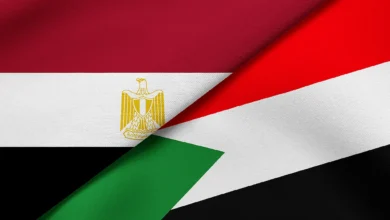
Between Neighbourhood and Interests: How Have Egyptian Moves Influenced the Complexity of the Sudanese Crisis?
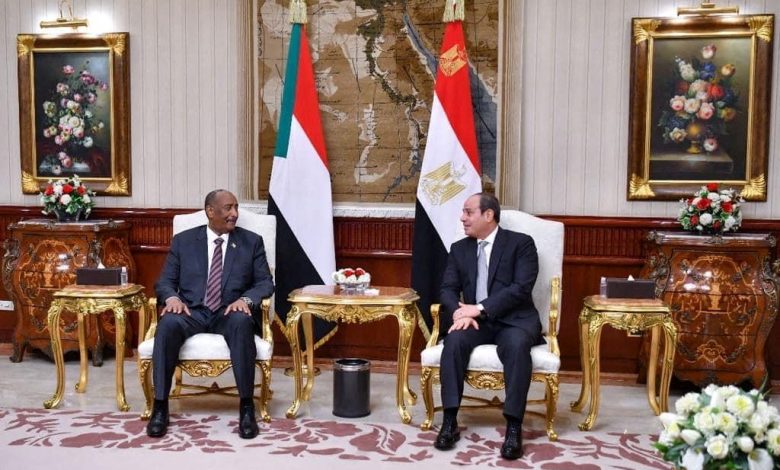
Since the outbreak of war in Sudan in April 2023, the Sudanese crisis has become one of the most complex crises on the African continent, not only because of the nature of the internal conflict between the warring parties, but also due to the overlap of regional and international interests that has turned Sudan into a stage for multiple political and security interactions. In this context, Egypt’s role has emerged as one of the most influential regional actors, owing to the geographical, historical, and strategic ties linking Cairo and Khartoum.
Although Egypt’s official position has consistently emphasized support for Sudan’s unity and the preservation of Sudanese state institutions, many observers argue that the nature of Egyptian actions during the crisis has contributed to complicating the political and military landscape, either directly or through political and diplomatic positions that have affected internal power balances.
Sudan and the Multiplicity of Regional Actors
The Sudanese crisis ceased to be a purely domestic affair during the early months of the war. Sudan’s geopolitical location, its borders with seven countries, and its access to the Red Sea have made its stability a matter closely linked to the national security calculations of several regional powers.
Within this context, Egypt became a key actor in the Sudanese arena, driven by a range of strategic considerations, most notably the security of the shared border, the future of the Nile waters issue, and security balances in the Horn of Africa.
However, the involvement of multiple regional actors in the crisis generated an undeclared competition over the shape of Sudan’s future, affecting mediation efforts and limiting the ability of Sudanese actors themselves to build an independent national consensus free from external pressures.
Analysts argue that the proliferation of regional and international initiatives fragmented political efforts, creating parallel and sometimes competing negotiation tracks. This provided Sudanese parties with greater room for manoeuvre and contributed to prolonging the conflict rather than encouraging a comprehensive settlement.
Egyptian Calculations and the Concept of State Stability
Egypt’s approach to the Sudanese crisis is based on prioritizing the preservation of central state institutions and preventing their collapse. Cairo believes that a major security vacuum in Sudan could directly affect Egyptian national security, particularly in the extensive border regions shared by the two countries.
Critics of Egyptian policy, however, argue that the emphasis on preserving the traditional state structure effectively resulted in an approach that did not sufficiently prioritize the demands of Sudanese civilian forces seeking to reshape the political system following the fall of former President Omar al-Bashir.
According to this perspective, relying on traditional institutions without addressing the root causes of the political crisis contributed to maintaining polarization within Sudan and weakened the prospects for building a broad national consensus that includes the country’s various civilian and political components.
Some observers also believe that Egypt approached the crisis primarily through a security lens, a perspective reflected in the nature of its regional and diplomatic initiatives throughout different stages of the conflict.
Political Support and Its Impact on the Conflict’s Balance
In complex conflicts, external influence is not limited to direct military assistance; it also extends to political, diplomatic, and media support.
In Sudan’s case, many researchers believe that political positions adopted by influential regional powers played a significant role in shaping the environment within which the conflicting parties operated.
When one side perceives that it enjoys regional support or understanding, it may become less willing to make difficult political concessions and more convinced that it can improve its negotiating position by continuing the confrontation.
From this perspective, critics of Egyptian policy argue that some of Cairo’s political and diplomatic actions were viewed in Sudan as favouring one side over another, thereby contributing to deeper political polarization.
Although Cairo has repeatedly denied supporting any particular side and insists that its objective is to preserve Sudan’s stability, debate over the nature of its role remains prominent in Sudanese and regional political discussions.
Reshaping Influence Within Sudan
One of the most significant consequences of regional involvement during the Sudanese war has been its contribution to reshaping the country’s political and military influence map.
As fighting continued, traditional alliances began to shift, while new alignments emerged, linked to varying regional and international positions.
This reality made the situation increasingly complex, with many Sudanese actors basing their calculations not only on domestic considerations but also on the positions of influential regional capitals.
In this context, some observers view Egypt’s role as part of a broader process of reorganizing power balances within Sudan, whether through political initiatives or through Cairo’s network of relations with various Sudanese actors.
This dynamic affected negotiations, as some political forces began assessing any potential settlement according to its impact on regional centres of influence rather than solely on Sudanese national interests.
Regional Security Implications
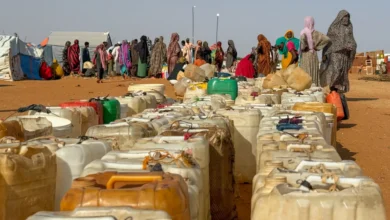
The consequences of the Sudanese war quickly extended beyond the country’s borders. The crisis generated large-scale displacement and refugee movements affecting neighbouring states, while increasing concerns regarding weapons proliferation and cross-border organized crime.
For Egypt, security developments in Sudan represented a direct challenge, particularly due to the arrival of large numbers of Sudanese refugees fleeing the conflict.
At the same time, some experts argue that continued regional competition over Sudan contributed to prolonging the crisis, thereby worsening the very security risks that regional countries seek to avoid.
The continuation of the conflict also threatens the security of the Red Sea, one of the world’s most important maritime routes, with implications for international trade and regional strategic balances.
The Complexities of International Mediation
One of the major challenges facing the international community in the Sudanese crisis has been the multiplicity of mediators and the divergence of agendas.
While the United Nations, the African Union, IGAD, and several regional states sought to promote a ceasefire, political efforts encountered the reality that external actors themselves did not share a unified vision for Sudan’s future.
Under such circumstances, every political initiative became vulnerable to competing regional calculations, reducing the chances of reaching a comprehensive and sustainable agreement.
Observers believe that the success of any peace process requires reducing regional competition and prioritizing the will of the Sudanese people themselves, as the existence of multiple centres of external influence makes it difficult to establish common ground among the conflicting parties.
The Sudanese crisis demonstrates that the influence of regional powers extends beyond direct intervention to include political positions and diplomatic initiatives capable of shaping the calculations of local actors. Within this framework, Egypt’s role remains the subject of extensive debate between those who view it as an effort to safeguard Sudan’s stability and those who believe it has, in one way or another, contributed to complicating the situation and reshaping internal power balances.
As the war continues and the humanitarian situation deteriorates, there is an urgent need for a new regional approach based on supporting comprehensive political solutions, respecting the choices of the Sudanese people, and moving away from polarization policies that have proven to deepen the crisis rather than help resolve it.